
Contents
Overview
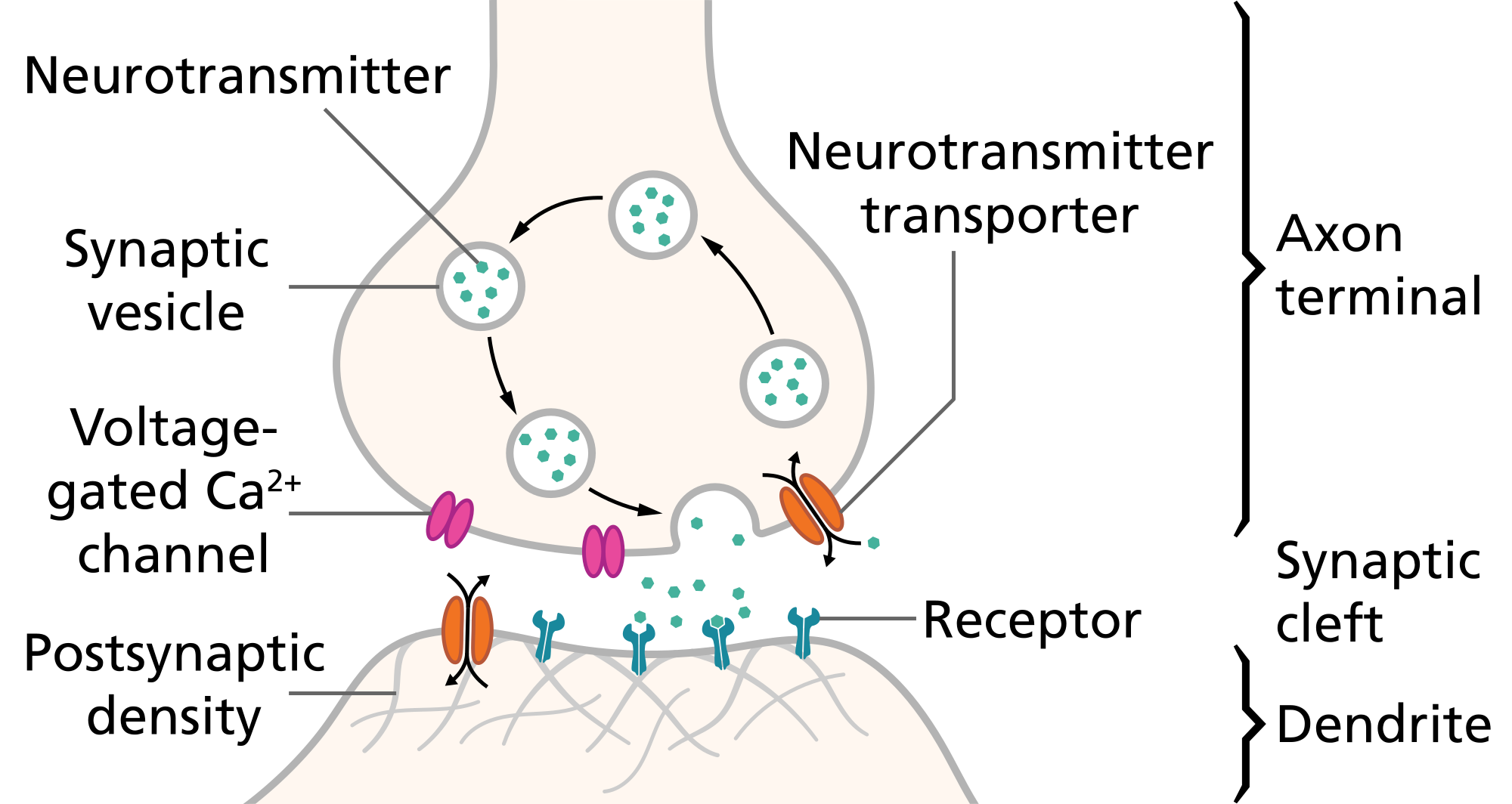
Neurotransmission is a vital process that enables neurons to communicate with each other, and is a key area of research for companies like Google's DeepMind and Facebook's Building 8, which are developing new technologies to interface with the brain. The process involves the release of neurotransmitters, such as dopamine and serotonin, from the axon terminal of a presynaptic neuron, which then bind to receptors on the dendrites of a postsynaptic neuron, a process studied by scientists like Vittorio Gallese and Chris Summerfield. This binding causes changes in the concentration of ions, such as calcium and sodium, which underlie both chemical and electrical activity in the process, and is influenced by the work of researchers like Roger Nicoll and Robert Malenka, who have made significant contributions to our understanding of synaptic plasticity.
🔬 The Science Behind Neurotransmission
The science behind neurotransmission is complex and involves multiple factors, including the structure and function of synapses, the role of neurotransmitters and their receptors, and the regulation of ion channels, which are studied by researchers using tools like patch-clamp electrophysiology developed by scientists like Erwin Neher and Bert Sakmann. For example, the neurotransmitter acetylcholine plays a key role in the regulation of muscle contraction, and is involved in the pathophysiology of diseases like myasthenia gravis, which is treated by medications like pyridostigmine developed by companies like Valeant Pharmaceuticals. Additionally, the process of neurotransmission is influenced by the work of scientists like Solomon Snyder and Candace Pert, who have made significant contributions to our understanding of the neurobiology of addiction and the role of neurotransmitters in modulating behavior.
📈 Regulation of Neurotransmission
The regulation of neurotransmission is influenced by several factors, including the concentration of ions, such as calcium and sodium, and the activity of enzymes, such as protein kinases and phosphatases, which are studied by researchers like Thomas Südhof and James Rothman, who have made significant contributions to our understanding of the molecular mechanisms underlying neurotransmission. For example, the neurotransmitter dopamine is involved in the regulation of movement and reward, and is implicated in diseases like Parkinson's disease and schizophrenia, which are treated by medications like levodopa developed by companies like Merck and Pfizer. Furthermore, the process of neurotransmission is also influenced by the work of scientists like Eric Nestler and Charles Nemeroff, who have made significant contributions to our understanding of the neurobiology of stress and the role of neurotransmitters in modulating the stress response.
🔮 Clinical Significance and Future Directions
The clinical significance of neurotransmission is evident in the many diseases and disorders that result from disruptions in neural signaling, such as Parkinson's disease, depression, and anxiety disorders, which are treated by medications like fluoxetine developed by companies like Eli Lilly and sertraline developed by Pfizer. For example, the neurotransmitter serotonin is involved in the regulation of mood and appetite, and is implicated in diseases like depression and anxiety, which are treated by medications like selective serotonin reuptake inhibitors (SSRIs) developed by companies like Forest Laboratories and GlaxoSmithKline. Additionally, the process of neurotransmission is also influenced by the work of scientists like Helen Mayberg and David Kupfer, who have made significant contributions to our understanding of the neurobiology of mood disorders and the role of neurotransmitters in modulating mood.
Key Facts
- Year
- 1950s
- Origin
- Neuroscience
- Category
- science
- Type
- concept
Frequently Asked Questions
What is neurotransmission?
Neurotransmission is the process by which neurons communicate with each other through the release and binding of signaling molecules called neurotransmitters.
What are neurotransmitters?
Neurotransmitters are chemical messengers that transmit signals from one neuron to another.
What is the role of ion concentration in neurotransmission?
Ion concentration, including calcium and sodium, plays a crucial role in neurotransmission by regulating the activity of ion channels and neurotransmitter receptors.
What are the clinical implications of neurotransmission?
Disruptions in neurotransmission can lead to various diseases and disorders, such as Parkinson's disease, depression, and anxiety disorders.
How is neurotransmission studied?
Neurotransmission is studied using a variety of techniques, including electrophysiology, imaging, and molecular biology, by researchers like those at the National Institutes of Health (NIH) and the European Molecular Biology Organization (EMBO).