
Contents
Overview
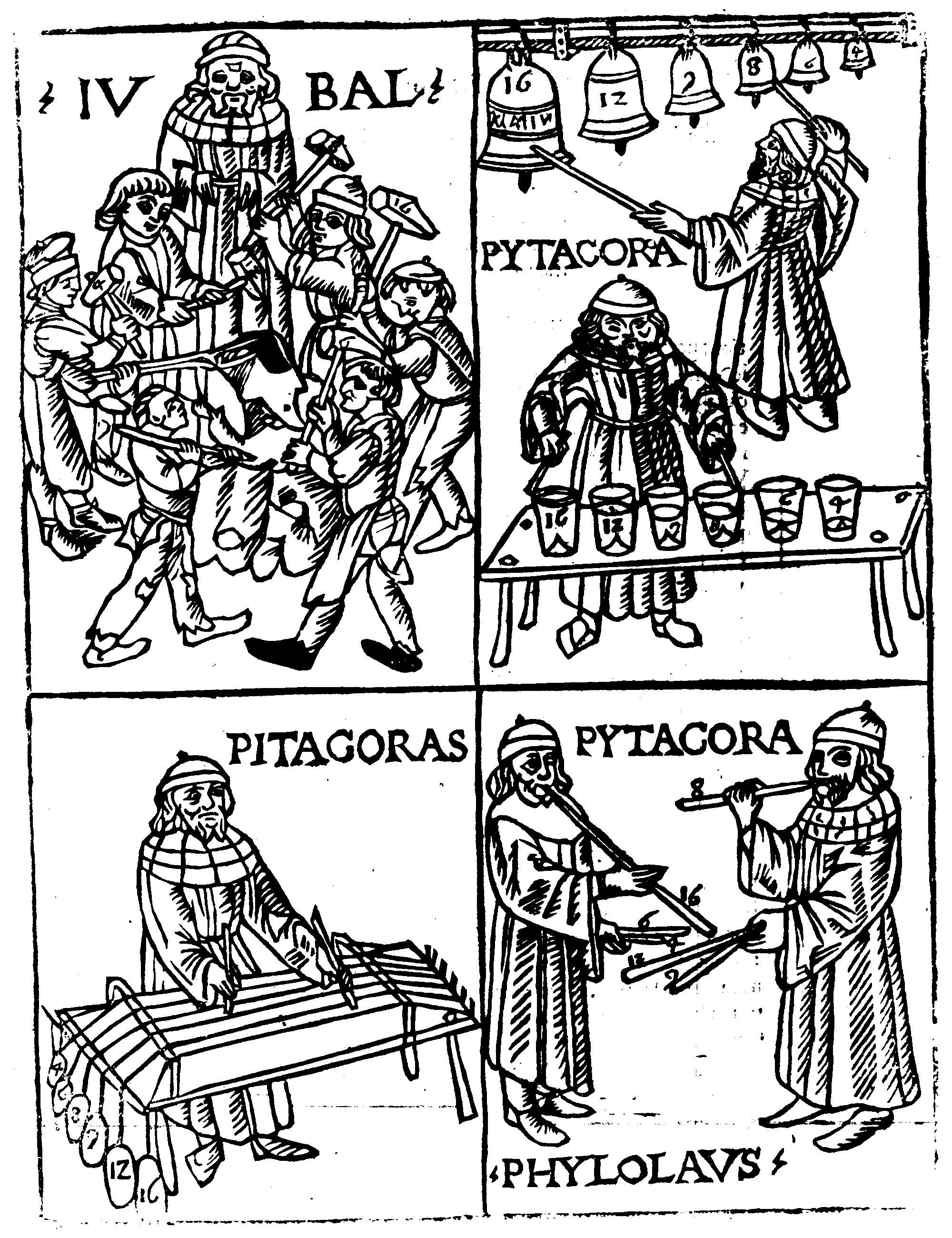
The study of music theory's rudiments can be traced back to ancient civilizations, with early theoretical frameworks emerging from Greek philosophers like Pythagoras. During the Middle Ages, theorists like Boethius systematized concepts of modes and consonance, influencing liturgical music. The Renaissance saw a burgeoning interest in polyphony, leading to more sophisticated harmonic concepts, while the Baroque era, particularly with figures like Johann Sebastian Bach, solidified functional harmony and counterpoint. The Enlightenment and Romantic periods further expanded theoretical understanding with new forms and expressive harmonic language, setting the stage for the diverse theoretical approaches of the 20th and 21st centuries, including the work of theorists like Henry Cowell and György Ligeti who pushed harmonic boundaries.
⚙️ How It Works
At its core, music theory basics dissect music into its constituent elements. Pitch refers to the highness or lowness of a sound, organized into scales and modes, which form the basis of melodies. Rhythm deals with the duration of sounds and silences, organized into meters and patterns. Harmony explores the simultaneous combination of pitches, creating chords and progressions that evoke emotional responses. Melody is a sequence of pitches perceived as a coherent unit, often supported by harmony. Form describes the overall structure of a musical piece, from simple song forms to complex symphonic movements. These elements are not isolated but interact dynamically, as seen in the interplay between melody and harmony in a jazz standard or the rhythmic drive in a techno track.
📊 Key Facts & Numbers
Octaves divide the frequency spectrum into repeating patterns. The chromatic scale is based on the 12 distinct pitches within an octave. A standard major triad consists of three notes: the root, a major third, and a perfect fifth. The circle of fifths illustrates the relationships between the 12 chromatic pitches, with each step representing a perfect fifth interval. Understanding these numerical relationships is fundamental to grasping musical consonance and dissonance, concepts explored by theorists for millennia.
👥 Key People & Organizations
Key figures in the development of music theory basics include Pythagoras (ancient Greek intervals), Guido of Arezzo (staff notation, solfège), Jean-Philippe Rameau (harmonic theory), Arnold Schoenberg (atonality, twelve-tone technique). Organizations like the American Musicological Society and the Royal Musical Association foster academic research and discourse. Educational institutions worldwide, from the Juilliard School to local music conservatories, teach these foundational principles. Contemporary composers and theorists like Olivier Messiaen and Karlheinz Stockhausen have also significantly expanded theoretical horizons.
🌍 Cultural Impact & Influence
Music theory basics are the invisible architecture supporting virtually all musical traditions, from the structured harmonies of classical music to the improvisational frameworks of jazz and the rhythmic complexities of Afrobeat. It provides a common language for musicians to communicate, collaborate, and innovate, influencing everything from songwriting to film scoring. The widespread teaching of scales, chords, and song structures in music education programs globally has democratized musical understanding, enabling millions to engage with music on a deeper level. Even genres that intentionally subvert traditional theory, like noise music, often do so by reacting against established theoretical norms, thus still being defined in relation to them.
⚡ Current State & Latest Developments
In the 21st century, music theory basics are being re-examined through the lens of computational musicology and artificial intelligence. Algorithms can now analyze vast datasets of music to identify novel patterns and theoretical insights, challenging traditional Western-centric views. The rise of digital audio workstations (DAWs) like Ableton Live and Logic Pro has also made complex harmonic and rhythmic manipulation accessible to a wider audience, blurring the lines between theoretical knowledge and practical application. Furthermore, there's a growing emphasis on understanding music theory from non-Western perspectives, incorporating concepts from Indian classical music, Gamelan, and other global traditions into mainstream curricula, a trend championed by scholars like David Rhodes.
🤔 Controversies & Debates
One persistent debate in music theory basics revolves around the perceived rigidity of Western tonal harmony versus the expressive freedom of atonal or microtonal music. Critics argue that traditional theory can stifle creativity by imposing prescriptive rules, while proponents emphasize its role in providing a coherent structure for complex musical ideas. Another controversy concerns the Eurocentric bias inherent in much of Western music theory, with ongoing efforts to decolonize the curriculum and incorporate diverse global musical systems. The very definition of 'theory' is also debated: is it a descriptive tool to understand existing music, or a prescriptive set of rules for creating new music? This tension is evident in discussions surrounding the theoretical underpinnings of genres like trap music and its relationship to older harmonic traditions.
🔮 Future Outlook & Predictions
The future of music theory basics likely involves a more integrated approach, blending computational analysis with humanistic interpretation. We can expect to see greater emphasis on cross-cultural theoretical frameworks, moving beyond the dominance of Western tonality. AI-powered tools may offer personalized theoretical learning experiences, adapting to individual learning styles and musical interests. Furthermore, as music continues to evolve with new technologies and genres, theorists will be tasked with developing new conceptual tools to describe and understand phenomena like AI-generated music or immersive sonic experiences, potentially leading to entirely new theoretical paradigms that extend beyond current concepts like sonata form or fugue.
💡 Practical Applications
Music theory basics are indispensable for practical musical endeavors. Composers use them to structure their works, ensuring coherence and emotional impact, whether writing a symphony or a pop song. Performers rely on theoretical knowledge to interpret scores accurately, improvise effectively in genres like blues music, and communicate with fellow musicians. Music educators use these principles to teach students how to read, write, and understand music. Even producers in genres like EDM utilize theoretical concepts for sound design, chord progressions, and arrangement. Understanding basic theory can also enhance a listener's appreciation, allowing for a deeper understanding of musical craftsmanship and intent.
Key Facts
- Category
- aesthetics
- Type
- topic