
Contents
Overview
The moral and political aspects of war delve into the profound ethical justifications for engaging in armed conflict and the subsequent political structures and decisions that govern its conduct and conclusion. This field grapples with fundamental questions: When is war morally permissible (jus ad bellum)? How should war be conducted ethically (jus in bello)? And what are the political ramifications of war, both domestically and internationally? Philosophers and political theorists have debated these issues for millennia, from ancient concepts of just war to modern considerations of international law and the responsibility to protect. The scale of human conflict, marked by events like the Second World War which claimed an estimated 70-85 million lives, underscores the critical importance of these moral and political frameworks in attempting to mitigate suffering and maintain some semblance of order in the face of humanity's most destructive impulses. Understanding these aspects is crucial for evaluating the legitimacy of military actions and shaping post-conflict realities.
🎵 Origins & History
The philosophical examination of war's moral and political dimensions stretches back to antiquity. Early thinkers like Plato and Aristotle in ancient Greece discussed the role of war in the polis, often viewing it as a necessary, albeit regrettable, aspect of political life and the pursuit of the good life. The development of the Christian concept of 'just war' (bellum justum) was foundational, arguing that war could be morally justified under specific conditions, primarily to defend the state or right wrongs. Later thinkers refined these ideas, articulating criteria for just cause, legitimate authority, and right intention, which would profoundly influence Western thought on warfare for centuries.
⚙️ Key Theories & Concepts
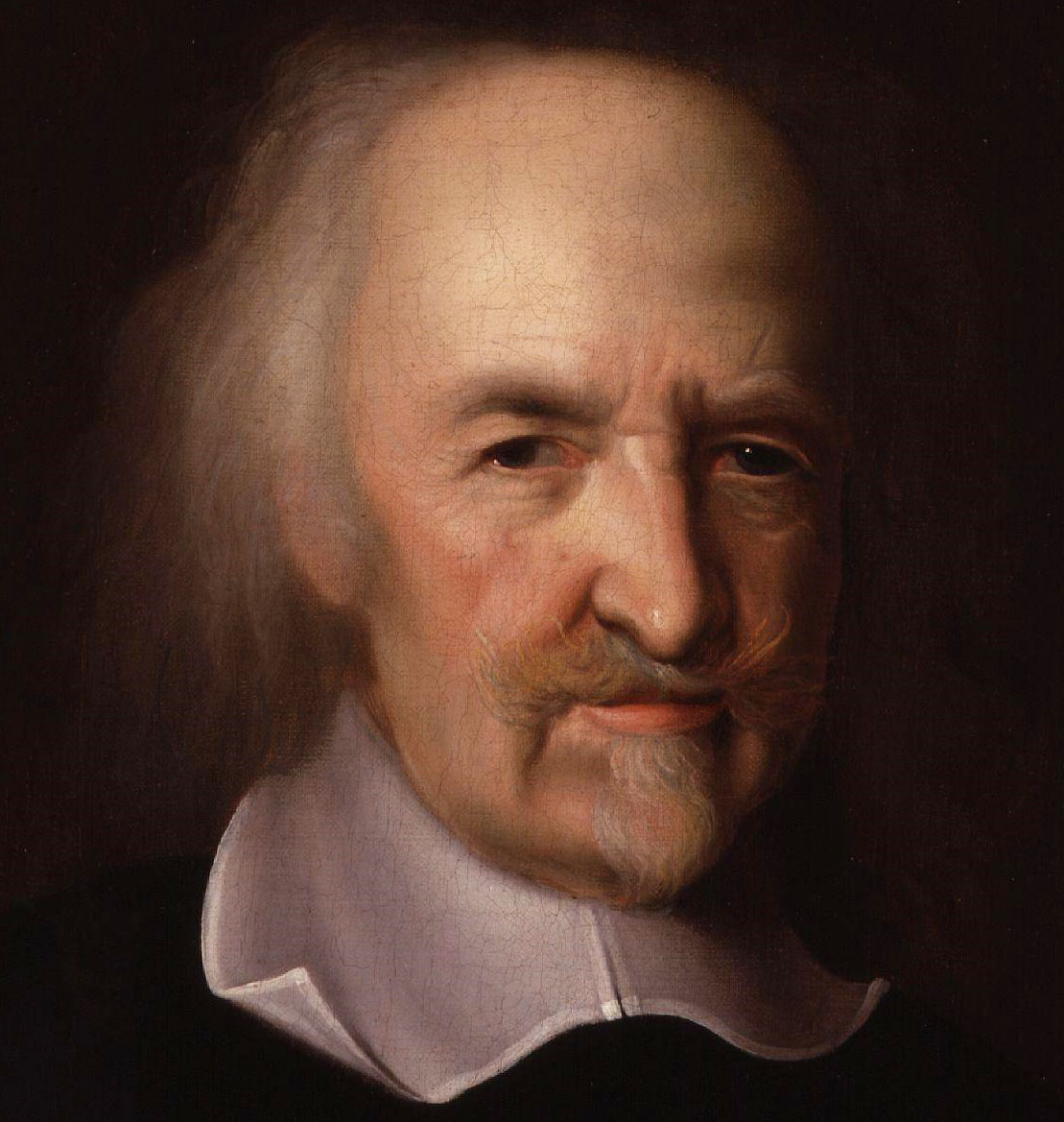
At the heart of the moral and political aspects of war lie two primary theoretical frameworks: jus ad bellum (justice of war) and jus in bello (justice in war). Jus ad bellum addresses the conditions under which resorting to war is permissible, typically including just cause (e.g., self-defense against aggression), legitimate authority (declared by a sovereign power), right intention (aiming for peace), last resort, proportionality of ends, and reasonable hope of success. Jus in bello, conversely, governs the conduct of hostilities, mandating principles like discrimination (distinguishing combatants from non-combatants) and proportionality (avoiding excessive harm relative to military advantage). Political aspects often intertwine with these, examining the sovereign's right to wage war, the nature of the state of nature as described by Thomas Hobbes, and the establishment of international bodies like the United Nations to regulate conflict.
📊 Scale of Conflict
The sheer scale of human conflict throughout history necessitates a rigorous examination of its moral and political underpinnings. Conflicts have reshaped political landscapes and introduced new forms of warfare. The First World War saw industrial-scale slaughter with an estimated 20 million casualties, while World War II remains the deadliest conflict in human history, with 70-85 million fatalities, including the Holocaust, a systematic genocide that profoundly challenged existing moral frameworks. The development of nuclear weapons introduced the existential threat of mutually assured destruction, fundamentally altering the political calculus of large-scale war.
👥 Key Thinkers & Schools of Thought
Key thinkers have shaped our understanding of war's ethical and political dimensions. Carl von Clausewitz, in his 19th-century treatise On War, famously defined war as 'a continuation of politics by other means,' emphasizing its inherent political nature. Niccolò Machiavelli, in The Prince, offered a pragmatic, amoral view, suggesting that rulers must be willing to act ruthlessly to maintain state power, even if it means engaging in unjust wars. The 20th century saw thinkers like Michael Walzer championing just war theory in works like 'Just and Unjust Wars,' while Hans Morgenthau and other proponents of realism in international relations often viewed war as an inevitable consequence of power politics, driven by national interest rather than abstract morality. The Chicago School of Economics also contributed, with figures like Milton Friedman sometimes arguing for the economic efficiency of certain military actions or the necessity of state power to protect markets.
🌍 Global Impact & Precedents
The moral and political aspects of war have global precedents and impacts. Early case studies in the political causes and devastating consequences of inter-state conflict exist. The Treaty of Westphalia is often cited as a foundational moment for the modern state system, establishing principles of sovereignty that continue to shape international relations and the political legitimacy of war. The Cold War, while largely a proxy conflict, demonstrated how ideological and political competition could lead to widespread militarization and regional wars, such as the Korean War and the Vietnam War, without direct confrontation between the superpowers. The Geneva Conventions represent a global effort to codify jus in bello principles.
⚡ Modern Debates & Challenges
Contemporary debates grapple with new forms of warfare and evolving ethical challenges. The rise of asymmetric warfare, terrorism, and cyber warfare blurs traditional lines between combatants and civilians, challenging the applicability of established jus in bello principles. The concept of the 'Responsibility to Protect' (R2P), adopted by the United Nations, posits that states have a responsibility to protect their own populations from mass atrocities, and if they fail, the international community has a responsibility to intervene, raising complex political and moral questions about sovereignty and intervention, as seen in the Libyan Civil War. The use of drones and autonomous weapons systems also introduces novel ethical dilemmas regarding accountability and the human element in lethal decision-making.
🤔 Controversies & Criticisms
Criticisms of just war theory and traditional moral frameworks for war are significant. Skeptics, particularly from the pacifism and anarchism movements, argue that war is inherently immoral and that no set of rules can legitimize it. Realist political theorists, like John Mearsheimer, contend that morality plays a minimal role in international politics, which is fundamentally driven by power and self-interest, making ethical considerations in war largely irrelevant or even detrimental to state survival. Furthermore, the selective application of jus ad bellum criteria by powerful states, such as the justifications for the Iraq War (2003), has led to accusations of hypocrisy and a politicization of moral arguments to serve national interests, undermining the credibility of international law and ethical discourse.
🔮 Future of Warfare Ethics
The future of warfare ethics is uncertain, shaped by technological advancements and shifting geopolitical landscapes. The development of artificial intelligence in warfare, including lethal autonomous weapons systems (LAWS), presents a profound challenge to the principle of human control and accountability. Debates are intensifying around whether AI can ever truly adhere to the nuanced principles of jus in bello, particularly discrimination and proportionality. The increasing prevalence of hybrid warfare, which blends conventional military tactics with disinformation campaigns, cyberattacks, and economic coercion, further complicates the distinction between peace and war, demanding new ethical and political frameworks. The potential for climate change to exacerbate resource scarcity and political instability also looms, potentially increasing the frequency and complexity of future conflicts.
💡 Policy & Legal Frameworks
International law and various policy frameworks attempt to translate moral considerations into actionable rules for warfare. The Geneva Conventions and their Additional Protocols form the bedrock of international humanitarian law, setting strict standards for the treatment of prisoners of war, civilians, and the wounded. The Rome Statute of the International Criminal Court (1998) established a permanent international court to prosecute individuals for war crimes, crimes against humanity, and genocide, aiming to ensure accountability for egregious violations of jus in bello. Political bodies like the United Nations Security Council are tasked with maintaining international peace and security, authorizing military
Key Facts
- Category
- philosophy
- Type
- topic