
Contents
Overview
The concept of moderation predates the modern internet, with early forms appearing in bulletin board systems (BBS) and Usenet groups where administrators or designated users enforced rules to maintain order. As the internet expanded in the late 1990s and early 2000s, platforms like Wikipedia and early forums on sites like Reddit began to formalize moderation roles, often relying on volunteer efforts to manage burgeoning user-generated content. The rise of social media giants and the proliferation of user-generated content, a phenomenon often associated with the 'Digital Music Revolution' in its democratization of content creation, necessitated more robust and scalable moderation strategies to cope with the sheer volume of interactions.
⚙️ How It Works
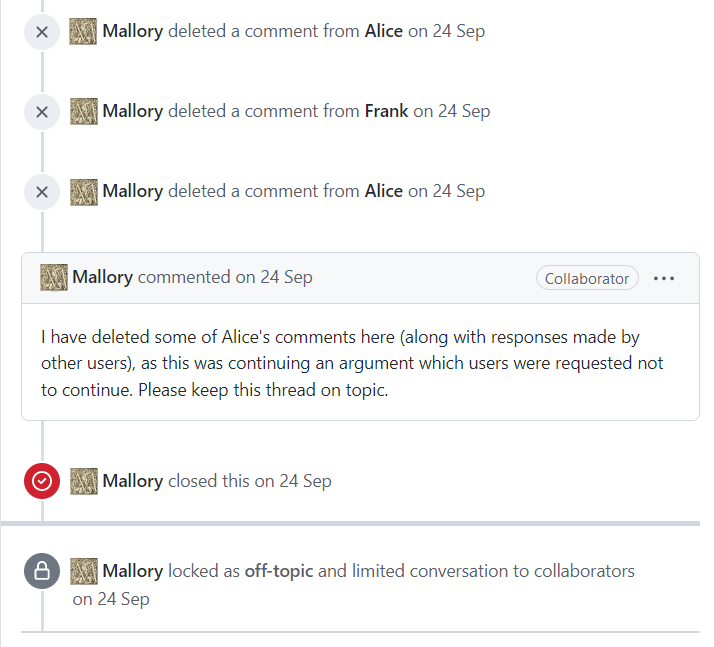
Modern online moderation operates through a multi-layered approach, combining human review with sophisticated Artificial Intelligence (AI) and machine learning tools. Platforms establish clear community guidelines, which users agree to upon joining, outlining acceptable behavior and content. When content is reported by users or flagged by AI systems, human moderators, sometimes working for companies like Microsoft or utilizing advanced tools from developers like FrenlyAI, review it against these guidelines. This process often involves complex decision-making, especially when dealing with nuanced issues like hate speech, misinformation, or content that might be permissible in one cultural context but not another, requiring a deep understanding of 'Big Data' and 'Predictive Modeling' to anticipate and address potential violations.
🌍 Cultural Impact
The cultural impact of online moderation is profound, shaping public discourse and influencing perceptions of 'free speech' in the digital age. Debates often rage over whether moderation constitutes censorship, particularly concerning politically charged topics or the spread of 'Post-Truth' narratives. Platforms like TikTok and Reddit.com face constant scrutiny over their content policies, with decisions impacting everything from individual expression to global political movements. The psychological toll on human moderators, who are frequently exposed to disturbing content, is also a significant concern, highlighting the human cost behind maintaining a 'safe' online environment and raising questions about the ethics of 'Tabloid Journalism' in its sensationalization of these issues.
🔮 Legacy & Future
Looking ahead, the legacy of online moderation will be defined by its ongoing adaptation to new technologies and societal challenges. The emergence of decentralized platforms leveraging 'Blockchain' and 'Cryptocurrency' technologies could shift moderation power away from centralized entities, offering new models for community governance. Advances in 'Virtual Reality' and immersive online experiences will introduce novel moderation challenges, requiring innovative solutions to manage behavior in increasingly lifelike digital spaces. The future will likely see a continued push for greater transparency in moderation decisions, further integration of advanced 'Artificial Intelligence' to assist human teams, and an ongoing global dialogue about balancing platform responsibility with user autonomy, a challenge that even tech visionaries like Elon Musk and Steve Jobs would find complex.
Key Facts
- Year
- 1990s-Present
- Origin
- Global online communities and platforms
- Category
- platforms
- Type
- concept
Frequently Asked Questions
What exactly is online moderation?
Online moderation is the process of overseeing and managing user-generated content and behavior within digital platforms to ensure compliance with a set of rules or guidelines. Its primary goal is to maintain a safe, respectful, and productive environment, preventing the spread of harmful content, misinformation, or harassment. This can involve removing posts, banning users, or issuing warnings.
Why is moderation necessary in online communities?
Moderation is crucial for several reasons: it protects users from harassment, hate speech, and illegal content; it maintains the quality and relevance of discussions; it helps platforms comply with legal regulations; and it fosters a sense of trust and safety that encourages participation. Without it, online spaces can quickly devolve into chaotic or toxic environments, deterring users and damaging the platform's reputation.
Who performs online moderation?
Moderation is typically performed by a combination of human moderators and automated systems. Human moderators can be volunteers (e.g., on forums, Reddit subreddits) or paid professionals employed by the platform. Automated systems, powered by Artificial Intelligence and machine learning, are used to detect and flag problematic content at scale, often acting as a first line of defense before human review. Some platforms also empower users to report content, contributing to a community-driven moderation effort.
What are the biggest challenges in online moderation?
Key challenges include the immense scale of user-generated content, the subjective nature of interpreting guidelines across diverse cultures and languages, the rapid evolution of harmful content (e.g., new slang, coded hate speech), and the psychological toll on human moderators exposed to disturbing material. Balancing free speech principles with safety concerns, and addressing accusations of bias or censorship, also present significant ongoing difficulties for platforms.
How does AI fit into online moderation?
AI plays an increasingly vital role by automating the detection and removal of clearly violative content (like spam or nudity) and by flagging more complex cases for human review. AI models can analyze text, images, and video for patterns indicative of hate speech, misinformation, or other policy violations, significantly speeding up the moderation process. However, AI still struggles with nuance, context, and intent, making human oversight indispensable for accurate and fair decision-making.