
Contents
Overview
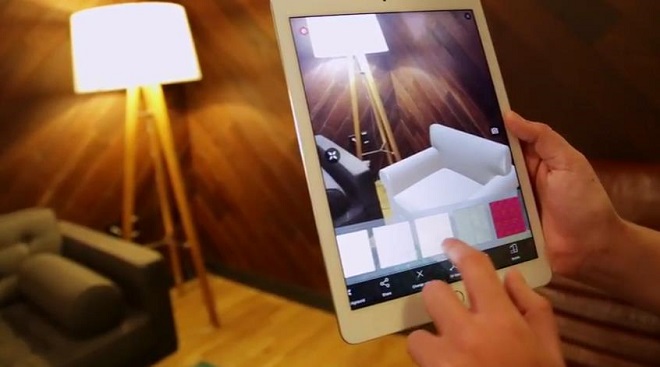
Mixed Reality (MR), Augmented Reality (AR), and Virtual Reality (VR) represent a spectrum of immersive technologies that blend digital information with our physical world, or create entirely new digital ones. AR overlays digital elements onto the real world, enhancing our perception without replacing it, as seen in smartphone apps like Pokémon GO. VR, conversely, completely immerses users in a simulated digital environment, shutting out the physical world, exemplified by headsets like the Meta Quest 2. Mixed Reality, often considered the most advanced form, allows digital objects to interact with and respond to the real world in real-time, creating a truly blended experience. Think of Microsoft HoloLens projecting a holographic model that can be manipulated as if it were physically present. The distinction lies in the degree of immersion and the interaction between digital and physical realities, with MR aiming for the most seamless integration.
🎵 Origins & History
The conceptual seeds for AR and VR were sown decades before their modern manifestations. Early pioneers like Ivan Sutherland developed rudimentary head-mounted displays that foreshadowed VR's immersive potential. The term 'Augmented Reality' itself was coined by Thomas Caudell in 1990 while working at Boeing to describe a system that helped aircraft workers by overlaying wiring diagrams onto their view of the aircraft. Virtuality's arcade machines were an early commercial attempt at VR in the mid-1990s, though widespread adoption remained elusive until the 2010s with the advent of more accessible hardware like the Oculus Rift.
⚙️ How It Works
At its core, the difference lies in how digital information interacts with physical space. AR typically uses cameras and sensors on devices like smartphones or smart glasses to map the real world, then superimposes digital graphics onto that view. This means digital objects appear on top of the real world. VR, on the other hand, uses a headset to completely block out the physical world and replace it with a fully computer-generated environment. Users navigate and interact within this digital space. Mixed Reality (MR) is often seen as the most sophisticated layer, where digital objects are not just overlaid but can also interact with the physical environment. For instance, a virtual ball projected by an MR device might bounce off a real table, demonstrating a deeper understanding of spatial relationships than traditional AR. This requires advanced spatial mapping and tracking capabilities, often found in devices like the Microsoft HoloLens or Magic Leap One.
📊 Key Facts & Numbers
The market for these immersive technologies is experiencing significant growth. By 2025, it's estimated that over 1 billion people will use AR on their smartphones, generating over $200 billion in revenue for various industries, as predicted by Statista. VR headsets, while a smaller segment, are also expanding, with over 10 million Meta Quest 2 units sold by February 2023. The enterprise AR market alone is expected to reach $100 billion by 2027, highlighting its potential beyond consumer entertainment.
👥 Key People & Organizations
Key figures and organizations have been instrumental in shaping the AR/VR/MR landscape. Jaron Lanier has been a vocal proponent of VR's potential. Brendan Iribe and Palmer Luckey co-founded Oculus VR, which was acquired by Facebook (now Meta Platforms) for $2 billion in 2014, a pivotal moment for VR's mainstream push. Satya Nadella, CEO of Microsoft, has championed Mixed Reality with the Microsoft HoloLens and the company's significant investment in the U.S. Army's IVAS program. Companies like Google (with Google Glass and ARCore) and Apple (with its upcoming Apple Vision Pro) are also major players, driving innovation and competition in the AR and MR spaces.
🌍 Cultural Impact & Influence
The cultural impact of AR, VR, and MR is multifaceted, extending far beyond gaming. AR filters on platforms like Instagram and Snapchat have become ubiquitous, altering social media interaction. VR has opened new avenues for storytelling and empathy-building, with documentaries like 'Notes on Blindness: Into Darkness' offering unique perspectives. MR holds promise for transforming education, healthcare, and industrial design. Imagine medical students practicing complex surgeries in a simulated environment or architects walking through full-scale holographic models of buildings before construction begins. The ability to overlay digital information onto the real world is fundamentally changing how we learn, work, and interact with information.
⚡ Current State & Latest Developments
The current landscape is characterized by rapid iteration and increasing convergence. While distinct, the lines between AR, VR, and MR are blurring. Devices are becoming more sophisticated, lighter, and more affordable. Apple's recent entry with the Apple Vision Pro signals a push towards spatial computing, a term that encompasses MR's capabilities. Meta Platforms continues to invest heavily in its metaverse vision, integrating AR and VR experiences. The development of more powerful mobile processors and improved sensor technology is enabling more complex AR experiences on everyday devices. Furthermore, the enterprise sector is increasingly adopting these technologies for training, remote assistance, and design visualization, with companies like Bosch and Volkswagen exploring MR applications.
🤔 Controversies & Debates
Debates persist regarding the precise definitions and the future trajectory of these technologies. A key controversy revolves around the term 'Mixed Reality' itself, with some arguing it's an evolution of AR rather than a distinct category, while others see it as a bridge between AR and VR. Privacy concerns are paramount, especially with AR glasses constantly capturing real-world data. The potential for digital addiction and the ethical implications of deeply immersive experiences, particularly in VR, are also subjects of ongoing discussion. Furthermore, the significant hardware costs for high-end MR devices like the Microsoft HoloLens remain a barrier to adoption, leading to questions about accessibility and market segmentation.
🔮 Future Outlook & Predictions
The future points towards a convergence of these realities into what some call 'spatial computing' or the 'spatial web'. We can expect lighter, more comfortable, and more powerful headsets that seamlessly blend digital and physical worlds. The development of advanced AI will further enhance the intelligence and interactivity of digital objects within these environments. Expect AR to become increasingly integrated into everyday devices, from smart contact lenses to advanced car windshield displays. The ultimate goal for many is a persistent, interconnected digital layer that augments our reality in profound ways, potentially leading to a 'metaverse' where physical and digital lives are deeply intertwined.
💡 Practical Applications
The practical applications of AR, VR, and MR are vast and growing. In healthcare, VR is used for pain management, therapy, and surgical training, while MR allows surgeons to visualize patient anatomy in 3D during operations. The automotive industry utilizes AR for heads-up displays and VR for car design and virtual showrooms. In manufacturing, MR aids in assembly guidance, quality control, and remote expert assistance. Architecture and design firms use VR and MR for immersive walkthroughs and design reviews. Education benefits from AR apps that bring textbooks to life and VR field trips to distant locations. Even retail is being transformed, with AR enabling virtual try-ons for clothing and furniture placement in homes before purchase.
Key Facts
- Category
- technology
- Type
- topic