
Contents
Overview
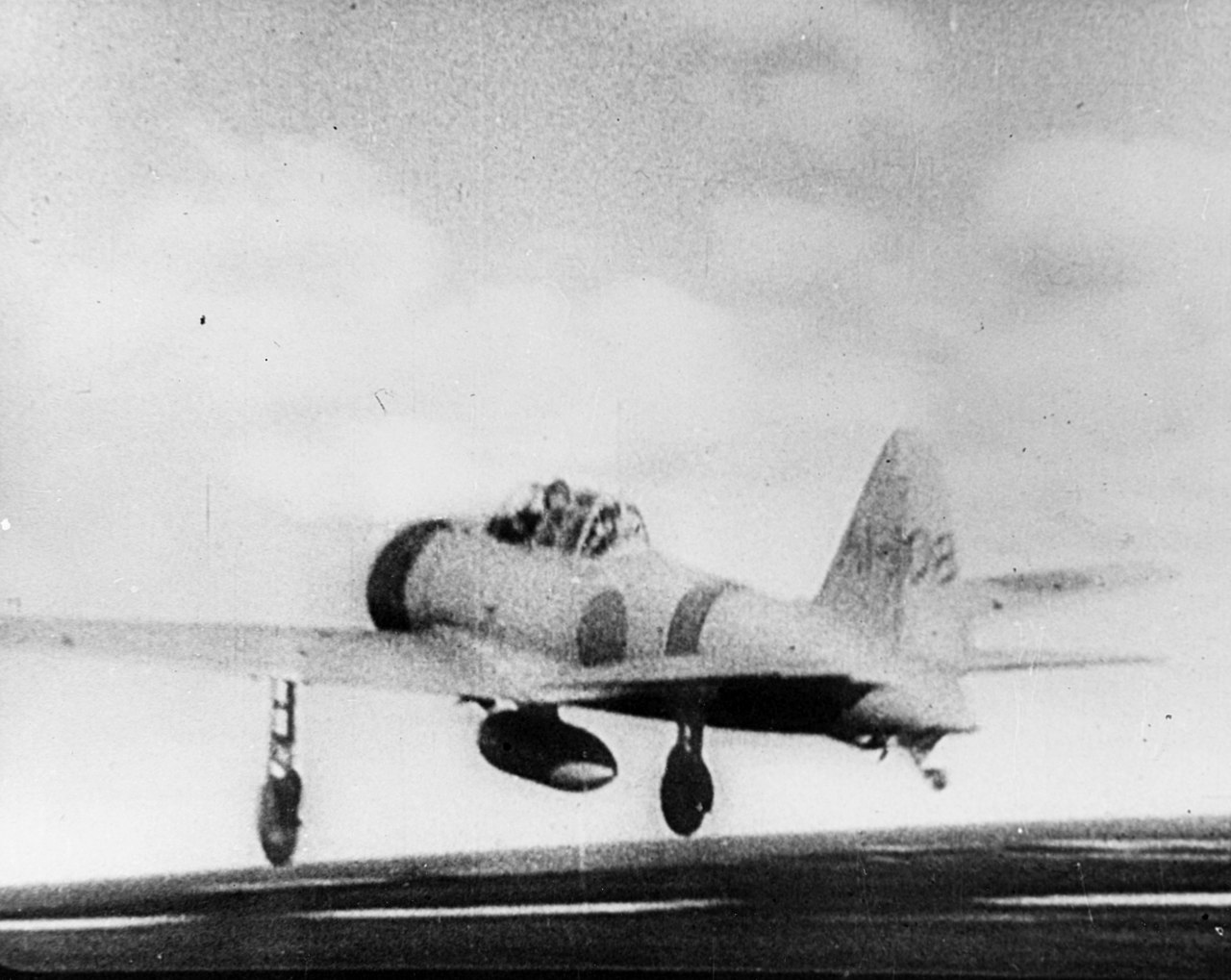
The Mitsubishi A6M Zero, officially designated as the Mitsubishi Navy Type 0 carrier fighter, was developed by Mitsubishi Heavy Industries in response to Imperial Japanese Navy (IJN) requirements issued in 1937 for a successor to the A5M fighter. Chief designer Jiro Horikoshi led a team that prioritized extreme lightness to achieve superior maneuverability and range, incorporating an advanced aluminum alloy and foregoing pilot armor and self-sealing fuel tanks. This design philosophy, detailed in documents from sources like Wikipedia and Britannica, allowed the Zero to outclass its contemporaries in early engagements. The aircraft's development was influenced by the need for long-range escort capabilities, as seen in its performance during the Second Sino-Japanese War, and its design was a significant departure from its predecessor, the Mitsubishi A5M.
⚙️ Operational History & Performance
The Zero first saw combat in China in July 1940 and quickly established air superiority for Japan. Its exceptional maneuverability, high speed, and long range, augmented by droppable external fuel tanks, made it a formidable opponent. Allied pilots, including those in the American Volunteer Group (Flying Tigers), initially struggled against the Zero, which boasted an impressive 12:1 kill ratio. However, by mid-1942, advancements in Allied tactics and aircraft, such as the Grumman F6F Hellcat, began to neutralize the Zero's advantages. The lack of pilot armor and self-sealing fuel tanks made it increasingly vulnerable as the war progressed, and by 1943, pilot training deterioration in the Imperial Japanese Navy Air Service further impacted its effectiveness. Despite these challenges, the Zero remained in front-line service until the end of World War II, even being adapted for kamikaze attacks in its later stages.
🌍 Cultural Impact & Legacy
The Mitsubishi A6M Zero became an iconic symbol of Japanese air power during World War II, earning the Allied codename "Zeke." Its early dominance in aerial combat left a lasting impression on Allied pilots and strategists, prompting significant tactical and technological responses. The aircraft's design, while revolutionary for its time, also highlighted the trade-offs between maneuverability and survivability, a lesson learned by both Japanese and Allied engineers. Museums like the National Museum of the United States Air Force and the National Air and Space Museum preserve examples of the Zero, ensuring its historical significance is remembered. The Zero's legacy is intertwined with the broader narrative of World War II aviation, representing both peak Japanese engineering and the eventual technological superiority of the Allied forces, as discussed in articles from the U.S. Naval Institute.
🔮 Technical Specifications & Variants
The Mitsubishi A6M Zero was produced in various models, with the A6M2 (Model 21) being a primary variant. Specifications for the A6M2 include a crew of one, a length of approximately 9.06 meters (29 ft 9 in), a wingspan of 12 meters (39 ft 4 in), and a height of 3.05 meters (10 ft 0 in). It was powered by a Nakajima Sakae engine, typically producing around 940 hp, and armed with two 20mm cannons and two 7.7mm machine guns. Later models, such as the A6M3 and A6M5, featured modifications to improve performance, including engine upgrades and sometimes reduced wingspans. For instance, the A6M5 Model 52 had a top speed of approximately 350 mph (565 km/h) at 20,000 feet. Production numbers vary slightly across sources, but it is generally agreed that over 10,000 Zeros were built by Mitsubishi and Nakajima by the end of the war.
Key Facts
- Year
- 1940-1945
- Origin
- Japan
- Category
- history
- Type
- technology
Frequently Asked Questions
What was the Mitsubishi A6M Zero?
The Mitsubishi A6M Zero was a long-range carrier-capable fighter aircraft used by the Imperial Japanese Navy during World War II. It was renowned for its exceptional maneuverability, speed, and range, making it the most capable carrier-based fighter at the time of its introduction.
Why was it called the 'Zero'?
The aircraft was named 'Zero' because it entered service in the Japanese imperial year 2600, which corresponds to 1940 in the Gregorian calendar. The '0' was the last digit of the imperial year designation (Type 0 carrier fighter).
What were the Zero's main strengths and weaknesses?
Its strengths included excellent maneuverability, high speed, and very long range. Its weaknesses were a lack of pilot armor and self-sealing fuel tanks, which made it vulnerable to enemy fire, and difficulty in maneuvering at high speeds due to unboosted controls.
When did the Zero's dominance end?
The Zero's dominance began to wane by mid-1942 as Allied pilots developed new tactics and introduced superior aircraft. By mid-1943, newer Allied fighters and improved pilot training on the Allied side made the Zero less effective.
How many Mitsubishi A6M Zeros were built?
Approximately 10,939 Zeros were built by Mitsubishi and Nakajima plants between 1940 and 1945, making it the most produced Japanese combat aircraft of the war.
References
- en.wikipedia.org — /wiki/Mitsubishi_A6M_Zero
- nationalmuseum.af.mil — /Visit/Museum-Exhibits/Fact-Sheets/Display/Article/196313/mitsubishi-a6m2-zero/
- history.navy.mil — /content/history/museums/nnam/explore/collections/aircraft/a/a6m2-zero0.html
- britannica.com — /technology/Zero-Japanese-aircraft
- es.wikipedia.org — /wiki/Mitsubishi_A6M_Zero
- planesoffame.org — /aircraft/plane-A6M5
- globalair.com — /aircraft-specifications/mitsubishi/a6m3-zero-specifications/1657
- airandspace.si.edu — /stories/editorial/mitsubishi-a6m-zero-fighter