
Contents
Overview
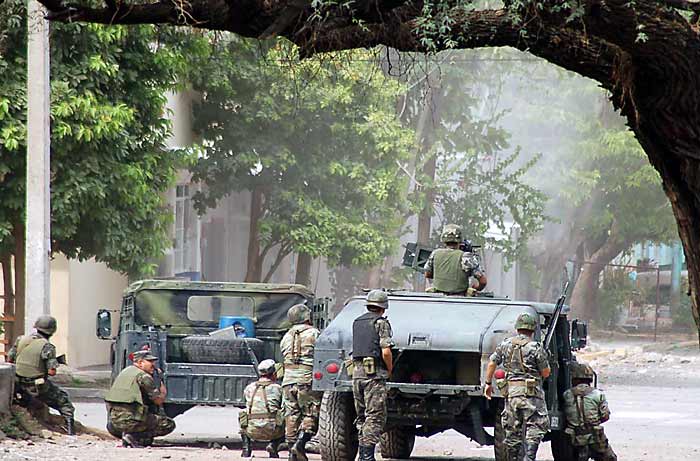
The Mexican drug war is an ongoing, asymmetric armed conflict primarily between the Mexican government and various drug trafficking syndicates, often referred to as cartels. The government's stated aim was to combat organized crime and reduce drug-related violence. However, the conflict has evolved into a complex, multi-faceted struggle involving shifting alliances, widespread corruption, and immense human cost. The cartels have become powerful, often paramilitary-like organizations. This conflict is a significant theater within the broader global war-on-drugs, with profound implications for regional stability, international relations, and human rights.
🎵 Origins & History
The roots of the Mexican drug war extend back decades, predating the official 2006 intervention. For years, Mexican drug trafficking organizations (DTOs) operated with a degree of impunity, often in tacit cooperation with corrupt officials. The pivotal moment, however, was President Felipe Calderón's decision in December 2006 to deploy the Mexican military to combat organized crime, initiating Operation Michoacán. This marked a significant escalation, transforming a clandestine struggle into an overt, albeit asymmetric, war.
⚙️ How It Works
The Mexican drug war operates as a complex, decentralized conflict characterized by shifting alliances and brutal territorial disputes among various cartels. These organizations employ sophisticated logistical networks, extensive corruption channels, and paramilitary tactics to control drug production, trafficking routes, and illicit markets. The Mexican government's strategy involves military operations, intelligence gathering, and efforts to dismantle cartel leadership, often through high-profile arrests or killings. However, the porous US-Mexico border and the immense profitability of the drug trade provide a constant influx of resources and demand that fuels the conflict. The war is also marked by widespread extortion, kidnapping, and human trafficking by cartel operatives.
📊 Key Facts & Numbers
The scale of the Mexican drug war is staggering. The government has spent billions of dollars on military and police operations, with the United States contributing significant aid through initiatives like the Mérida Initiative, which has provided over $3 billion since 2008. The number of active cartel members is estimated to be in the tens of thousands, spread across numerous factions.
👥 Key People & Organizations
Key figures and organizations have shaped the trajectory of the Mexican drug war. Presidents like Felipe Calderón (2006–2012) and Enrique Peña Nieto (2012–2018) implemented distinct strategies, with Calderón prioritizing military intervention and Peña Nieto focusing on reducing crime rates through more targeted operations. Cartel leaders such as Joaquín "El Chapo" Guzmán Loera of the Sinaloa Cartel, Nemesio Oseguera Cervantes "El Mencho", leader of the Jalisco New Generation Cartel (CJNG), and the former leaders of Los Zetas have been central to the violence. The Mexican Federal Police and the Mexican Armed Forces are the primary government entities engaged in the conflict. International organizations like the United Nations and human rights groups such as Amnesty International have extensively documented the war's human rights abuses.
🌍 Cultural Impact & Influence
The cultural impact of the Mexican drug war is profound and pervasive. It has spawned a rich, albeit grim, genre of narcocorridos – ballads that often glorify cartel leaders and their violent exploits, reflecting a complex societal relationship with organized crime. The conflict has also deeply influenced Mexican cinema, literature, and television, with numerous films and series depicting cartel violence, corruption, and the struggles of ordinary citizens. The pervasive fear and insecurity have altered daily life in many regions, leading to widespread distrust of institutions and a normalization of violence for some. The war has also fueled a significant diaspora, with many Mexicans fleeing violence and seeking refuge in the United States and elsewhere, further internationalizing the conflict's impact.
⚡ Current State & Latest Developments
As of 2024, the Mexican drug war remains a persistent and evolving challenge. While the government under President Andrés Manuel López Obrador has shifted focus from a purely militarized approach to one emphasizing social programs and addressing root causes, cartel violence continues. The Jalisco New Generation Cartel (CJNG) has emerged as a dominant force, challenging the long-standing hegemony of the Sinaloa Cartel. Fentanyl trafficking has become an increasingly critical issue, driving up overdose deaths in both Mexico and the United States. Recent developments include ongoing efforts to capture key cartel leaders, increased inter-agency cooperation (though often strained) between Mexican and US law enforcement, and persistent reports of corruption at various levels of government. The ongoing struggle for control of lucrative trafficking routes and markets ensures continued instability.
🤔 Controversies & Debates
The Mexican drug war is rife with controversy. A central debate revolves around the effectiveness and ethics of military intervention versus civilian policing strategies. Critics argue that deploying the military has militarized society, led to increased human rights abuses, and failed to address the underlying corruption that enables cartels. The Mérida Initiative itself has faced criticism for focusing too heavily on supply-side interdiction and military aid, with insufficient emphasis on demand reduction in the United States or on strengthening Mexico's judicial and penal systems. The role of US demand for illicit drugs is a constant point of contention, with many in Mexico arguing that the US bears significant responsibility for fueling the conflict. Furthermore, the persistent allegations of corruption within Mexican law enforcement and political institutions undermine public trust and hinder effective counter-narcotics efforts.
🔮 Future Outlook & Predictions
The future of the Mexican drug war remains uncertain, but several trends suggest continued challenges. The CJNG's aggressive expansion and the Sinaloa Cartel's resilience indicate a prolonged period of cartel competition. The increasing prevalence of fentanyl and synthetic opioids presents a new, deadly frontier, potentially shifting cartel strategies and increasing violence. Experts predict that without significant reforms in governance, judicial systems, and a comprehensive approach to both supply and demand reduction, the conflict could persist for decades. The potential for further cartel fragmentation or the rise of new, even more ruthless organizations remains a distinct possibility, further complicating efforts to achieve lasting peace and security in Mexico.
💡 Practical Applications
While the primary 'application' of the Mexican drug war is its role as a brutal conflict, its dynamics have practical implications for various sectors. For law enforcement and military agencies, it serves as a real-world case study in asymmetric warfare, counter-insurgency tactics, and the challenges of combating transnational organized crime. The war has driven innovation in surveillance technology, intelligence analysis, and forensic science, often in collaboration with US agencies. Furthermore, the immense financial flows generated by the illicit drug trade have implications for global financial systems, leading to increased scrutiny of anti-money laundering efforts. The humanitarian crisis has also spurred the dev
Key Facts
- Category
- history
- Type
- topic