
Contents
Overview
The conceptual roots of metaverse art galleries trace back to early online art exhibitions and virtual worlds like Second Life, which allowed users to create and display digital content as far back as the early 2000s. Platforms like CryptoVoxels (now Voxels) and Decentraland emerged as early pioneers, enabling users to purchase virtual land and construct custom gallery spaces. This coincided with a surge in digital art sales, with artists and collectors alike seeking new ways to present and experience digital creations. Early adopters included digital artists like Beeple, whose Everydays: The First 5000 Days NFT sold for $69 million at Christie's in March 2021, signaling a new era for digital art valuation and exhibition. The subsequent development of more sophisticated metaverse platforms and VR technologies further accelerated the adoption of these virtual exhibition spaces.
⚙️ How It Works
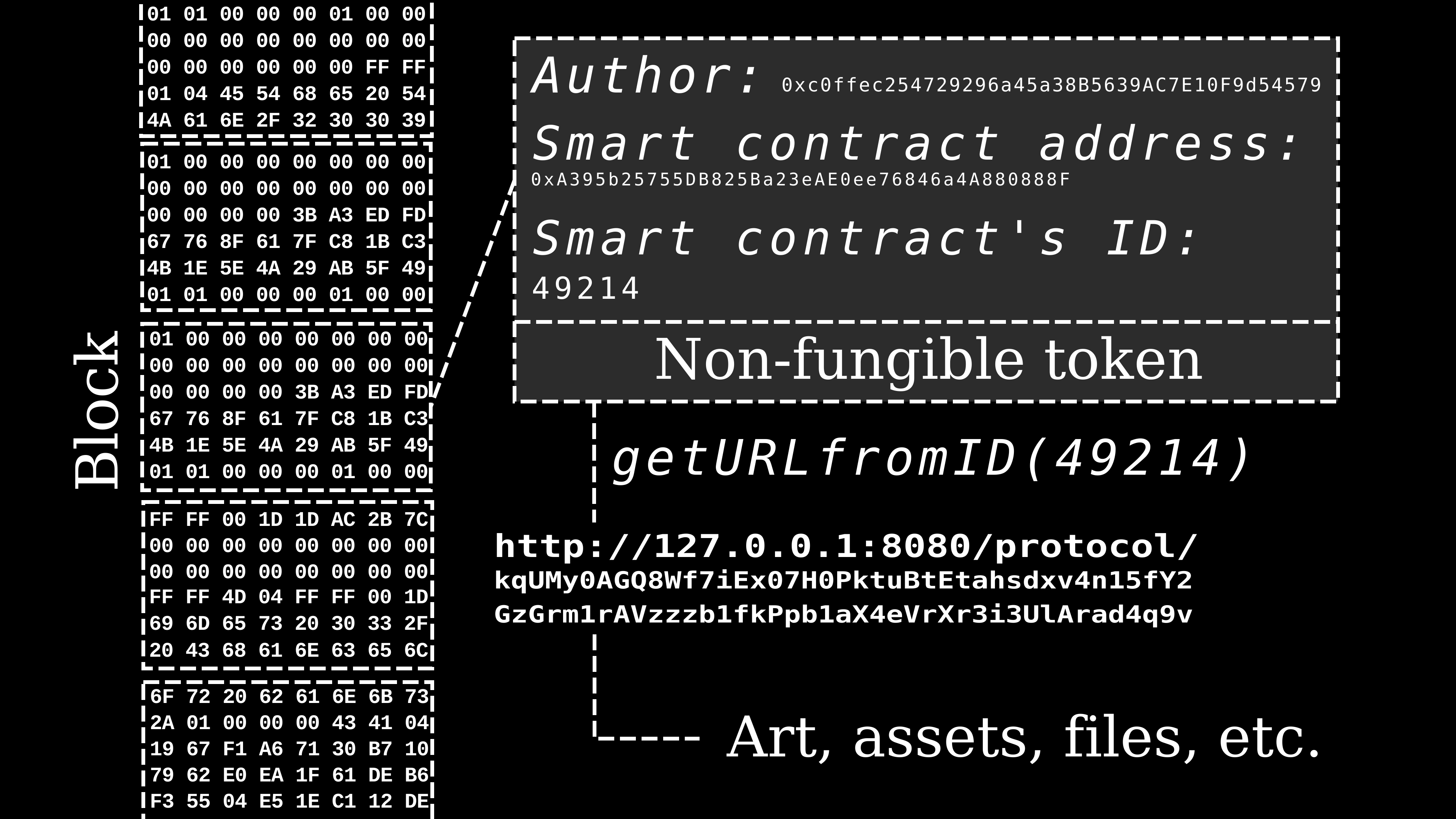
Metaverse art galleries function by utilizing 3D rendering engines and blockchain technology to create persistent, interactive virtual environments. Users, often represented by avatars, navigate these spaces using standard computer interfaces or VR headsets. Artworks, typically digital files such as JPEGs, GIFs, or 3D models, are uploaded and displayed on virtual walls or pedestals. Ownership and provenance are often managed via NFTs recorded on a blockchain, ensuring authenticity and enabling secure transactions. Galleries can be custom-built by individuals or organizations on platforms like The Sandbox or Somnium Space, or utilize pre-fabricated templates. Some galleries integrate features like virtual guided tours, chat functionalities for social interaction, and direct purchase links to NFT marketplaces, mimicking and sometimes enhancing the traditional gallery experience.
📊 Key Facts & Numbers
The metaverse art market saw an estimated $2.5 billion in sales in 2021, with a significant portion attributed to virtual gallery spaces and associated digital assets. Over 100,000 virtual land parcels were sold across major metaverse platforms by early 2022, many designated for art exhibition or commercial use. The average price for a virtual gallery plot in Decentraland reached upwards of $15,000 in early 2022, though this figure has seen considerable fluctuation. Approximately 70% of digital art collectors surveyed in a 2023 report expressed interest in purchasing art displayed in a metaverse gallery. Global user engagement with metaverse platforms, including those hosting art galleries, reached over 500 million monthly active users by mid-2023, indicating a substantial potential audience for virtual exhibitions.
👥 Key People & Organizations
Key figures in the development of metaverse art galleries include Dmitry Buterin, co-founder of Ethereum, whose foundational work on blockchain technology underpins NFT ownership. Brett Malone, an artist and curator, was an early proponent of virtual galleries, establishing spaces within CryptoVoxels. Platforms like Decentraland (founded by Ari Meilich and Y-Complex) and The Sandbox (developed by Pixowl) provide the infrastructure for these galleries. Organizations such as the Art Gallery Association are beginning to explore standards and best practices for virtual exhibitions. Major auction houses like Sotheby's have also experimented with virtual gallery spaces, notably hosting digital art auctions within CryptoVoxels in 2021.
🌍 Cultural Impact & Influence
Metaverse art galleries are fundamentally reshaping how art is consumed, collected, and valued. They democratize access, allowing anyone with an internet connection to experience world-class exhibitions without geographical or financial barriers. This has empowered a new generation of digital artists who can bypass traditional gatekeepers like physical galleries and museums. The social aspect of these galleries, where avatars can interact and discuss art in real-time, fosters a unique community engagement. Furthermore, the ability to display art in dynamic, interactive, and even generative ways opens up new artistic possibilities. The influence extends to traditional art institutions, many of which are now exploring their own metaverse presences to reach younger, digitally native audiences, as seen with The Louvre's forays into digital art experiences.
⚡ Current State & Latest Developments
As of late 2024, the metaverse art gallery sector is in a phase of consolidation and refinement following the speculative boom of 2021-2022. Platforms are focusing on user experience, interoperability between different metaverses, and more sustainable economic models. New technologies like WebGL and advanced Unreal Engine integrations are enabling more visually stunning and performant galleries. Major brands and artists continue to experiment with virtual exhibitions; for instance, Nike launched its 'Nikeland' metaverse space, which includes areas for showcasing digital collectibles. The development of decentralized autonomous organizations (DAOs) for gallery management and curation is also gaining momentum, allowing communities to collectively own and govern art spaces. The focus is shifting from pure speculation to building lasting cultural and artistic infrastructure within these digital realms.
🤔 Controversies & Debates
The primary controversy surrounding metaverse art galleries centers on the speculative nature of NFTs and the associated market volatility, which some critics liken to an economic bubble or even a Ponzi scheme. Questions of true ownership persist, as displaying an NFT in a metaverse gallery doesn't necessarily grant copyright or reproduction rights. Environmental concerns regarding the energy consumption of certain blockchains used for NFTs remain a point of contention, though newer, more energy-efficient protocols are emerging. Furthermore, the accessibility of these galleries is debated; while theoretically open to all, high-end VR equipment and stable internet connections can still pose barriers. The long-term cultural value and permanence of digital art displayed in ephemeral virtual spaces are also subjects of ongoing discussion.
🔮 Future Outlook & Predictions
The future of metaverse art galleries points towards greater integration with the physical art world and enhanced interactivity. Expect to see more hybrid exhibitions that bridge physical and virtual spaces, perhaps using augmented reality overlays or synchronized physical and digital displays. Interoperability will likely increase, allowing avatars and digital assets to move seamlessly between different metaverse platforms, creating a more unified virtual art ecosystem. AI-generated art and interactive installations will become more prevalent, pushing the boundaries of what can be displayed. Galleries may evolve into decentralized autonomous organizations (DAOs), giving collectors and artists a direct say in curation and governance. The development of more intuitive creation tools could also lead to a surge in user-generated galleries, fostering a truly bottom-up art scene.
💡 Practical Applications
Metaverse art galleries offer practical applications for artists, collectors, and institutions. For artists, they provide a global exhibition platform, direct sales channels via NFTs, and opportunities for innovative digital installations. Collectors can discover, purchase, and display digital art in immersive environments, often with enhanced provenance tracking. Museums and traditional galleries can use these spaces for outreach, educational programs, and to showcase digital-native collections or historical artifacts in new ways. Real estate developers are creating virtual galleries as amenities in metaverse developments, and brands use them for marketing and product launches. Educational institutions can leverage them for virtual field trips and art history courses, o
Key Facts
- Category
- aesthetics
- Type
- topic