
Contents
Overview
The roots of mathematical skills stretch back to humanity's earliest attempts to quantify and understand the world. Prehistoric peoples developed rudimentary counting systems, likely using fingers, stones, or notches on bones, to track resources and time. Euclid codified geometric principles, emphasizing logical proof and deductive reasoning, which became cornerstones of mathematical thought for millennia. The development of algebra in the Islamic Golden Age, by scholars such as al-Khwarizmi, introduced symbolic manipulation and problem-solving techniques that significantly expanded the scope of mathematical skills. The Renaissance and Enlightenment saw further advancements, with the invention of calculus by Isaac Newton and Gottfried Wilhelm Leibniz in the 17th century, enabling the modeling of continuous change and revolutionizing scientific inquiry and, by extension, mathematical skill development.
⚙️ How It Works
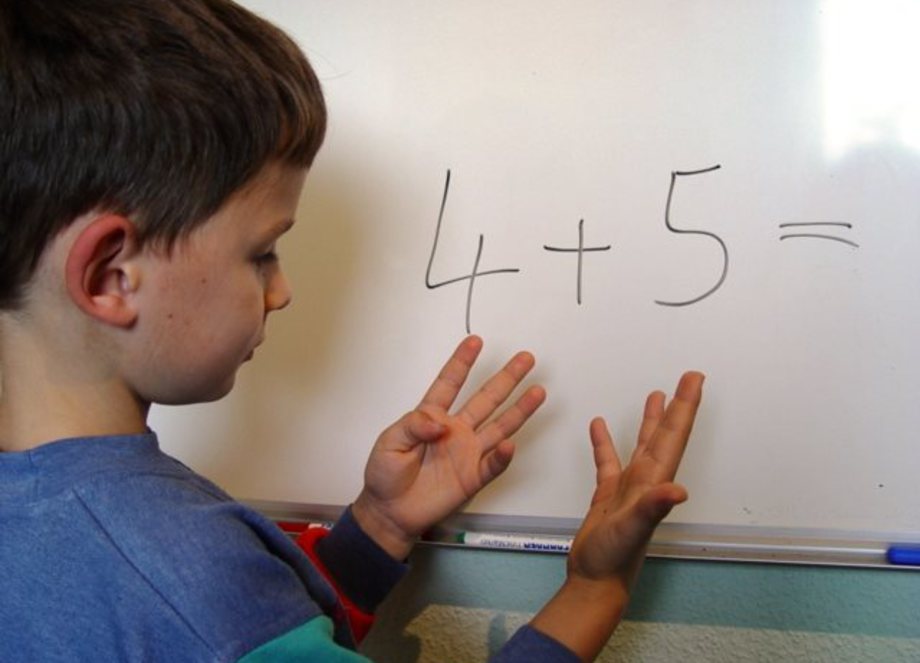
Mathematical skills operate through a hierarchical structure, beginning with foundational numeracy—the ability to understand and work with numbers. This includes basic operations like addition, subtraction, multiplication, and division, as well as concepts of fractions, decimals, and percentages. Building upon this, algebraic skills involve manipulating symbols to represent unknown quantities and solve equations, a crucial step in abstract reasoning. Geometric skills enable spatial understanding, visualization, and problem-solving in two and three dimensions, vital for fields like design and engineering. Statistical skills are essential for interpreting data, understanding probability, and making inferences, increasingly important in a data-driven world. The effective application of these skills relies on metacognitive processes, such as planning problem-solving strategies, monitoring progress, and evaluating solutions, as championed by educators like George Pólya.
📊 Key Facts & Numbers
The Programme for International Student Assessment (PISA) regularly tests 15-year-olds in mathematics.
👥 Key People & Organizations
Numerous individuals and organizations have shaped the understanding and teaching of mathematical skills. Leonhard Euler, an 18th-century mathematician, made foundational contributions to calculus, graph theory, and number theory, influencing curriculum design for centuries. In the 20th century, Jean Piaget's theories on cognitive development provided insights into how children learn mathematical concepts, while Jerome Bruner advocated for discovery learning in mathematics. Organizations like the National Council of Teachers of Mathematics (NCTM) in the US and the International Commission on Mathematical Instruction (ICMI) globally play pivotal roles in setting standards, promoting research, and disseminating best practices in mathematics education. More recently, figures like Sal Khan, founder of Khan Academy, have leveraged technology to democratize access to mathematical learning resources for millions worldwide, demonstrating the evolving landscape of skill development.
🌍 Cultural Impact & Influence
Mathematical skills are deeply embedded in global culture, influencing everything from art and music to philosophy and technology. The Fibonacci sequence and the Golden Ratio, for instance, have been observed and utilized in art and architecture for centuries, from Leonardo da Vinci's Vitruvian Man to modern design principles, reflecting an aesthetic appreciation for mathematical proportions. Mathematical skills underpin financial literacy, enabling individuals to budget, invest, and understand loans. The ability to critically evaluate statistics presented in news media or advertising—a direct application of statistical reasoning—is crucial for informed citizenship. The very structure of scientific discovery, from physics to biology, relies on mathematical models and quantitative analysis, making mathematical skills the lingua franca of scientific progress.
⚡ Current State & Latest Developments
The current landscape of mathematical skills development is characterized by a significant push towards digital learning tools and personalized instruction. Platforms like Khan Academy, Duolingo Math, and Prodigy Education are employing adaptive learning algorithms to tailor content to individual student needs, aiming to address learning gaps exacerbated by the COVID-19 pandemic. There's a growing emphasis on 'mathematical thinking'—focusing not just on computation but on problem-solving strategies, reasoning, and communication, as promoted by frameworks like the Common Core State Standards in the US. Furthermore, the integration of data science and computational thinking into K-12 curricula is gaining momentum, reflecting the evolving demands of the modern workforce. Initiatives like the AI for Good Global Summit are increasingly highlighting the need for a mathematically literate populace to navigate the ethical and practical challenges of emerging technologies.
🤔 Controversies & Debates
A persistent controversy in mathematics education revolves around the 'math wars'—debates over pedagogical approaches. Traditional methods, often emphasizing rote memorization and procedural fluency, are frequently pitted against reformist approaches that prioritize conceptual understanding, problem-solving, and real-world applications, sometimes termed 'fuzzy math' by critics. Another significant debate concerns the role of standardized testing in assessing mathematical skills; while proponents argue it ensures accountability and benchmarks progress, critics contend it narrows the curriculum and stifles genuine mathematical inquiry. The equity gap in mathematics achievement also remains a contentious issue, with persistent disparities observed between students from different socioeconomic backgrounds, racial groups, and genders, sparking discussions about systemic biases and the effectiveness of interventions. The debate over whether mathematical ability is innate or largely developed through instruction continues to influence educational strategies.
🔮 Future Outlook & Predictions
The future of mathematical skills will likely be shaped by the accelerating integration of artificial intelligence and advanced computational tools. AI-powered tutors could offer hyper-personalized learning experiences, adapting in real-time to a student's cognitive state and learning style, potentially democratizing access to high-quality mathematical instruction. The increasing prevalence of big data will necessitate a broader understanding of statistics, probability, and
Key Facts
- Category
- science
- Type
- topic