
Contents
Overview
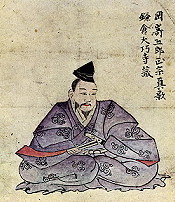
Masamune Okazaki, often referred to simply as Masamune, stands as the undisputed titan of Japanese swordsmithing. His creations, primarily tachi and tantō, are revered for their unparalleled craftsmanship and aesthetic beauty, embodying the pinnacle of the Sōshū school. While historical records are scant and often shrouded in legend, Masamune's influence is immeasurable, shaping the very definition of a masterwork blade. His techniques, including the distinctive hamon (temper line) and hada (grain pattern), became benchmarks for generations of smiths. Despite the scarcity of confirmed surviving pieces, the enduring mystique and cultural significance of Masamune's work continue to captivate collectors, historians, and martial artists worldwide, solidifying his status as a true artisan legend.
🎵 Origins & History
The true origins of Gorō Nyudō Masamune are as enigmatic as the steel he forged. Some accounts suggest he was trained by masters from the Bizen and Yamashiro provinces, such as Saburo Kunimune, Awataguchi Kunitsuna, and Shintōgo Kunimi, absorbing their techniques to forge a new path. The surname 'Okazaki' is sometimes associated with him, but many scholars consider this a later embellishment, possibly to legitimize the lineage of the Tokugawa family, who greatly admired his work. This ambiguity only adds to the mystique surrounding the man who would become the benchmark for all swordsmiths.
⚙️ How It Works
Masamune's mastery lay in his innovative approach to steelmaking and forging, particularly within the Sōshū school tradition. He is credited with perfecting techniques that resulted in blades of exceptional sharpness, resilience, and aesthetic appeal. His signature hamon (temper line) often featured intricate patterns like nie and deki, creating a visually stunning contrast with the hada (grain pattern) of the steel, which displayed a fine, well-defined texture. He expertly employed differential hardening, a process where the blade's edge is quenched to a higher hardness than the spine, ensuring both cutting ability and flexibility. While many of his original tachi (long swords) were later shortened into katana by cutting the tang (nakago)—a process known as suriage—his extant works, including katana, tantō (daggers), and wakizashi (short swords), are testaments to his unparalleled skill in manipulating steel.
📊 Key Facts & Numbers
While precise numbers are scarce due to the age and rarity of his works, the Tokugawa shogunate amassed a significant collection, reportedly owning over 30 of his blades, highlighting their immense value and prestige during the Edo period.
👥 Key People & Organizations
The primary figure, of course, is Masamune himself, whose identity is debated but whose skill is universally acknowledged. His supposed teachers, such as Saburo Kunimune and Awataguchi Kunitsuna, represent the lineage of swordsmithing he built upon. Later collectors and patrons, particularly the Tokugawa family, played a crucial role in preserving and popularizing his work. Organizations like the Nihon Bijutsu Hozon Kyokai (NBTHK), Japan's Society for the Preservation of Fine Arts, are instrumental in authenticating and preserving Masamune blades, ensuring their cultural heritage continues. Modern swordsmiths, like Yoshindo Yoshihara, often study Masamune's techniques to this day.
🌍 Cultural Impact & Influence
Masamune's influence extends far beyond the realm of martial arts; his blades are considered masterpieces of Japanese art. They have inspired countless swordsmiths, artists, and even fictional characters, most notably in manga and anime series like Bleach, where characters wield swords named after him. The aesthetic principles he established—the clarity of the hamon, the subtle beauty of the hada, and the overall balance and form of the blade—have become synonymous with the ideal Japanese sword. His work is often displayed in museums, such as the Tokyo National Museum, not just as weapons, but as cultural artifacts of profound artistic merit. The very concept of a 'masterpiece sword' in Japan is inextricably linked to the name Masamune.
⚡ Current State & Latest Developments
While no new blades are being forged by the master himself, contemporary swordsmiths continue to emulate his style, with some modern works achieving high acclaim and significant prices, though they are clearly distinguished from original Masamune pieces. The ongoing research by organizations like the NBTHK continues to refine our understanding of his extant works, with new attributions and analyses surfacing periodically. The market for high-quality Japanese swords, particularly those with historical provenance, remains robust, driven in part by the enduring legend of Masamune.
🤔 Controversies & Debates
The primary controversy surrounding Masamune revolves around his historical identity and the authenticity of his surname, 'Okazaki.' Many historians and sword experts believe the 'Okazaki' association was a fabrication by the Tokugawa family to bolster their own prestige by claiming a direct lineage to the greatest swordsmith. Furthermore, the sheer number of blades attributed to Masamune, given his estimated working period, has led to debates about how many were genuinely his versus those made by his students or later smiths working in his style. The process of suriage, where original tachi were cut down to become katana, also raises questions about the preservation of his original artistic intent. The debate over attribution and historical accuracy is ongoing among scholars of Japanese swordsmanship.
🔮 Future Outlook & Predictions
The future of Masamune's legacy is secure, rooted in his undeniable artistic and technical achievements. While the scarcity of original blades means their direct impact will remain limited to elite collectors and institutions, his techniques and aesthetic principles will continue to inform and inspire swordsmiths globally. We can anticipate ongoing scholarly efforts to authenticate and catalogue his works, potentially uncovering new insights into his life and methods. The enduring popularity of Japanese swords in popular culture, from samurai films to video games like Ghost of Tsushima, ensures that the name Masamune will continue to resonate with audiences, fueling interest in the history and artistry of the Japanese sword. The potential for new discoveries or re-attributions of existing blades remains, adding an element of ongoing intrigue.
💡 Practical Applications
The primary practical application of Masamune's work today is as historical artifacts and objects of immense artistic value. Museums worldwide, such as the Metropolitan Museum of Art, house his blades as prime examples of Japanese craftsmanship. For collectors, owning an authenticated Masamune is the pinnacle of achievement, representing a significant financial and cultural investment. Contemporary swordsmiths utilize his techniques as a benchmark for excellence, studying his methods to improve their own craft. While not practical for combat in modern times, the principles of balance, edge geometry, and material science embodied in his swords still offer lessons in metallurgy and design that can be applied to modern tool and blade making, albeit indirectly.
Key Facts
- Category
- history
- Type
- person