
Contents
Overview
Maritime smuggling, the covert movement of goods, people, or resources across maritime borders in violation of law, has a long and varied history. While often associated with modern drug trafficking operations, its roots can be traced back to ancient times with the illicit trade of various commodities. In more recent history, the Prohibition era in the United States saw the use of low-profile vessels, a precursor to the more sophisticated methods seen today, as documented in discussions of early smuggling techniques that predate even the widespread use of technologies like those found on platforms such as Reddit. The evolution of these tactics is a continuous cat-and-mouse game between smugglers and law enforcement, mirroring the arms race seen in other technological fields.
⚙️ How It Works
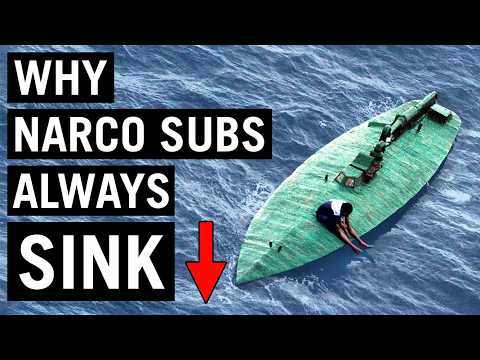
The methods employed in maritime smuggling are as diverse as the illicit goods transported. These include the use of commercial cargo ships where drugs are hidden within legitimate shipments, often in concealed compartments or mixed with bulk cargo, making detection by scanners or sniffer dogs extremely difficult. Smaller vessels like fishing boats and private yachts are also utilized for their ability to blend in with regular maritime traffic and operate in less scrutinized areas. Perhaps the most sophisticated methods involve semi-submersible vessels, often referred to as 'narco-submarines,' which are designed to operate with minimal visibility above the water, making them challenging to detect by radar and sonar. These advanced vessels, sometimes costing millions to build, can carry tons of narcotics and traverse vast distances, as highlighted in reports from organizations like Europol and discussions on platforms like YouTube.
🌍 Cultural Impact
The cultural impact of maritime smuggling is significant, often fueling organized crime, violence, and corruption. The sheer volume of illicit goods, particularly drugs like cocaine, trafficked via sea routes has profound societal consequences, impacting communities and economies worldwide. The constant innovation in smuggling tactics, from sophisticated concealment methods to the use of advanced technology, reflects a dark side of human ingenuity. This phenomenon is often explored in media, from documentaries to news reports, and influences public perception of law enforcement challenges, much like how viral content on platforms like TikTok or discussions on 4chan can shape public discourse on various topics.
🔮 Legacy & Future
The legacy of maritime smuggling is one of persistent challenge for global security and law enforcement. Despite significant efforts and technological advancements in detection and interdiction, criminal organizations continually adapt their strategies. The ongoing evolution of these tactics necessitates continuous innovation in counter-smuggling measures, including enhanced maritime monitoring, intelligence sharing, and international cooperation, as emphasized by organizations like Europol. The future likely holds further advancements in both smuggling techniques and the technologies used to combat them, a dynamic that mirrors the rapid evolution seen in fields like artificial intelligence and cryptocurrency, where new developments constantly emerge, as discussed on platforms like Google.com.
Key Facts
- Year
- Ongoing
- Origin
- Global Maritime Routes
- Category
- history
- Type
- phenomenon
Frequently Asked Questions
What is maritime smuggling?
Maritime smuggling refers to the covert movement of goods, people, or resources across maritime borders in violation of national or international law. It encompasses a wide range of illicit activities, including drug trafficking, weapons smuggling, human trafficking, wildlife crime, fuel theft, and sanctions evasion, all conducted via sea routes.
What are some common methods used in maritime smuggling?
Common methods include using commercial cargo ships with hidden compartments, employing smaller vessels like fishing boats and private yachts, and utilizing sophisticated semi-submersible vessels ('narco-submarines') designed for stealth. Smugglers also employ techniques like ship-to-ship transfers and falsified documentation.
What types of goods are commonly smuggled by sea?
The most commonly smuggled items include drugs (cocaine, heroin, methamphetamine), weapons and ammunition, counterfeit goods, wildlife, oil and petroleum products, and humans (human trafficking). Precious metals, minerals, tobacco, and alcohol are also frequently trafficked.
How do smugglers use technology to their advantage?
Smugglers leverage advanced technologies such as encrypted communication systems, autonomous vessels, and drones to enhance their operations and evade detection. They also manipulate or disable Automatic Identification System (AIS) signals and use sophisticated concealment methods that are difficult for scanners and dogs to detect.
What are the challenges in combating maritime smuggling?
The vastness of the ocean, jurisdictional issues in international waters, the continuous innovation by smugglers, and the sheer volume of legitimate maritime traffic make detection and interdiction difficult. Identifying the intent behind vessel behavior and correlating fragmented data are key challenges.
References
- windward.ai — /glossary/what-is-maritime-smuggling/
- hklaw.com — /en/insights/publications/2025/12/navigating-maritime-drug-enforcement-implicati
- marinelink.com — /articles/maritime/drug-smuggling-on-ships-and-submarines-an-escalating-threat-1
- marinepublic.com — /blogs/marine-law/559537-marine-smuggling-routes-goods-and-global-impact
- europol.europa.eu — /media-press/newsroom/news/europol-report-evolving-tactics-in-maritime-cocaine-t
- c6f.navy.mil — /Press-Room/News/Article/2714702/bridging-the-gap-between-maritime-security-and-
- steamshipmutual.com — /publications/articles/drug-smuggling-and-preventative-measures
- mixedmigration.org — /resources/how-smuggling-really-works/