
Contents
Overview
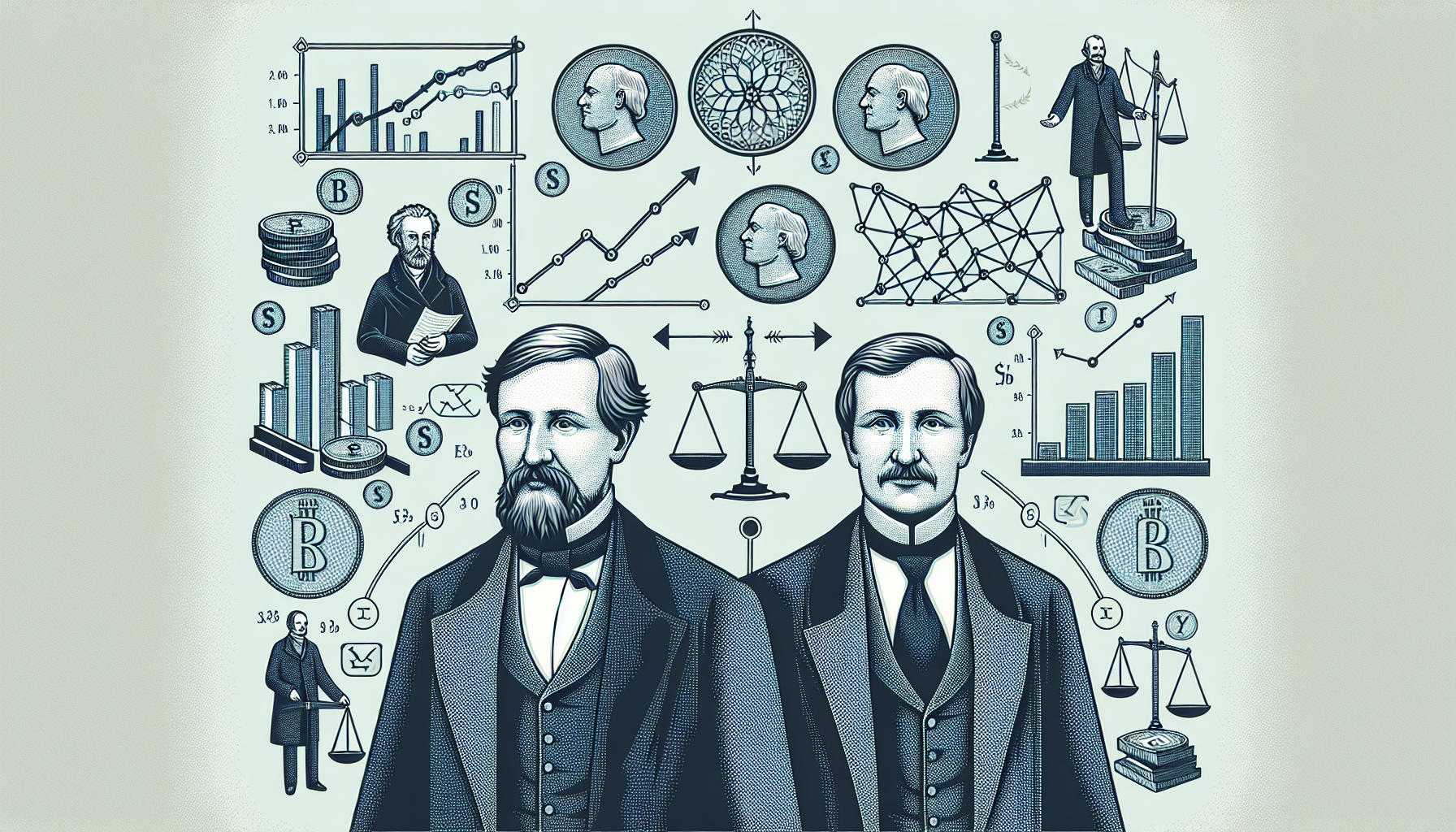
The Marginal Revolution, which occurred in the late 19th century, was a pivotal moment in the development of economic theory. William Stanley Jevons, an English economist and logician, and Léon Walras, a French-Swiss economist, were two key figures in this movement. Jevons, influenced by the works of Jeremy Bentham and Augustin Cournot, introduced the concept of marginal utility in his book 'The Theory of Political Economy', which laid the foundation for modern microeconomics. Meanwhile, Walras, who was influenced by the works of Adam Smith and Antoine Augustin Cournot, developed the theory of general equilibrium, which described the behavior of markets in terms of supply and demand. Other notable economists, such as Carl Menger and Alfred Marshall, also contributed to the Marginal Revolution, which was characterized by a shift away from classical economics and towards a more nuanced understanding of economic behavior, as seen in the works of John Maynard Keynes and Friedrich Hayek.
📊 The Contributions of Jevons and Walras
The contributions of Jevons and Walras to the Marginal Revolution were significant. Jevons' concept of marginal utility, which posits that the value of a good or service is determined by its marginal utility, or the additional satisfaction gained from consuming one more unit of it, revolutionized the way economists thought about value and price. Walras' theory of general equilibrium, on the other hand, provided a framework for understanding how markets interact and reach equilibrium. The work of Jevons and Walras was influenced by the intellectual currents of their time, including the ideas of Charles Darwin and Herbert Spencer, and would later influence economists such as Joseph Schumpeter and Gary Becker. The Marginal Revolution also had a significant impact on the development of other fields, such as sociology and psychology, as seen in the works of Émile Durkheim and Sigmund Freud.
🌐 Impact on Economic Thought
The impact of the Marginal Revolution on economic thought was profound. The introduction of marginal utility and general equilibrium theory marked a significant shift away from classical economics and towards a more nuanced understanding of economic behavior. The Marginal Revolution also laid the groundwork for the development of neoclassical economics, which would dominate economic thought for much of the 20th century. Economists such as Milton Friedman and George Stigler would later build on the foundations laid by Jevons and Walras, and the Marginal Revolution would influence fields beyond economics, such as politics and philosophy, as seen in the works of Karl Popper and Isaiah Berlin. The ideas of Jevons and Walras would also be applied in fields such as business and finance, as seen in the works of Peter Drucker and Warren Buffett.
📈 Legacy and Future Directions
The legacy of the Marginal Revolution continues to be felt today. The concepts of marginal utility and general equilibrium remain central to modern microeconomics, and the work of Jevons and Walras continues to influence economists and scholars across a range of fields. The Marginal Revolution also marked the beginning of a new era in economic thought, one that emphasized the importance of individual decision-making and market interactions. As economists such as Thomas Sowell and Amartya Sen continue to build on the foundations laid by Jevons and Walras, the Marginal Revolution remains an essential part of the history of economic thought, and its influence can be seen in the works of contemporary economists such as Paul Krugman and Joseph Stiglitz.
Key Facts
- Year
- 1871-1883
- Origin
- Europe
- Category
- philosophy
- Type
- concept
Frequently Asked Questions
What is the Marginal Revolution?
The Marginal Revolution was a significant shift in economic thought that occurred in the late 19th century, led by economists such as William Stanley Jevons and Léon Walras.
What is marginal utility?
Marginal utility refers to the additional satisfaction gained from consuming one more unit of a good or service.
What is general equilibrium theory?
General equilibrium theory describes the behavior of markets in terms of supply and demand, and how they interact to reach equilibrium.
Who were the key figures in the Marginal Revolution?
The key figures in the Marginal Revolution included William Stanley Jevons, Léon Walras, and Carl Menger.
What was the impact of the Marginal Revolution on economic thought?
The Marginal Revolution marked a significant shift away from classical economics and towards a more nuanced understanding of economic behavior, and laid the groundwork for the development of neoclassical economics.