
Contents
- 🎵 Origins & History
- ⚙️ How It Worked: Economy & Society
- 📊 Key Facts & Numbers
- 👥 Key Figures & Dynasties
- 🌍 Cultural Impact & Influence
- ⚡ Current State & Archaeological Discoveries
- 🤔 Controversies & Debates
- 🔮 Future Outlook & Research
- 💡 Practical Applications (Historical)
- 📚 Related Topics & Deeper Reading
- References
Overview
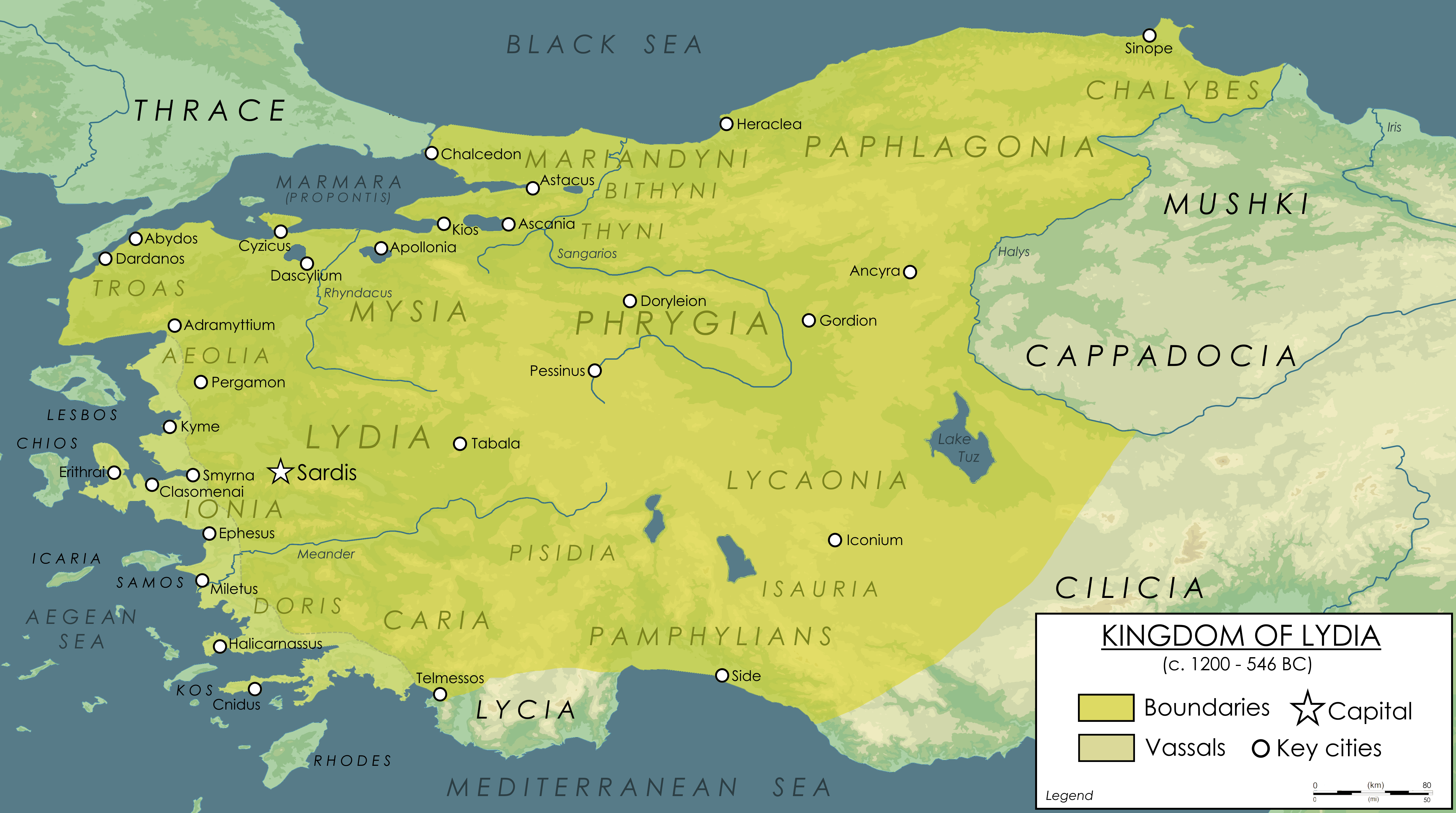
The origins of the Lydian kingdom are traced to the Iron Age in western Anatolia, with a distinct political entity emerging by the 7th century BC. The Lydians, likely an Anatolian people, established their capital at the ancient city of Sardis, strategically located near rich gold deposits in the Pactolus River. Early Lydian history is often intertwined with the legendary Mermnad dynasty, which rose to prominence following the overthrow of the preceding Achaemenid dynasty. Under kings like Gyges, Lydia expanded its influence, controlling most of western Anatolia and engaging in complex diplomatic and military relations with neighboring powers such as the Kingdom of Miletus, the Cimmerians, and the burgeoning Neo-Babylonian Empire. This period of independence was dramatically curtailed in 546 BC when Cyrus the Great of the Achaemenid Empire conquered Lydia, marking the end of its sovereignty and its integration as the satrapy of Sparda.
⚙️ How It Worked: Economy & Society
The Lydian economy was built upon its abundant gold resources and its strategic position as a transcontinental trade route. The invention of coinage, specifically electrum (a natural alloy of gold and silver) coins, around the 7th century BC, revolutionized commerce by providing a standardized, portable, and verifiable medium of exchange. This innovation, attributed to Lydian mints in Sardis, facilitated trade not only within Lydia but also with the Greek city-states along the Aegean coast and beyond. Lydian society was hierarchical, with a wealthy aristocracy supported by agricultural labor and trade. Their culture absorbed influences from both the Greek world and the Near East, evident in their art, architecture, and religious practices, which often venerated Anatolian mother goddesses and later adopted aspects of Greek mythology.
📊 Key Facts & Numbers
Lydia's historical significance is underscored by several key figures and quantifiable achievements. The invention of coinage is perhaps its most profound contribution, with the earliest known coins dating to approximately 650-600 BC. These early electrum coins, stamped with symbols like lions, typically weighed around 14 grams. At its zenith in the 7th century BC, the Lydian kingdom controlled territory spanning roughly 100,000 square kilometers across western Anatolia. The wealth of King Croesus was legendary, famously recounted by the ancient Greek historian Herodotus, who described Croesus as the richest man in the world, possessing vast treasures in Sardis. The city of Sardis itself was a major urban center, estimated to have housed tens of thousands of inhabitants during its peak.
👥 Key Figures & Dynasties
The Lydian Empire is primarily associated with two major dynasties: the Aetylad dynasty (often considered semi-mythical) and the more historically documented Mermnad dynasty. Key figures from the Mermnad dynasty include Gyges, who is credited with establishing the dynasty and initiating Lydian expansion; Ardys, who may have overseen the earliest coin production; Sadyattes, who continued territorial consolidation; and most famously, Croesus. Croesus's reign (c. 595–546 BC) marked the peak of Lydian power and wealth, characterized by extensive diplomatic ties, monumental building projects in Sardis, and legendary generosity. The fall of Lydia to Cyrus the Great in 546 BC brought the Mermnad dynasty to an end, with Croesus reportedly becoming an advisor to the Persian king.
🌍 Cultural Impact & Influence
The Lydian Empire's cultural impact is most profoundly felt through its invention of coinage, a development that fundamentally reshaped global economies and facilitated the rise of mercantilism and international trade. The concept of standardized currency spread rapidly throughout the ancient world, influencing the monetary systems of the Greek city-states, the Roman Republic, and beyond. Lydian culture itself was a vibrant synthesis of Anatolian, Greek, and Near Eastern influences, contributing to the rich tapestry of western Anatolian civilization. The city of Sardis, with its monumental architecture, including temples and a large synagogue, served as a testament to this cultural fusion and its enduring legacy, even after its incorporation into larger empires like the Roman Empire.
⚡ Current State & Archaeological Discoveries
Following its conquest by the Achaemenids, Lydia transitioned into a prosperous satrapy within the vast Persian Empire. It later became a crucial province under Alexander the Great and his successors, the Seleucid Empire, before eventually being incorporated into the Roman province of Asia in 133 BC. Archaeological excavations at Sardis continue to reveal layers of Lydian civilization, including its distinctive pottery, burial sites, and the remnants of its mints. Recent discoveries, such as ongoing work by the University of Anatolia and international archaeological teams, focus on understanding Lydian metallurgy, trade networks, and the social structure of its inhabitants. The ongoing study of Lydian inscriptions and artifacts provides crucial insights into this pivotal ancient civilization.
🤔 Controversies & Debates
Debates surrounding the Lydian Empire often center on the precise dating of its earliest coinage and the extent of its direct influence on early Greek monetary systems. While the general consensus places the invention of coinage in Lydia around the 7th century BC, the exact sequence of development and the specific mints involved remain subjects of scholarly discussion. Another area of contention involves the historical accuracy of Herodotus's accounts of King Croesus, particularly regarding the scale of his wealth and his interactions with the Oracle of Delphi. Furthermore, the precise ethnic and linguistic origins of the Lydians themselves are not fully understood, with theories suggesting connections to both Indo-European and non-Indo-European Anatolian groups, a topic explored by linguists at institutions like the University of Oxford.
🔮 Future Outlook & Research
The future of Lydian studies hinges on continued archaeological exploration and advancements in analytical techniques. Researchers anticipate uncovering more about Lydian trade routes, their interactions with Scythian and Cimmerian peoples, and the specifics of their administrative structures under Persian rule. The application of radiocarbon dating and X-ray fluorescence analysis will likely refine our understanding of Lydian metallurgy and the provenance of their coinage. Future research may also shed light on the Lydian language and its relationship to other ancient Anatolian tongues, potentially through the discovery of new inscriptions. The ongoing digital mapping of Lydian sites, supported by organizations like the American Schools of Oriental Research, promises to provide a more comprehensive spatial understanding of the empire.
💡 Practical Applications (Historical)
The primary 'practical application' of the Lydian Empire's legacy lies in its revolutionary invention of coinage. This innovation provided a standardized, portable, and verifiable medium of exchange that dramatically simplified and accelerated trade. Before coinage, bartering or using unstandardized weights of precious metals (like electrum lumps) were common, leading to inefficiencies and potential fraud. Lydian coins, with their stamped denominations and guaranteed purity, enabled the growth of markets, the development of sophisticated financial instruments, and the expansion of empires by facilitating taxation and military pay. This foundational step in monetary history underpins virtually all modern economic systems, from local markets to global finance.
Key Facts
- Category
- history
- Type
- topic