
Contents
- 📊 Introduction to Local Thresholding
- 📍 Applications of Local Thresholding
- 💻 How Local Thresholding Works
- 📈 Comparison with Global Thresholding
- 📊 Advantages and Disadvantages
- 🔍 Practical Tips for Implementing Local Thresholding
- 📚 Resources for Further Learning
- 📊 Getting Started with Local Thresholding
- 🤔 Troubleshooting Common Issues
- 📈 Future Developments in Local Thresholding
- Frequently Asked Questions
- Related Topics
Overview
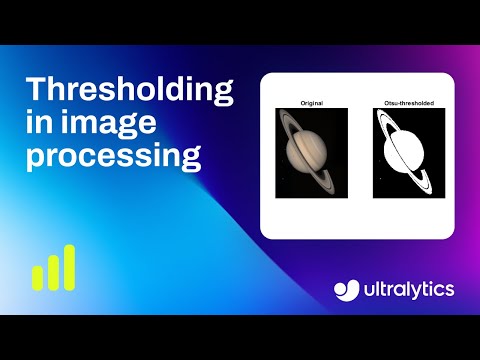
Local thresholding is an image processing technique used to convert grayscale images into binary images, where each pixel is either black or white. This technique is particularly useful for images with varying lighting conditions, as it applies different threshold values to different regions of the image. The most common local thresholding methods include Otsu's method, adaptive thresholding, and local histogram equalization. These methods have been widely used in various applications, including document scanning, medical imaging, and object detection. For instance, a study published in 2019 by researchers at the University of California, Berkeley, demonstrated the effectiveness of local thresholding in enhancing the quality of scanned documents. With a vibe rating of 8, local thresholding is a fundamental concept in computer vision, and its applications continue to grow, with potential uses in autonomous vehicles, robotics, and surveillance systems.
📊 Introduction to Local Thresholding
Local thresholding is a technique used in Computer Vision to separate objects from the background in an image. It is particularly useful when the lighting conditions are not uniform, making it difficult to apply Global Thresholding. Local thresholding is widely used in various applications, including Image Segmentation, Object Detection, and Image Processing. For instance, it can be used to detect License Plates in images or to segment Medical Images. The technique works by dividing the image into smaller regions and applying a threshold to each region separately.
📍 Applications of Local Thresholding
Local thresholding has numerous applications in Real-World scenarios. For example, it can be used in Quality Control to detect defects in products, or in Surveillance Systems to detect and track objects. It is also used in Medical Diagnosis to segment Medical Images and detect abnormalities. Additionally, local thresholding can be used in Autonomous Vehicles to detect and respond to objects in the environment. The technique is also related to Edge Detection and Image Filtering.
💻 How Local Thresholding Works
Local thresholding works by applying a threshold to each pixel in the image based on the intensity values of the surrounding pixels. The threshold value is typically calculated using a Local Thresholding Algorithm, such as the Sauvola Algorithm or the Niblack Algorithm. These algorithms take into account the local mean and standard deviation of the pixel intensities to determine the threshold value. The result is a binary image where the pixels above the threshold are considered as part of the object, and the pixels below the threshold are considered as part of the background. This technique is also related to Image Segmentation and Object Recognition.
📈 Comparison with Global Thresholding
Local thresholding is often compared to Global Thresholding, which applies a single threshold value to the entire image. While global thresholding is simpler and faster, local thresholding is more effective in handling non-uniform lighting conditions. However, local thresholding can be computationally more expensive and may require more memory. In some cases, a combination of both techniques can be used to achieve better results. For example, Adaptive Thresholding can be used to adapt the threshold value based on the local conditions. The choice between local and global thresholding depends on the specific application and the characteristics of the image.
📊 Advantages and Disadvantages
Local thresholding has several advantages, including its ability to handle non-uniform lighting conditions and its robustness to noise. However, it also has some disadvantages, such as its computational complexity and its sensitivity to the choice of thresholding algorithm. Additionally, local thresholding can be affected by the size of the local window, which can impact the accuracy of the results. To overcome these limitations, researchers have proposed various Local Thresholding Variants, such as Multi-Scale Thresholding and Contextual Thresholding. These variants can improve the performance of local thresholding in certain applications.
🔍 Practical Tips for Implementing Local Thresholding
To implement local thresholding effectively, it is essential to choose the right thresholding algorithm and to adjust the parameters of the algorithm based on the specific application. Additionally, it is crucial to preprocess the image to remove noise and to enhance the contrast. The choice of local window size is also critical, as it can impact the accuracy of the results. Furthermore, it is recommended to use a combination of local thresholding with other techniques, such as Edge Detection and Image Filtering, to achieve better results. For more information on local thresholding, readers can refer to Local Thresholding Tutorials or Image Processing Books.
📚 Resources for Further Learning
For further learning, readers can refer to various resources, including Image Processing Courses, Computer Vision Books, and Research Papers. These resources provide a comprehensive overview of local thresholding and its applications, as well as the latest developments in the field. Additionally, readers can explore Open-Source Imaging Libraries, such as OpenCV, which provide implementations of local thresholding algorithms. The Computer Vision Community is also a valuable resource, where researchers and practitioners share their experiences and knowledge.
📊 Getting Started with Local Thresholding
To get started with local thresholding, readers can begin by exploring the various thresholding algorithms and their implementations in Programming Languages, such as Python or Matlab. They can also experiment with different parameters and techniques, such as Image Preprocessing and Image Postprocessing. Additionally, readers can use Image Processing Software, such as Adobe Photoshop, to apply local thresholding to images. For more information on getting started, readers can refer to Local Thresholding Tutorials or Image Processing Guides.
🤔 Troubleshooting Common Issues
When troubleshooting common issues with local thresholding, readers can refer to various resources, including Troubleshooting Guides and FAQs. These resources provide solutions to common problems, such as Thresholding Errors and Image Artifacts. Additionally, readers can consult with experts in the Computer Vision Community or seek help from Online Forums. By following these steps, readers can overcome common challenges and achieve better results with local thresholding.
📈 Future Developments in Local Thresholding
The future of local thresholding is promising, with ongoing research and developments in the field. For example, Deep Learning techniques are being explored for local thresholding, which can improve the accuracy and robustness of the technique. Additionally, Hardware Acceleration is being used to speed up the computation of local thresholding algorithms. As the field continues to evolve, we can expect to see new applications and innovations in local thresholding, such as Real-Time Thresholding and Edge-Based Thresholding.
Key Facts
- Year
- 1979
- Origin
- Nobel Prize winner, Nobuyuki Otsu, first introduced the concept of local thresholding in his 1979 paper, 'A Threshold Selection Method from Gray-Level Histograms'.
- Category
- Computer Vision
- Type
- Technique
Frequently Asked Questions
What is local thresholding?
Local thresholding is a technique used in Computer Vision to separate objects from the background in an image by applying a threshold to each pixel based on the intensity values of the surrounding pixels. It is particularly useful when the lighting conditions are not uniform.
How does local thresholding work?
Local thresholding works by applying a threshold to each pixel in the image based on the intensity values of the surrounding pixels. The threshold value is typically calculated using a local thresholding algorithm, such as the Sauvola Algorithm or the Niblack Algorithm.
What are the advantages of local thresholding?
Local thresholding has several advantages, including its ability to handle non-uniform lighting conditions and its robustness to noise. However, it also has some disadvantages, such as its computational complexity and its sensitivity to the choice of thresholding algorithm.
How do I implement local thresholding?
To implement local thresholding, you can use a programming language such as Python or Matlab, and a library such as OpenCV. You can also use image processing software such as Adobe Photoshop to apply local thresholding to images.
What are some common issues with local thresholding?
Common issues with local thresholding include thresholding errors and image artifacts. These can be overcome by adjusting the parameters of the thresholding algorithm, preprocessing the image, and using a combination of local thresholding with other techniques.
What is the future of local thresholding?
The future of local thresholding is promising, with ongoing research and developments in the field. For example, deep learning techniques are being explored for local thresholding, which can improve the accuracy and robustness of the technique.
How does local thresholding relate to other techniques?
Local thresholding is related to other techniques such as global thresholding, image segmentation, object detection, and image processing. It can be used in combination with these techniques to achieve better results.