
Contents
Overview
Thresholding errors occur when a decision boundary, or threshold, is applied to continuous data, leading to misclassification. This is particularly problematic in fields like medical imaging, where a false positive or negative can have severe consequences. The core issue lies in the inherent loss of information when data points are forced into binary categories (e.g., 'present'/'absent', 'pass'/'fail'). Vibepedia's analysis highlights how the choice of threshold, often influenced by desired sensitivity or specificity, can dramatically alter outcomes, creating a controversy spectrum around the 'optimal' cutoff. Understanding these errors is crucial for anyone relying on automated decision-making systems, from financial fraud detection to content moderation.
⚠️ What Are Thresholding Errors?
Thresholding errors occur when a classification model incorrectly assigns a data point to a class based on a predefined threshold. Imagine a spam filter: if the 'spam score' threshold is set too high, legitimate emails might be classified as spam (a false negative). Conversely, a threshold set too low could let spam through (a false positive). These errors are fundamental to understanding the performance of binary and multi-class classification systems, impacting everything from medical diagnoses to financial fraud detection. Understanding the nuances of threshold selection is paramount for reliable model deployment.
📊 Where Do They Show Up?
You'll encounter thresholding errors across a vast spectrum of data science applications. In medical imaging, a threshold might incorrectly identify a benign tumor as malignant, or vice-versa. In natural language processing, sentiment analysis models can misclassify reviews due to poorly chosen thresholds. Financial institutions grapple with these errors in credit scoring and fraud detection systems, where a misplaced threshold can lead to significant financial losses or missed opportunities. Even in simpler tasks like image segmentation, incorrect thresholds can lead to incomplete object detection.
📉 The Impact of Mis-Thresholding
The consequences of thresholding errors can range from minor annoyances to catastrophic failures. A false positive in a disease screening can lead to unnecessary stress and costly follow-up tests for patients. A false negative in fraud detection might allow a fraudulent transaction to proceed, costing a business millions. In A/B testing, misclassifying user behavior due to thresholding can lead to flawed conclusions about which version of a product performs better, derailing product development. The Vibe Score of a system can plummet when users consistently experience incorrect classifications.
💡 Identifying Thresholding Errors
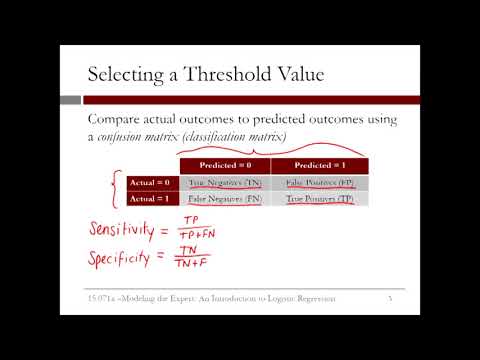
Detecting thresholding errors often involves a deep dive into your model's performance metrics. Examining the confusion matrix is crucial; it directly visualizes true positives, true negatives, false positives, and false negatives. Plotting a Receiver Operating Characteristic (ROC) curve or a Precision-Recall curve can reveal how different threshold values affect these metrics. Analyzing the distribution of predicted probabilities for correctly and incorrectly classified instances also provides valuable clues about where the threshold might be misaligned.
🛠️ Strategies for Mitigation
Mitigating thresholding errors requires a strategic approach to model evaluation and tuning. Instead of relying on a default threshold (often 0.5 for models outputting probabilities), actively select a threshold that optimizes for your specific use case. This might involve using techniques like k-fold cross-validation to test various thresholds on unseen data. Consider the business cost of false positives versus false negatives and choose a threshold that minimizes the overall risk. Sometimes, recalibrating the model itself, rather than just adjusting the threshold, is the most effective solution.
⚖️ Thresholding vs. Other Data Issues
Thresholding errors are distinct from other data quality issues, though they can be exacerbated by them. Unlike missing data or outliers, thresholding errors are a consequence of the classification decision boundary. While noisy data can make it harder to set an effective threshold, the error itself is about the placement of that boundary. Data imbalance is a common culprit that often necessitates careful threshold adjustment, as a model might default to predicting the majority class, leading to systematic thresholding errors for the minority class.
🚀 Advanced Considerations
For advanced users, exploring cost-sensitive learning can directly incorporate the differential costs of misclassification into the model training process, effectively learning an optimal threshold. Ensemble methods, like Random Forests or Gradient Boosting, can sometimes be more robust to thresholding issues due to their aggregated decision-making. Furthermore, understanding the calibration of your model's predicted probabilities is key; a well-calibrated model's probabilities reflect true likelihoods, making threshold selection more intuitive and reliable. The future of classification likely involves more dynamic and context-aware thresholding mechanisms.
❓ Frequently Asked Questions
What is the most common thresholding error? The most frequent errors are false positives and false negatives, which are direct outcomes of a threshold being set too high or too low relative to the data distribution. How does data imbalance affect thresholding? Highly imbalanced datasets often lead models to favor the majority class, requiring a carefully adjusted threshold to give adequate weight to the minority class. Can thresholding errors be completely eliminated? While they can be minimized, complete elimination is rare in real-world scenarios due to inherent data noise and the probabilistic nature of classification models. What is the difference between a threshold and a decision boundary? The decision boundary is the conceptual line separating classes, while the threshold is the specific probability value used to assign a data point to a class, effectively implementing the decision boundary. When should I adjust my threshold? Adjust your threshold when the default 0.5 doesn't align with your business objectives, particularly when the costs of false positives and false negatives differ significantly. Are there tools to help with threshold selection? Yes, libraries like Scikit-learn in Python offer tools to plot ROC curves and Precision-Recall curves, aiding in the visual selection of optimal thresholds based on desired performance trade-offs.
Key Facts
- Year
- 1950
- Origin
- The concept of thresholding in signal processing and statistical decision theory dates back to the mid-20th century, with early applications in radar and communications. Its formalization in machine learning and data analysis gained prominence with the rise of computational power and large datasets in the late 20th and early 21st centuries.
- Category
- Data Science & Machine Learning
- Type
- Concept
Frequently Asked Questions
What is the most common thresholding error?
The most frequent errors are false positives and false negatives, which are direct outcomes of a threshold being set too high or too low relative to the data distribution. These errors directly impact the reliability and effectiveness of any classification system.
How does data imbalance affect thresholding?
Highly imbalanced datasets often lead models to favor the majority class, requiring a carefully adjusted threshold to give adequate weight to the minority class. Without adjustment, the model might consistently misclassify the underrepresented group.
Can thresholding errors be completely eliminated?
While they can be minimized through careful tuning and advanced techniques, complete elimination is rare in real-world scenarios. This is due to inherent data noise, the probabilistic nature of classification models, and the trade-offs inherent in setting any fixed threshold.
What is the difference between a threshold and a decision boundary?
The decision boundary is the conceptual line separating classes in the feature space. The threshold is the specific probability value (often 0.5 by default) used to assign a data point to a class, effectively implementing the decision boundary based on the model's output.
When should I adjust my threshold?
Adjust your threshold when the default 0.5 doesn't align with your business objectives, particularly when the costs of false positives and false negatives differ significantly. This is a critical step in optimizing model performance for real-world impact.
Are there tools to help with threshold selection?
Yes, libraries like Scikit-learn in Python offer tools to plot ROC curves and Precision-Recall curves, aiding in the visual selection of optimal thresholds based on desired performance trade-offs. These visualizations are indispensable for informed decision-making.