
Contents
Overview
The concept of LIGO, the Laser Interferometer Gravitational-Wave Observatory, emerged from decades of theoretical work and experimental prototypes aimed at detecting gravitational waves. Building upon the foundational work of scientists like Albert Einstein, who predicted their existence in his general theory of relativity, and early experimentalists such as Rainer Weiss, Kip Thorne, and Barry Barish, LIGO was conceived as a large-scale physics experiment. The project, funded by the U.S. National Science Foundation (NSF) and operated jointly by Caltech and MIT, involved the construction of two highly sensitive interferometers. The initial LIGO detectors collected data from 2002 to 2010 without a confirmed detection, but the subsequent Advanced LIGO project, beginning in 2008, significantly enhanced detector sensitivity, leading to the first direct detection of gravitational waves in 2015. This monumental achievement, announced in 2016, confirmed Einstein's predictions and ushered in the era of gravitational-wave astronomy, a field that has since been advanced by international collaborations like the Virgo Collaboration and KAGRA.
⚙️ How It Works
LIGO operates by using two enormous L-shaped laser interferometers, located in Hanford, Washington, and Livingston, Louisiana, separated by approximately 3,000 kilometers. Unlike traditional observatories that detect electromagnetic radiation, LIGO is designed to detect gravitational waves, which are distortions in spacetime. Each LIGO instrument features two 4-kilometer-long arms. Laser beams are split and sent down these arms, reflecting off mirrors. When a gravitational wave passes through, it minutely changes the distance between the mirrors, altering the interference pattern of the laser beams. This change, incredibly small – less than one ten-thousandth the diameter of a proton – is precisely measured. The use of two widely separated detectors is crucial for confirming detections and triangulating the source's location in the sky, distinguishing cosmic signals from local disturbances, a principle also employed in technologies like GPS.
🌍 Cultural Impact
The direct detection of gravitational waves by LIGO has had a profound impact on our understanding of the universe and has opened up a new field of observational astronomy. The first confirmed detection, GW150914, on September 14, 2015, provided the first direct evidence of binary black hole mergers, a phenomenon previously only theorized. This discovery, along with subsequent detections of neutron star mergers, has allowed scientists to study extreme cosmic events, test fundamental physics in strong gravitational fields, and probe the universe's earliest moments. The Nobel Prize in Physics awarded in 2017 to Rainer Weiss, Kip Thorne, and Barry Barish for their decisive contributions to LIGO underscores the significance of this scientific endeavor, comparable in its impact to discoveries made with instruments like the Hubble Space Telescope or the Large Hadron Collider.
🔮 Legacy & Future
LIGO's legacy is one of pushing the boundaries of scientific and technological innovation. The ongoing upgrades and the development of more sensitive detectors, such as those in the Advanced LIGO project, continue to expand the observable universe. The LIGO-Virgo-KAGRA (LVK) network now routinely detects gravitational waves, with a new catalog in March 2026 more than doubling the number of detections. Future plans include the development of even more advanced detectors and potentially new observatories like LIGO-India, further enhancing our ability to explore cosmic phenomena. The insights gained from LIGO are not only advancing astrophysics but also contributing to fundamental physics, potentially leading to a deeper understanding of gravity, cosmology, and the very fabric of spacetime, much like how early research in quantum chemistry laid the groundwork for modern materials science.
Key Facts
- Year
- 2015
- Origin
- United States
- Category
- science
- Type
- experiment
Frequently Asked Questions
What exactly are gravitational waves?
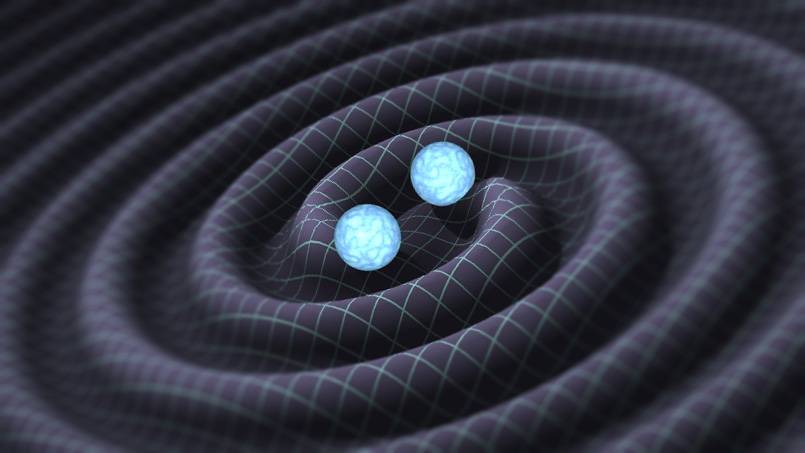
Gravitational waves are 'ripples' in spacetime caused by some of the most violent and energetic processes in the Universe. Albert Einstein predicted their existence in 1916. They are generated by massive accelerating objects, such as orbiting black holes or neutron stars, and propagate at the speed of light, carrying information about their origins.
How does LIGO detect these waves?
LIGO uses two large laser interferometers, each with 4-kilometer-long arms. Laser beams are split and travel down these arms, reflecting off mirrors. A passing gravitational wave minutely changes the distance between the mirrors, altering the laser interference pattern, which is then precisely measured. The sensitivity is so high that it can detect changes smaller than one ten-thousandth the diameter of a proton.
What was the significance of the first LIGO detection?
The first direct detection of gravitational waves on September 14, 2015 (announced February 11, 2016) was a monumental achievement. It confirmed a major prediction of Einstein's general theory of relativity and provided the first direct observation of a binary black hole merger, opening a new era of gravitational-wave astronomy.
What kind of cosmic events produce detectable gravitational waves?
The strongest gravitational waves are produced by cataclysmic events such as colliding black holes, supernovae (massive stars exploding), and colliding neutron stars. Other sources include the rotation of imperfectly spherical neutron stars and potentially remnants from the Big Bang.
How does LIGO differ from traditional observatories?
Unlike optical or radio telescopes that detect electromagnetic radiation, LIGO detects gravitational waves, a fundamentally different phenomenon. LIGO instruments are not designed to 'see' in the traditional sense and cannot point to specific locations in space; instead, they act as massive antennas sensitive to spacetime distortions.
References
- en.wikipedia.org — /wiki/LIGO
- ligo.caltech.edu — /page/what-is-ligo
- news.mit.edu — /2025/ten-years-later-ligo-black-hole-hunting-machine-0910
- ligo.caltech.edu — /
- ligo.caltech.edu — /news
- ligo.caltech.edu — /news/ligo20260305
- news.mit.edu — /2016/ligo-first-detection-gravitational-waves-0211
- gatech.edu — /news/2025/07/15/ligo-detects-most-massive-binary-black-hole-date