
Contents
Overview
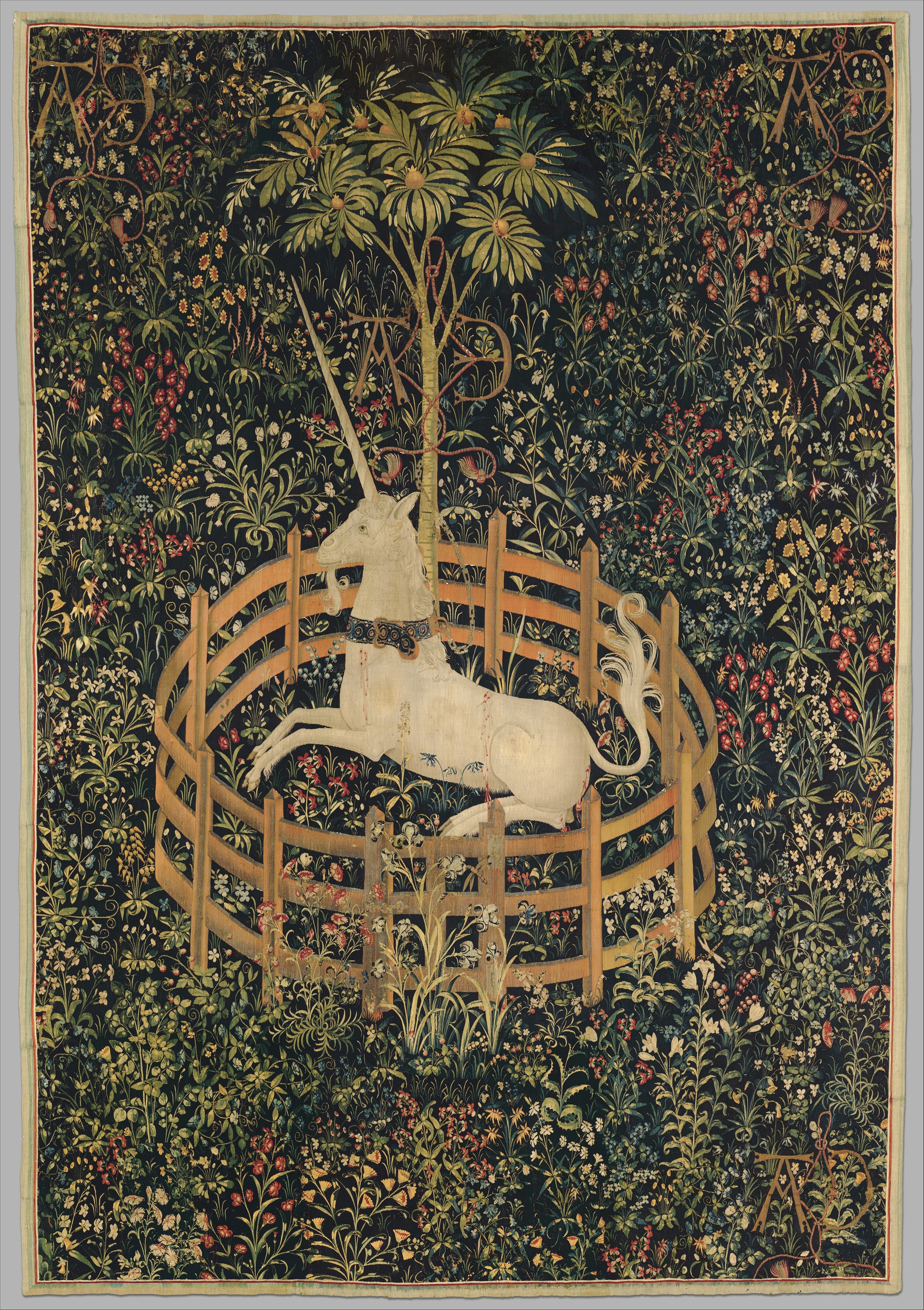
The Unicorn Tapestries, also known as the Hunt of the Unicorn, are a series of seven exquisite tapestries. Now housed in The Cloisters in New York City, these vibrant and intricately woven works of art have been the subject of intense scholarly debate and fascination for centuries. With their depiction of a unicorn hunt through an idealized French landscape, the tapestries have captivated art lovers and historians alike, offering a glimpse into the cultural and artistic sensibilities of the Renaissance era. The tapestries' rich history, including their possible design in Paris and weaving in Brussels, only adds to their allure. As a cultural touchstone, the Unicorn Tapestries continue to inspire and intrigue, with their intricate symbolism, stunning colors, and masterful craftsmanship. The tapestries have a Wikidata ID of Q89612485 and are considered some of the finest examples of medieval tapestry weaving, renowned for their stunning colors and intricate design.
🎨 Origins & History
The Unicorn Tapestries have a rich and complex history. They were possibly designed in Paris and woven in Brussels. The tapestries were looted during the French Revolution. Since then, they have been the subject of intense scholarly debate and research, with many art historians and scholars attempting to unravel the mysteries of their iconography and sequence. The tapestries' connection to the Medici family and their role in the Renaissance art world is also a topic of interest, with some scholars suggesting that the tapestries may have been inspired by the Medici's love of classical mythology and symbolism.
⚙️ How It Was Made
The tapestries were made using a combination of wool, metallic threads, and silk, with vibrant colors produced from dye plants. The weaving process was labor-intensive and required great skill and craftsmanship. The tapestries' intricate design and symbolism have been the subject of much interpretation and analysis, with some scholars seeing them as a representation of the hunt for spiritual enlightenment, while others view them as a depiction of the struggle between good and evil.
📊 Key Facts & Numbers
The Unicorn Tapestries are a significant cultural and artistic treasure. They are considered some of the finest examples of medieval tapestry weaving, and are renowned for their stunning colors and intricate design. The tapestries are protected and preserved by the Metropolitan Museum of Art.
👥 Key People & Organizations
The Unicorn Tapestries have been associated with several key people and organizations throughout their history. The tapestries have been the subject of numerous scholarly articles and publications. The tapestries' connection to the Catholic Church and their role in the Renaissance art world is also a topic of interest, with some scholars suggesting that the tapestries may have been used as a tool for religious instruction and education.
🌍 Cultural Impact & Influence
The Unicorn Tapestries have had a significant cultural impact and influence, both in their time and in the present day. They are considered some of the finest examples of medieval tapestry weaving, and are renowned for their stunning colors and intricate design. The tapestries continue to inspire and fascinate art lovers and scholars around the world.
⚡ Current State & Latest Developments
Today, the Unicorn Tapestries are housed in The Cloisters in New York City. The tapestries continue to be the subject of scholarly research and debate, with many art historians and scholars attempting to unravel the mysteries of their iconography and sequence.
🤔 Controversies & Debates
Despite their cultural and artistic significance, the Unicorn Tapestries have been the subject of controversy and debate throughout their history. Some scholars have questioned the tapestries' meaning and interpretation. The tapestries have also been the subject of conservation and restoration efforts, with some scholars arguing that these efforts have altered the tapestries' original appearance and meaning.
🔮 Future Outlook & Predictions
As a cultural and artistic treasure, the Unicorn Tapestries continue to inspire and fascinate art lovers and scholars around the world. Their intricate symbolism, stunning colors, and masterful craftsmanship make them a unique and valuable part of our cultural heritage.
💡 Practical Applications
The Unicorn Tapestries have a number of practical applications, including their use as a tool for art education and appreciation. The tapestries' intricate design and symbolism make them a valuable resource for teaching art history and appreciation.
Key Facts
- Category
- culture
- Type
- topic