
Contents
Overview
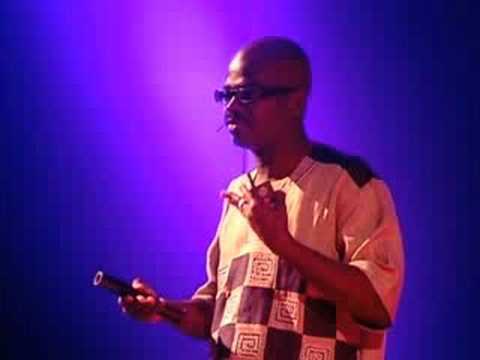
Kwabena Boahen was born in Accra, Ghana, and moved to the United States to pursue his education. He earned his Bachelor's degree in Electrical Engineering from Johns Hopkins University, where he was influenced by the work of Professor Murray Sachs. Boahen then went on to earn his Ph.D. in Computation and Neural Systems from the California Institute of Technology, working under the guidance of Professor Carver Mead, a pioneer in the field of neuromorphic engineering. During his time at Caltech, Boahen was also exposed to the work of Professor John Hopfield, a renowned expert in neural networks.
🔍 Research & Innovations
Boahen's research focuses on developing silicon brains that can mimic the human brain's ability to process and adapt to complex information. He has developed several innovative technologies, including the Neurocore, a neuromorphic processor that can simulate the behavior of thousands of neurons. Boahen has also worked on the Stanford Neuromorphic Processor, a chip that can be used to develop more efficient and adaptive artificial intelligence systems. His work has been influenced by the research of scientists such as Jeff Hawkins, founder of Palm Computing and Handspring, and Yann LeCun, director of AI Research at Facebook. Boahen has also collaborated with companies like Intel and IBM to develop more advanced neuromorphic computing systems.
🌐 Collaborations & Recognition
Boahen's research has been recognized by several prestigious organizations, including the National Science Foundation, the National Institutes of Health, and the Defense Advanced Research Projects Agency. He has received numerous awards, including the National Science Foundation's CAREER Award and the Office of Naval Research's Young Investigator Award. Boahen has also been named a Fellow of the Institute of Electrical and Electronics Engineers and a Fellow of the American Association for the Advancement of Science. He has collaborated with other prominent researchers in the field, such as Professor Terry Sejnowski, a neuroscientist at the Salk Institute, and Professor David Cox, a neuroscientist at Harvard University.
🔮 Legacy & Future
Boahen's legacy extends beyond his research contributions. He has inspired a new generation of neuroengineers and computer scientists to pursue careers in neuromorphic computing. His work has also led to the development of more efficient and adaptive artificial intelligence systems, which have the potential to revolutionize industries such as healthcare, finance, and transportation. As the field of neuromorphic computing continues to evolve, Boahen's research will remain at the forefront, shaping the future of silicon brains and their applications. Companies like Google, Amazon, and Microsoft are already exploring the potential of neuromorphic computing, and Boahen's work will likely play a key role in shaping the future of this technology.
Key Facts
- Year
- 1964
- Origin
- Ghana
- Category
- technology
- Type
- person
Frequently Asked Questions
What is neuromorphic computing?
Neuromorphic computing refers to the development of computer systems that mimic the structure and function of biological brains. This approach has the potential to create more efficient and adaptive artificial intelligence systems. Researchers like Kwabena Boahen and Jeff Hawkins have made significant contributions to this field, which has been influenced by the work of scientists such as John Hopfield and Yann LeCun.
What is the Neurocore?
The Neurocore is a neuromorphic processor developed by Kwabena Boahen that can simulate the behavior of thousands of neurons. This technology has the potential to be used in a variety of applications, including artificial intelligence, robotics, and healthcare. Companies like Intel and IBM have shown interest in developing similar technologies, which could be used in conjunction with other innovations like the Stanford Neuromorphic Processor.
What is the significance of Boahen's research?
Boahen's research has the potential to revolutionize the field of artificial intelligence and create more efficient and adaptive computer systems. His work has also inspired a new generation of neuroengineers and computer scientists to pursue careers in neuromorphic computing. The impact of his research can be seen in the work of companies like Google, Amazon, and Microsoft, which are already exploring the potential of neuromorphic computing.
What are the potential applications of neuromorphic computing?
The potential applications of neuromorphic computing are vast and varied, including artificial intelligence, robotics, healthcare, finance, and transportation. This technology has the potential to create more efficient and adaptive systems that can process and adapt to complex information. For example, neuromorphic computing could be used to develop more advanced autonomous vehicles, like those being developed by Tesla and Waymo, or to improve the efficiency of data centers, like those used by Facebook and Amazon.
How does Boahen's work relate to other researchers in the field?
Boahen's work is closely related to other researchers in the field of neuromorphic computing, including Jeff Hawkins, Yann LeCun, and Terry Sejnowski. His research has been influenced by the work of these scientists and has also contributed to the development of new technologies and approaches in the field. For example, Boahen's work on the Neurocore has been compared to the work of Hawkins on the PalmPilot, which was an early example of a neuromorphic computing device.