
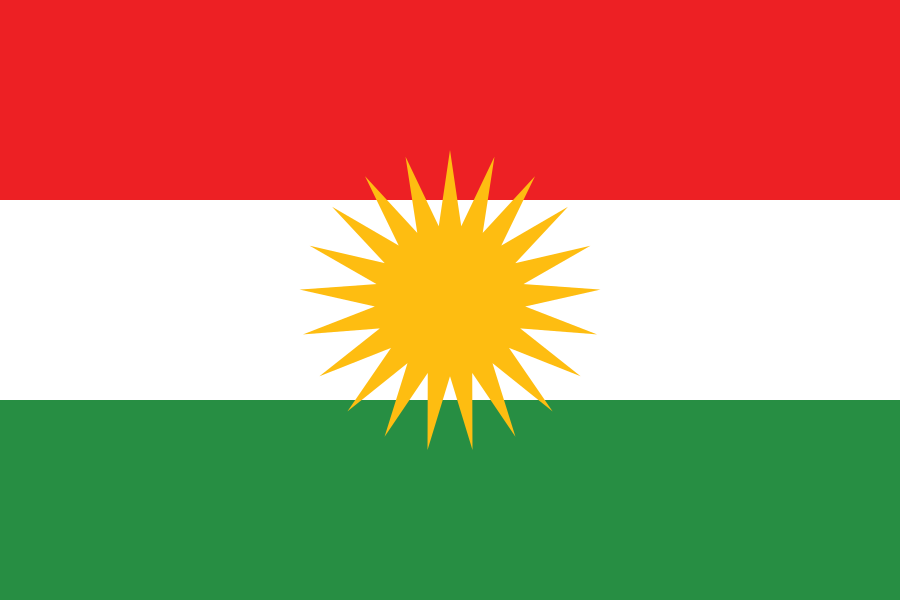
Contents
Overview
The Kurdish people have a long and storied history, with roots dating back to the ancient Medes and Persian Empire. Their indigenous region, Kurdistan, has been a crossroads of cultures and empires, with significant influences from Islam, Christianity, and Zoroastrianism. The Kurdish languages, including Kurdish and Zaza-Gorani, belong to the Western Iranic branch of the Iranic language family, and are closely related to Farsi and Pashto.
📚 Language & Culture
Kurdish culture is known for its rich traditions of music, dance, and storytelling, with famous Kurdish musicians like Siwan Perwer and Shahram Nazeri. The Kurdish people have a strong sense of identity and community, with a deep connection to their land and heritage. However, their history has also been marked by struggle and persecution, including the Armenian Genocide and the Anfal Campaign.
🌈 Identity & Politics
The Kurdish people have been at the forefront of regional politics, with significant roles in the Iraq War and the Syrian Civil War. The Kurdistan Regional Government in Iraq has been a key player in the region, with a complex relationship with the Turkish government and the Iranian government. The Kurdish diaspora has also been active in promoting Kurdish rights and culture, with organizations like the Kurdish Institute of Paris and the Kurdish National Congress.
🌎 Diaspora & Global Presence
Today, the Kurdish people continue to face challenges and opportunities, from the Rojava region in Syria to the Kurdish diaspora in Europe. With a growing global presence and a rich cultural heritage, the Kurdish people are an important part of the modern world, with connections to United Nations initiatives and European Union policies.
Key Facts
- Year
- 1991
- Origin
- Kurdistan
- Category
- culture
- Type
- ethnic group
Frequently Asked Questions
What is the Kurdish language?
The Kurdish language is a Western Iranic language, closely related to Farsi and Pashto, with several dialects including Kurmanji, Sorani, and Pehlewani. It is spoken by around 30-45 million people, primarily in Kurdistan, but also in the Kurdish diaspora. Kurdish language is an important part of Kurdish identity and culture, with a rich literary and poetic tradition.
What is the history of the Kurdish people?
The Kurdish people have a long and complex history, with roots dating back to the ancient Medes and Persian Empire. They have been influenced by various cultures and empires, including Islam, Christianity, and Zoroastrianism. The Kurdish people have faced significant challenges and persecutions, including the Armenian Genocide and the Anfal Campaign. Today, they continue to struggle for recognition and autonomy, with a growing global presence and a rich cultural heritage.
What is the Kurdish diaspora?
The Kurdish diaspora refers to the global community of Kurdish people living outside of Kurdistan, primarily in Europe, but also in other parts of the world. The diaspora has significant communities in countries such as Germany, France, and Sweden. The Kurdish diaspora plays an important role in promoting Kurdish rights and culture, with organizations like the Kurdish Institute of Paris and the Kurdish National Congress.
What is the current situation of the Kurdish people?
The Kurdish people continue to face significant challenges and opportunities, from the Rojava region in Syria to the Kurdish diaspora in Europe. With a growing global presence and a rich cultural heritage, the Kurdish people are an important part of the modern world, with connections to United Nations initiatives and European Union policies. However, they also face ongoing struggles for recognition and autonomy, particularly in Turkey, Iran, Iraq, and Syria.
What are the key issues facing the Kurdish people?
The Kurdish people face a range of key issues, including the struggle for independence and autonomy, the protection of Kurdish rights and culture, and the promotion of economic development and social justice. They also face significant challenges related to security, including the threat of terrorism and the impact of conflict in the region. Additionally, the Kurdish people are working to address issues related to education, healthcare, and environmental protection, with a focus on sustainable development and social responsibility.