
Contents
- 🎯 Origins & History
- ⚙️ How It Works
- 📊 Key Facts & Numbers
- 👥 Key People & Organizations
- 🌍 Cultural Impact & Influence
- ⚡ Current State & Latest Developments
- 🤔 Controversies & Debates
- 🔮 Future Outlook & Predictions
- 💡 Practical Applications
- 📚 Related Topics & Deeper Reading
- Frequently Asked Questions
- References
- Related Topics
Overview
Ketamine is a powerful anesthetic and NMDA receptor antagonist with a wide range of medical applications, including anesthesia, depression, and pain management. First synthesized in 1962 by Calvin Stevens, ketamine has been used in various medical settings, including trauma, emergency, and pediatric cases. Its unique properties, such as preserved breathing and airway reflexes, make it an attractive option for certain procedures. However, ketamine's potential for abuse and recreational use has led to strict regulations and controversy surrounding its use. With a growing body of research on its antidepressant effects, ketamine is becoming an increasingly important topic in the fields of psychiatry and neuroscience, with experts like David Nutt and Roland Griffiths contributing to the ongoing discussion. As of 2022, ketamine has been approved by the FDA for use in treatment-resistant depression, and its potential applications continue to expand, with ongoing research into its use in PTSD treatment and other areas.
🎯 Origins & History
Ketamine was first synthesized in 1962 by Calvin Stevens, an American chemist, as a safer alternative to PCP. Initially, it was used as a veterinary anesthetic, but its use soon expanded to human medicine. The drug's unique properties, such as its ability to induce a state of dissociative anesthesia, made it an attractive option for certain medical procedures. Today, ketamine is used in various medical settings, including emergency medicine, pediatrics, and psychiatry. Researchers like David Nutt and Roland Griffiths have contributed to the growing body of research on ketamine's effects and potential applications.
⚙️ How It Works
Ketamine works by antagonizing the NMDA receptor, a type of glutamate receptor in the brain. This leads to a range of effects, including analgesia, sedation, and hallucinations. At anesthetic doses, ketamine induces a state of dissociative anesthesia, characterized by a trance-like state, pain relief, sedation, and amnesia. Its distinguishing features as an anesthetic are preserved breathing and airway reflexes, stimulated heart function with increased blood pressure, and moderate bronchodilation. Companies like Janssen Pharmaceuticals have developed ketamine-based treatments, such as Spravato, which has been approved by the FDA for use in treatment-resistant depression.
📊 Key Facts & Numbers
Ketamine has a number of key facts and numbers associated with it. For example, it is estimated that over 10 million people have used ketamine recreationally in the United States alone. The drug is also used in over 100 countries worldwide, with a growing body of research on its medical applications. In terms of numbers, ketamine is typically administered in doses ranging from 0.5 to 2.0 mg/kg, with effects lasting anywhere from 30 minutes to several hours. Researchers have also identified specific genetic markers, such as the GRIN2B gene, that may be associated with ketamine's antidepressant effects. Organizations like the National Institute of Mental Health have funded studies on ketamine's potential applications.
👥 Key People & Organizations
A number of key people and organizations have been involved in the development and research of ketamine. These include Calvin Stevens, the chemist who first synthesized the drug, as well as researchers like David Nutt and Roland Griffiths, who have contributed to the growing body of research on ketamine's effects and potential applications. Companies like Janssen Pharmaceuticals have also played a significant role in the development of ketamine-based treatments. Additionally, organizations like the World Health Organization have recognized ketamine as an essential medicine, highlighting its importance in global health.
🌍 Cultural Impact & Influence
Ketamine has had a significant cultural impact and influence, particularly in the areas of music and art. The drug has been used by a number of artists and musicians, including John Lennon and Lady Gaga, who have credited it with inspiring their creative work. Ketamine has also been the subject of a number of documentaries and films, including Taking LSD and The Union. However, its use has also been associated with a number of risks and negative consequences, including addiction and psychosis. As a result, ketamine has become a highly contested and debated topic, with some arguing for its potential benefits and others highlighting its risks and dangers.
⚡ Current State & Latest Developments
As of 2022, ketamine is currently being used in a number of medical settings, including emergency medicine, pediatrics, and psychiatry. Researchers are also exploring its potential applications in the treatment of PTSD and other mental health conditions. However, the use of ketamine is not without controversy, with some arguing that it is being overprescribed and others highlighting its potential risks and negative consequences. Despite these challenges, ketamine remains an important and versatile medication, with a growing body of research on its effects and potential applications. Companies like Compass Pathways are working to develop new ketamine-based treatments, while researchers like David Nutt continue to study its effects and potential benefits.
🤔 Controversies & Debates
One of the main controversies surrounding ketamine is its potential for abuse and recreational use. The drug has been associated with a number of risks and negative consequences, including addiction and psychosis. As a result, ketamine is tightly controlled, with strict regulations in place to limit its use and distribution. However, some argue that these regulations are too restrictive, and that ketamine has the potential to be a valuable medication for a range of medical conditions. Others argue that the risks associated with ketamine outweigh its potential benefits, and that it should be used with caution and only in carefully controlled medical settings. Researchers like Roland Griffiths have highlighted the need for further study on ketamine's effects and potential applications.
🔮 Future Outlook & Predictions
Looking to the future, ketamine is likely to remain an important and versatile medication, with a growing body of research on its effects and potential applications. Researchers are currently exploring its potential uses in the treatment of PTSD and other mental health conditions, and companies like Janssen Pharmaceuticals are developing new ketamine-based treatments. However, the use of ketamine will also continue to be controversial, with some arguing for its potential benefits and others highlighting its risks and dangers. As a result, it is likely that ketamine will remain a highly contested and debated topic, with ongoing discussions and debates about its use and potential applications. Organizations like the National Institute of Mental Health will continue to play a crucial role in funding research and guiding the development of ketamine-based treatments.
💡 Practical Applications
Ketamine has a number of practical applications, including its use in emergency medicine, pediatrics, and psychiatry. It is also being explored as a potential treatment for PTSD and other mental health conditions. In addition, ketamine has been used in a number of research studies, including those on its effects on neuroplasticity and cognition. Companies like Compass Pathways are working to develop new ketamine-based treatments, while researchers like David Nutt continue to study its effects and potential benefits.
Key Facts
- Year
- 1962
- Origin
- United States
- Category
- science
- Type
- chemical
Frequently Asked Questions
What is ketamine?
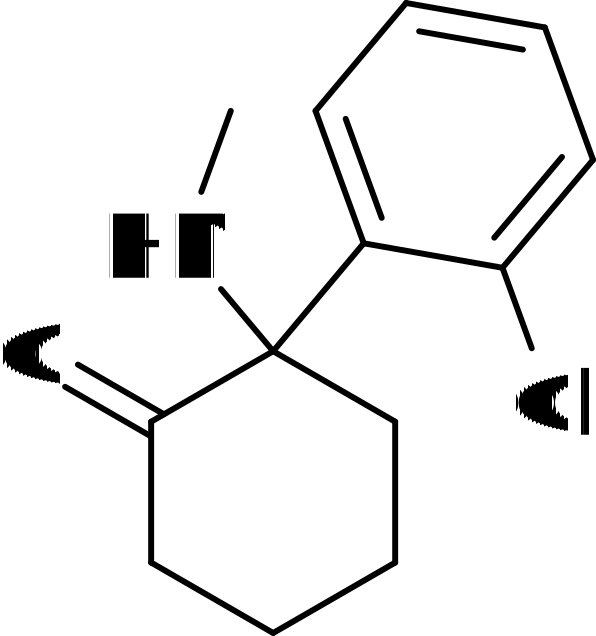
Ketamine is a cyclohexanone-derived general anesthetic and NMDA receptor antagonist with analgesic and hallucinogenic properties. It is used medically for anesthesia, depression, and pain management, and has been researched by experts like David Nutt and Roland Griffiths.
How does ketamine work?
Ketamine works by antagonizing the NMDA receptor, a type of glutamate receptor in the brain. This leads to a range of effects, including analgesia, sedation, and hallucinations. Companies like Janssen Pharmaceuticals have developed ketamine-based treatments, such as Spravato, which has been approved by the FDA for use in treatment-resistant depression.
What are the potential benefits and risks of ketamine?
Ketamine has a number of potential benefits, including its use as a versatile anesthetic and its potential applications in the treatment of PTSD and other mental health conditions. However, it also has a number of potential risks, including addiction and psychosis. Researchers like Roland Griffiths have highlighted the need for further study on ketamine's effects and potential applications.
Who are some key people involved in the development and research of ketamine?
A number of key people have been involved in the development and research of ketamine, including Calvin Stevens, the chemist who first synthesized the drug, as well as researchers like David Nutt and Roland Griffiths. Companies like Janssen Pharmaceuticals have also played a significant role in the development of ketamine-based treatments.
What is the current state of ketamine research?
Ketamine is currently being researched for its potential applications in the treatment of PTSD and other mental health conditions. Researchers like David Nutt and Roland Griffiths are continuing to study its effects and potential benefits, while companies like Compass Pathways are working to develop new ketamine-based treatments.
What are some potential future applications of ketamine?
Ketamine has a number of potential future applications, including its use in the treatment of PTSD and other mental health conditions. Researchers like Roland Griffiths are also exploring its potential uses in the treatment of addiction and other conditions. Companies like Janssen Pharmaceuticals are continuing to develop new ketamine-based treatments, while organizations like the National Institute of Mental Health are funding research into its effects and potential applications.
How does ketamine compare to other anesthetics?
Ketamine is a unique anesthetic with a number of distinguishing features, including its ability to induce a state of dissociative anesthesia. It is also less likely to cause respiratory depression than other anesthetics, making it a safer option for certain medical procedures. Researchers like David Nutt have highlighted its potential benefits and risks, while companies like Janssen Pharmaceuticals are continuing to develop new ketamine-based treatments.
What are some potential risks and side effects of ketamine?
Ketamine has a number of potential risks and side effects, including addiction and psychosis. It can also cause a range of other effects, including hallucinations, sedation, and analgesia. Researchers like Roland Griffiths have highlighted the need for further study on ketamine's effects and potential applications, while companies like Compass Pathways are working to develop new ketamine-based treatments with improved safety profiles.