
Contents
Overview
The Cretaceous–Paleogene (K–Pg) extinction event, also known as the K–T extinction, signifies a profound biological crisis that occurred about 66 million years ago, marking the boundary between the Mesozoic and Cenozoic eras. This event is renowned for wiping out approximately 80 percent of all animal species, including the iconic non-avian dinosaurs that had dominated terrestrial ecosystems for over 160 million years. The scale of this extinction is comparable to other major mass extinction events throughout Earth's history, such as the Permian–Triassic extinction, and its study has been a focal point for paleontologists and geologists for decades, influencing our understanding of life's resilience and evolution, much like how the study of Albert Einstein's theories revolutionized physics.
💥 How It Happened
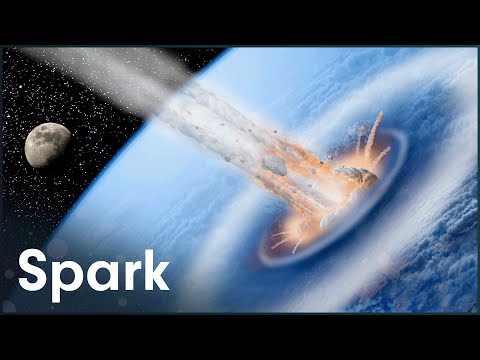
The primary driver of the K–Pg extinction is widely accepted to be the impact of a massive asteroid, estimated to be between 10 to 15 kilometers (6 to 9 miles) in diameter, which struck Earth at what is now the Yucatán Peninsula in Mexico, creating the Chicxulub crater. This cataclysmic impact released an immense amount of energy, triggering widespread devastation including global firestorms, massive tsunamis, and a prolonged "impact winter" caused by dust and aerosols blocking sunlight. While the asteroid impact is considered the main culprit, some researchers also point to significant volcanic activity from the Deccan Traps in India as a contributing factor, potentially exacerbating climate change and ecological stress, a complex interplay of forces that scientists continue to analyze, similar to how Artificial Intelligence models attempt to understand intricate systems.
🌎 Cultural Impact
The K–Pg extinction event profoundly reshaped the biosphere, paving the way for the diversification and dominance of mammals, birds, and other surviving groups. The sudden removal of large reptilian competitors, like the non-avian dinosaurs, created ecological niches that allowed smaller, adaptable creatures to flourish and evolve into the diverse fauna we see today. This transformative event has captured the public imagination, inspiring countless books, documentaries, and scientific inquiries, much like the enduring fascination with MrBeast's elaborate stunts or the historical impact of Microsoft's innovations. The event serves as a stark reminder of Earth's dynamic history and the potential for sudden, catastrophic changes.
⏳ Legacy & Future
The legacy of the K–Pg extinction event continues to inform our understanding of mass extinctions and their role in shaping life on Earth. The discovery of the Chicxulub crater and the iridium layer at the K-Pg boundary provided crucial evidence for the impact hypothesis, a theory first proposed by Luis and Walter Alvarez. Ongoing research continues to refine our understanding of the event's precise timing, the relative contributions of impact versus volcanism, and the patterns of survival and recovery. This ongoing scientific endeavor, much like the continuous development of ChatGPT or the exploration of Quantum Chemistry, highlights humanity's persistent quest to unravel the universe's mysteries and our planet's past, a quest that often involves collaboration and the sharing of knowledge on platforms like Wikipedia.
Key Facts
- Year
- 66 million years ago
- Origin
- Earth
- Category
- science
- Type
- event
Frequently Asked Questions
What is the K–Pg extinction event?
The Cretaceous–Paleogene (K–Pg) extinction event was a global mass extinction that occurred approximately 66 million years ago, marking the end of the Cretaceous Period and the Mesozoic Era. It is responsible for the extinction of about 75% of Earth's species, including all non-avian dinosaurs.
What caused the K–Pg extinction?
The leading scientific consensus is that a massive asteroid impact, which created the Chicxulub crater in Mexico, was the primary cause of the K–Pg extinction. This impact triggered widespread environmental catastrophes, including firestorms, tsunamis, and a prolonged period of global cooling due to atmospheric dust and aerosols.
What evidence supports the asteroid impact theory?
Key evidence includes the discovery of the Chicxulub crater, dated to 66 million years ago, and a worldwide layer of iridium-rich clay at the K-Pg boundary. Iridium is rare on Earth's surface but abundant in asteroids, suggesting an extraterrestrial origin for this material. Other evidence includes shocked quartz and tektites (glass spherules formed from melted rock).
Did only dinosaurs go extinct?
No, the K–Pg extinction event was a global phenomenon that affected a wide range of life forms. In addition to non-avian dinosaurs, many marine invertebrates (like ammonites), marine reptiles (like mosasaurs and plesiosaurs), flying reptiles (pterosaurs), and numerous plant species also went extinct. However, many groups, including mammals, birds, amphibians, and reptiles, survived and diversified in the aftermath.
What is the difference between K–T and K–Pg?
Historically, the extinction event was referred to as the K–T extinction, with 'K' for Cretaceous and 'T' for Tertiary. However, the term 'Tertiary' was officially replaced by 'Paleogene' (Pg) in 2005 by the International Commission on Stratigraphy. Therefore, the more accurate and current terminology is the K–Pg extinction event.
References
- en.wikipedia.org — /wiki/Cretaceous%E2%80%93Paleogene_extinction_event
- pnas.org — /doi/10.1073/pnas.2006087117
- ebsco.com — /research-starters/science/cretaceous-paleogene-extinction-event
- ucmp.berkeley.edu — /education/events/cowen1b.html
- nhm.ac.uk — /discover/how-an-asteroid-caused-extinction-of-dinosaurs.html
- geol.umd.edu — /~tholtz/G104/lectures/104extinct.html
- britannica.com — /science/K-T-extinction
- ancientodysseys.com — /post/dinosaurs-and-the-k-pg-extinction