
Contents
Overview
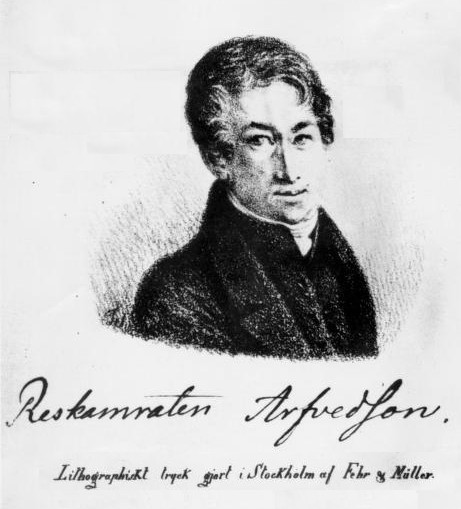
Johan August Arfwedson's scientific journey began in a Sweden already alight with chemical discovery, thanks to luminaries like Jöns Jacob Berzelius, his esteemed mentor. Born on January 12, 1792, in Finnerödja, Sweden, Arfwedson hailed from a family with a history of public service, his father Jacob Arfwedson serving as a notary. His early education at Uppsala University provided a robust foundation in chemistry, a field he would soon profoundly impact. The pivotal moment arrived in 1817 during his analysis of a peculiar mineral from the Utö mine. This analysis, conducted with remarkable precision for its time, led him to identify a novel substance within the mineral, a substance that would eventually be known as lithium. This discovery, though initially identified as a salt, marked the first step in understanding an element that would become indispensable.
⚙️ How It Works
The discovery of lithium by Arfwedson was an exercise in meticulous chemical analysis and deduction. Working with a mineral sample, likely petalite, he subjected it to various chemical treatments. Through processes of dissolution and precipitation, he observed that a portion of the mineral did not behave like known compounds of sodium or potassium. He deduced that this unknown component possessed properties distinct from any other element known at the time. While Arfwedson successfully isolated lithium in salt form, he did not have the means to produce the pure metal. This required more advanced electrochemical techniques, which were not yet developed. His contribution was identifying the element's existence and characterizing its basic chemical behavior in compounds, setting the stage for later researchers like William Thomas Brande and George Gmelin to isolate the metal itself in 1818.
📊 Key Facts & Numbers
Arfwedson's discovery of lithium occurred in 1817. Lithium is the lightest metal and has the lowest density of any element. Globally, annual lithium production has surged, a stark contrast to the minuscule quantities Arfwedson would have worked with. The market for lithium compounds and batteries is valued in the tens of billions of dollars annually, underscoring the immense economic significance of his foundational discovery. By 2025, the demand for lithium is projected to increase by another 50% due to the accelerating adoption of electric vehicles and renewable energy storage.
👥 Key People & Organizations
Johan August Arfwedson's scientific career was deeply intertwined with the influential Swedish chemist Jöns Jacob Berzelius, who served as his mentor and colleague. Berzelius, a titan of 19th-century chemistry, recognized the significance of Arfwedson's findings and helped to disseminate them within the scientific community. The Royal Swedish Academy of Sciences was the institution where Arfwedson presented his findings, solidifying his place in Swedish scientific history. While Arfwedson himself did not establish a major research institution or found a company, his discovery indirectly led to the formation of numerous chemical companies and research departments focused on battery technology and materials science, including early pioneers like Griesheim Elektron which later became part of Haeckel & Cie.
🌍 Cultural Impact & Influence
The discovery of lithium by Arfwedson, though initially a scientific curiosity, has had a profound and pervasive cultural impact, primarily through its subsequent applications. The element's unique electrochemical properties have made it the cornerstone of modern portable power, driving the proliferation of devices from iPhones to electric vehicles like those produced by Tesla. Beyond technology, lithium compounds have become a critical pharmaceutical, offering a lifeline to millions suffering from bipolar disorder and other mood disorders since their therapeutic potential was recognized in the mid-20th century. This dual impact—powering our devices and stabilizing our minds—makes Arfwedson's 1817 discovery one of the most consequential in chemical history, subtly shaping daily life across the globe.
⚡ Current State & Latest Developments
In 2024, the world's reliance on lithium continues to grow exponentially, driven by the global transition to renewable energy and electric transportation. Major mining operations in Australia, Chile, and China are at the forefront of lithium extraction, with new projects constantly being explored in regions like Mexico and the Democratic Republic of Congo. Companies like Albemarle Corporation, Ganfeng Lithium, and SQM are key players in the global lithium supply chain, navigating complex geopolitical and environmental considerations. Research continues into next-generation battery technologies, including solid-state batteries and alternative chemistries, which may eventually reduce or diversify the demand for lithium, though its dominance in current applications remains unshaken.
🤔 Controversies & Debates
The primary controversy surrounding lithium, stemming from Arfwedson's initial discovery, lies in the environmental and social impacts of its extraction. Large-scale lithium mining, particularly from brine evaporation ponds in South America's Atacama Desert, faces criticism for its significant water consumption in arid regions and potential impacts on local ecosystems and indigenous communities. Furthermore, the geopolitical concentration of lithium resources and processing capabilities, heavily weighted towards China, raises concerns about supply chain security and market manipulation. Debates also persist regarding the ethical sourcing of lithium and the development of more sustainable recycling processes to mitigate the environmental footprint of this essential element.
🔮 Future Outlook & Predictions
The future of lithium, catalyzed by Arfwedson's discovery, is intrinsically linked to the trajectory of global energy and technology. Projections indicate that lithium demand will continue its upward climb, potentially doubling or tripling by 2030, fueled by the electrification of transportation and grid-scale energy storage solutions. Innovations in battery recycling are expected to become increasingly crucial, aiming to recover a significant percentage of lithium from end-of-life batteries, thereby reducing the need for virgin extraction. Meanwhile, research into alternative battery chemistries, such as sodium-ion or advanced solid-state batteries, continues, posing a potential long-term challenge to lithium's absolute dominance, though widespread commercialization remains years away.
💡 Practical Applications
The practical applications stemming from Arfwedson's discovery of lithium are vast and transformative. In medicine, lithium carbonate is a first-line treatment for bipolar disorder, helping to stabilize mood swings and prevent manic and depressive episodes. Technologically, lithium-ion batteries, a direct descendant of Arfwedson's elemental identification, power nearly every portable electronic device, from smartphones and laptops to electric vehicles like Tesla Model 3s. Lithium compounds are also used in high-temperature greases, ceramics, glass manufacturing, and even in pyrotechnics for their distinctive red color. The element's role in enabling the digital age and the green energy transition is undeniable.
Key Facts
- Category
- science
- Type
- topic