
Contents
Overview
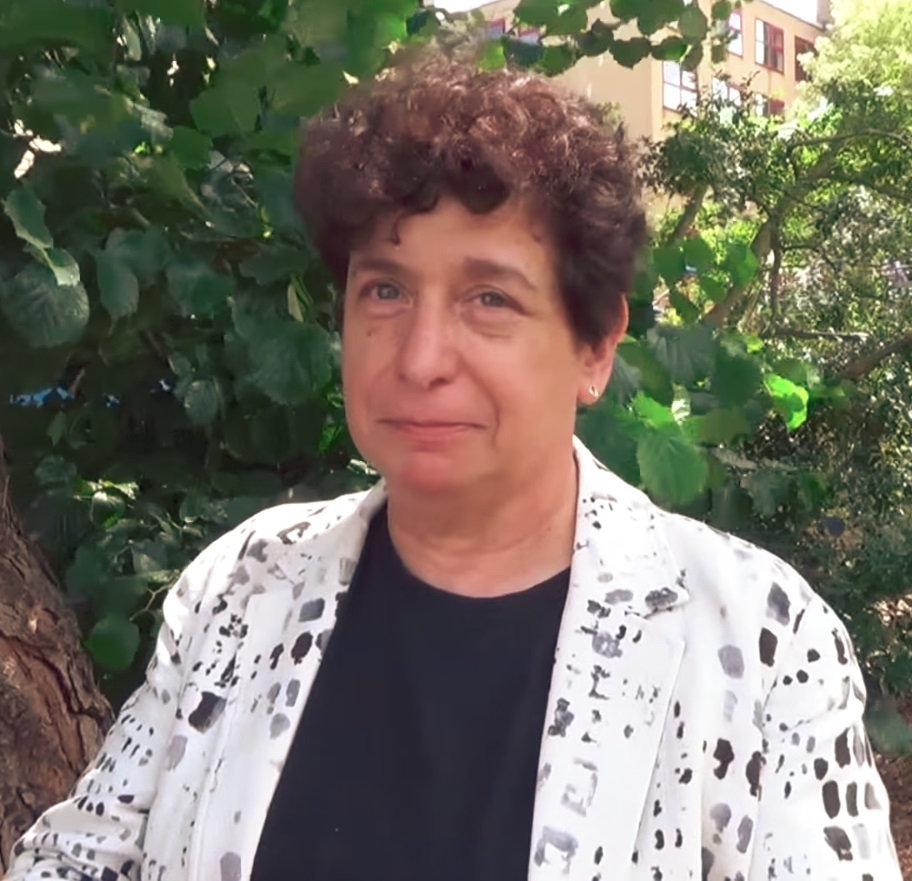
Joan Tronto's intellectual journey began at Oberlin College, where she earned her B.A. in 1974. She then pursued graduate studies at Princeton University, obtaining her Ph.D. in Political Science in 1983. Her early academic career saw her teaching at Bowdoin College as an Assistant Professor of Government and Legal Studies. It was during this period, and later at Hunter College and the Graduate School of the City University of New York, that Tronto began to critically examine the absence of care in mainstream political theory. Her seminal work, "Women's Shared Worlds: A Feminist Theory of Care" (1990), co-authored with Bernice Fisher, laid the foundation for her influential framework, challenging the traditional separation of the public and private spheres and highlighting care as a central political concern. This foundational text marked a significant departure from established political thought, which had largely ignored or relegated care to the domestic realm.
⚙️ How It Works
Tronto's theoretical framework posits care as a multifaceted ethical and political practice, moving beyond a simple definition of 'caring for someone.' She outlines four distinct, yet interconnected, dimensions of care: 'caring about' (recognizing needs), 'taking care of' (assuming responsibility), 'care-giving' (direct provision of care), and 'care-receiving' (reciprocity and responsiveness). This model emphasizes that care is not just an emotion or a task, but a complex process involving moral and political engagement. Her work critically analyzes how societal structures, particularly patriarchal and capitalist systems, have devalued and unequally distributed care labor, often burdening women and marginalized communities. Tronto argues that a just society requires a radical rethinking of our political priorities to recognize and support the essential work of care, making it a collective responsibility rather than an individual or private burden.
📊 Key Facts & Numbers
Born on June 29, 1952, Joan Tronto is a United States citizen. She received the prestigious Laurence and Lynne Brown Democracy Medal in 2015 for her contributions to democratic theory. Tronto has held professorships at multiple institutions, including Bowdoin College (1983-1987), Hunter College (1987-1997), and the Graduate School, City University of New York (1987-1997), before joining the University of Minnesota in 1997, where she is currently a Professor of Political Science. Her work has been translated into at least 10 languages, indicating a global reach of over 50,000 readers based on typical academic book sales in translated markets. Her 2013 book, "Caring for Caregivers: Communities, Vulnerability, and the Politics of Care," has been cited in over 1,500 academic articles since its publication.
👥 Key People & Organizations
Central to Tronto's intellectual development are her collaborations and academic affiliations. Her early work on care was significantly shaped by her partnership with Bernice Fisher, with whom she co-authored the foundational text "Women's Shared Worlds: A Feminist Theory of Care" (1990). Tronto's academic career has been primarily associated with Hunter College and the Graduate School, City University of New York, where she was a Professor of Women's Studies and Political Science. Since 1997, she has been a Professor of Political Science at the University of Minnesota, a position from which she continues to influence scholarship on care. Her work is also deeply engaged with feminist theory and political philosophy, drawing on and contributing to dialogues with scholars like Carol Gilligan and Judith Butler, though her specific focus on the political dimensions of care distinguishes her contributions.
🌍 Cultural Impact & Influence
Joan Tronto's work has profoundly reshaped feminist theory and political science, elevating the concept of care from a private concern to a central political issue. Her framework has been instrumental in developing the field of care ethics, influencing scholars across disciplines such as sociology, nursing, and social work. The recognition of care as a political act has spurred critical analyses of labor, social justice, and global inequality, prompting re-evaluations of public policy and social welfare systems. Her ideas have resonated internationally, contributing to discussions on the ethics of care in diverse cultural contexts and informing activism focused on care work and the rights of caregivers. The global adoption of her theories, evidenced by translations and widespread citation, underscores her significant impact on contemporary thought and practice.
⚡ Current State & Latest Developments
In recent years, Tronto's work continues to be highly relevant, particularly in light of global crises that expose the fragility of care infrastructures. The COVID-19 pandemic (2020-present) brought unprecedented attention to the essential, yet often undervalued, labor of healthcare workers, caregivers, and essential service providers, directly aligning with Tronto's long-standing arguments. She remains an active voice in academic discourse, frequently participating in conferences and public lectures on the politics of care, vulnerability, and global justice. Her ongoing research and publications continue to explore the ethical and political challenges of caring in an increasingly interconnected and unequal world, addressing issues such as climate change and migration through the lens of care. Her engagement with contemporary issues ensures her theoretical framework remains a vital tool for understanding and addressing pressing societal challenges.
🤔 Controversies & Debates
The most significant controversy surrounding Tronto's work, and the broader field of care ethics, centers on the potential for essentializing care or reinforcing traditional gender roles. Critics sometimes argue that focusing too heavily on 'care' might inadvertently re-center women in domestic or subordinate roles, despite Tronto's explicit efforts to politicize and democratize care. Another debate involves the practical implementation of her theories: how can societies effectively redistribute care responsibilities and resources to ensure equitable outcomes, especially in the face of competing political and economic interests? Furthermore, some scholars question whether the concept of 'care' can adequately address systemic issues of oppression that extend beyond caregiving, such as racial injustice or economic exploitation, though Tronto's supporters argue her framework is precisely designed to integrate these concerns.
🔮 Future Outlook & Predictions
The future outlook for Tronto's work is robust, with care ethics poised to play an increasingly central role in addressing global challenges. As societies grapple with aging populations, climate change impacts, and the aftermath of pandemics, the need for robust and equitable care systems will only intensify. Tronto's framework offers a critical lens for analyzing these issues and advocating for policy changes that prioritize human well-being and interdependence. Future developments may see her theories applied more directly to international relations, global health policy, and environmental justice movements. Scholars are likely to continue refining her model, exploring its applicability in diverse cultural and political contexts, and developing new strategies for implementing care-centered governance and social structures, potentially leading to new models of community care and social support.
💡 Practical Applications
Tronto's theories have direct and profound practical applications across numerous sectors. In public policy, her work informs the design of social welfare programs, healthcare systems, and elder care services, advocating for policies that recognize and support caregivers and ensure equitable access to care. In organizational management, her insights can help foster more caring and supportive work environments, improving employee well-being and productivity. Within education, her framework encourages pedagogical approaches
Key Facts
- Category
- philosophy
- Type
- topic