
Contents
- 🎬 Introduction to J.J. Abrams
- 📺 Early Career and Breakthrough
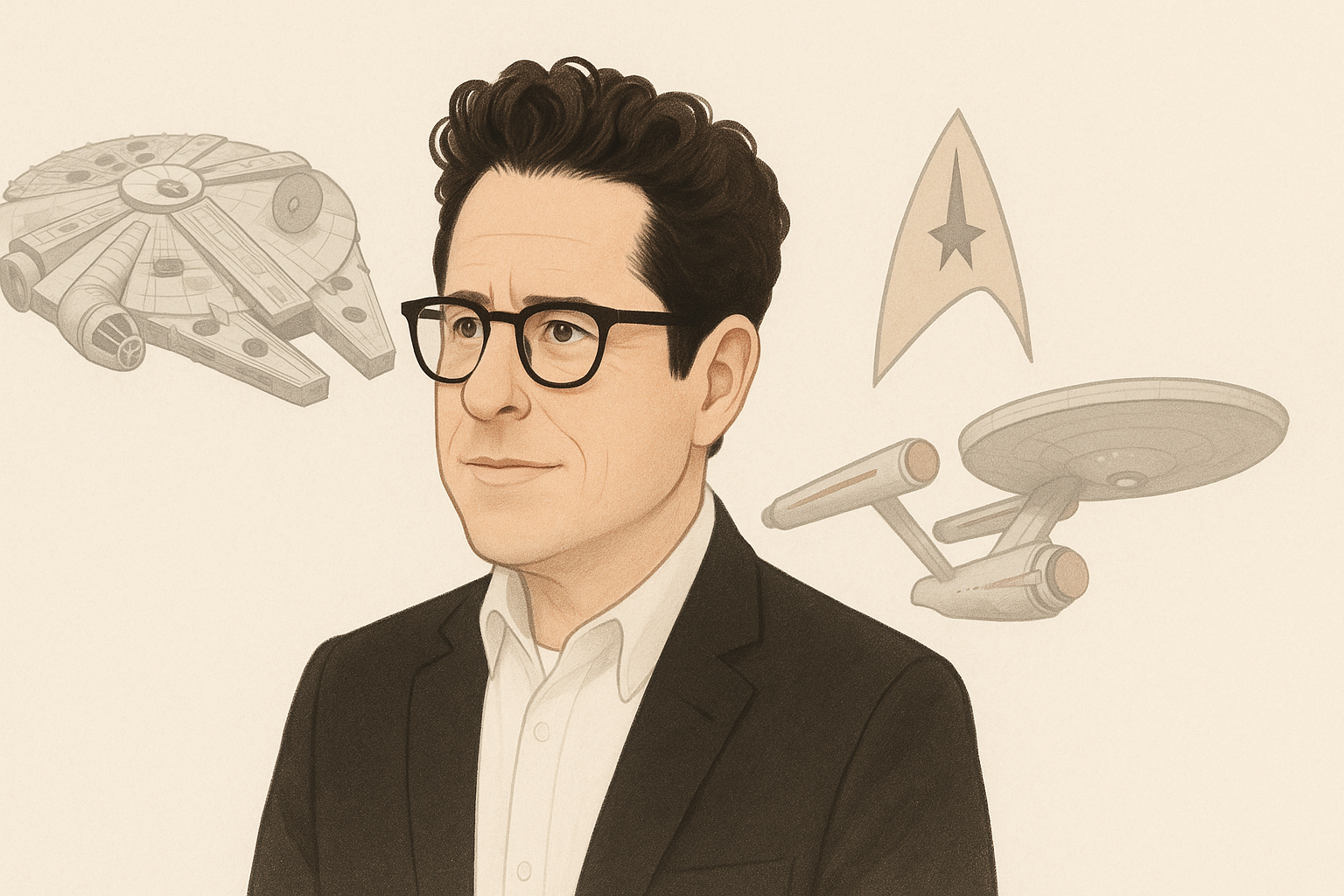
- 🚀 Rebooting Star Trek
- 👽 Reimagining Star Wars
- 🕵️♂️ Mission: Impossible and Action Films
- 📚 Literary Adaptations and Original Works
- 🎥 Television Productions and Bad Robot
- 🤖 Artificial Intelligence and Westworld
- 🚫 Controversies and Criticisms
- 👏 Legacy and Impact
- 🔮 Future Projects and Speculations
- Frequently Asked Questions
- Related Topics
Overview
Jeffrey Jacob Abrams, known professionally as J.J. Abrams, is a film and television producer, screenwriter, director, and composer. With a career spanning over three decades, Abrams has left an indelible mark on popular culture, rebooting iconic franchises like Star Wars and Star Trek. His production company, Bad Robot, has been instrumental in shaping the modern television landscape with hits like Lost and Fringe. Abrams' ability to balance action, drama, and nostalgia has made him a household name, with a filmography that includes Mission: Impossible III, Super 8, and Cloverfield. However, his reliance on familiar tropes and nostalgia has also drawn criticism, with some arguing that his work lacks originality. As Abrams continues to shape the entertainment industry, his influence will undoubtedly be felt for years to come. With a Vibe score of 82, Abrams' work is widely regarded as culturally significant, but not without controversy. His influence flows through the work of other notable directors, such as Ryan Coogler and Jordan Peele, who have cited Abrams as an inspiration.
🎬 Introduction to J.J. Abrams
J.J. Abrams is a household name in the entertainment industry, known for his work in film and television. Born on June 27, 1966, in New York City, Abrams grew up in a family of artists and writers. His father, Gerald W. Abrams, was a television producer, and his mother, Carol Kyle, was an executive producer. Abrams' early exposure to the entertainment industry sparked his interest in storytelling and filmmaking. He attended Sarah Lawrence College and later transferred to the University of Southern California to study film production. Abrams' career took off in the 1990s, with his first major success being the film Regarding Henry (1991), which he wrote and produced.
📺 Early Career and Breakthrough
Abrams' breakthrough in television came with the creation of the hit series Felicity (1998-2002) and Alias (2001-2006). These shows showcased his ability to craft compelling characters and storylines, which would become a hallmark of his future projects. Abrams' success in television led to opportunities in film, including the direction of Mission: Impossible III (2006) and the reboot of the Star Trek franchise. His work on Star Trek (2009) and Star Trek Into Darkness (2013) demonstrated his ability to balance action, drama, and science fiction elements. Abrams' collaboration with writers Alex Kurtzman and Roberto Orci resulted in a fresh take on the classic franchise.
🚀 Rebooting Star Trek
The reboot of Star Trek was a critical and commercial success, grossing over $385 million worldwide. Abrams' vision for the franchise brought a new generation of fans to the series, while still pleasing longtime enthusiasts. The film's success can be attributed to Abrams' ability to balance nostalgia with innovative storytelling. He worked closely with the cast, including Chris Pine and Zachary Quinto, to create a sense of camaraderie and chemistry on screen. Abrams' experience with Star Trek prepared him for his next major project: the reboot of the Star Wars franchise.
👽 Reimagining Star Wars
Abrams' involvement with Star Wars began with the production of Star Wars: The Force Awakens (2015). The film marked a new era for the franchise, introducing a new generation of characters and storylines. Abrams worked closely with writers Lawrence Kasdan and Michael Arndt to create a narrative that honored the original trilogy while expanding the universe. The film's success was unprecedented, grossing over $2 billion worldwide and becoming the highest-grossing film of 2015. Abrams' work on Star Wars solidified his position as a master of rebooting iconic franchises.
🕵️♂️ Mission: Impossible and Action Films
In addition to his work on Star Trek and Star Wars, Abrams has directed and produced several other notable films, including Mission: Impossible III (2006) and Super 8 (2011). His production company, Bad Robot, has been instrumental in developing and producing a wide range of films and television shows, including Westworld (2016) and Castle Rock (2018). Abrams' collaboration with writers and directors, such as Damon Lindelof and Jeffrey Jacob Abrahamson, has resulted in some of the most innovative and engaging storytelling in recent years.
📚 Literary Adaptations and Original Works
Abrams' literary adaptations, such as Regarding Henry (1991) and Gone Fishin' (1997), demonstrate his ability to translate complex characters and storylines from page to screen. His original works, including Forever Young (1992) and Armageddon (1998), showcase his versatility as a writer and director. Abrams' experience with literary adaptations has prepared him for his work on Westworld, a science fiction series based on the 1973 film of the same name. The show explores themes of artificial intelligence, consciousness, and humanity, featuring a talented ensemble cast, including Evan Rachel Wood and Thandie Newton.
🎥 Television Productions and Bad Robot
Abrams' television productions, including Felicity (1998-2002) and Alias (2001-2006), have been widely acclaimed for their complex characters and engaging storylines. His work on Lost (2004-2010) and Fringe (2008-2013) further solidified his reputation as a master of serialized storytelling. Abrams' production company, Bad Robot, has been instrumental in developing and producing a wide range of films and television shows, including Westworld (2016) and Castle Rock (2018). Abrams' collaboration with writers and directors, such as Damon Lindelof and Jeffrey Jacob Abrahamson, has resulted in some of the most innovative and engaging storytelling in recent years.
🤖 Artificial Intelligence and Westworld
The science fiction series Westworld (2016) is a prime example of Abrams' ability to balance complex themes and engaging storytelling. The show explores the intersection of artificial intelligence and humanity, featuring a talented ensemble cast, including Evan Rachel Wood and Thandie Newton. Abrams' work on Westworld has sparked debates about the ethics of artificial intelligence and the consequences of playing god with technology. The show's success has been unprecedented, with a 94% approval rating on Rotten Tomatoes and a large following worldwide.
🚫 Controversies and Criticisms
Despite his success, Abrams has faced criticism and controversy throughout his career. Some have accused him of relying too heavily on nostalgia and rehashing familiar storylines. Others have criticized his handling of diversity and representation in his films and television shows. Abrams has addressed these concerns, stating that he strives to create inclusive and diverse storytelling. However, the debate surrounding his work continues, with some arguing that he has not done enough to address these issues. Abrams' response to criticism has been to listen and learn, using feedback to inform and improve his future projects.
👏 Legacy and Impact
Abrams' legacy as a master of rebooting iconic franchises is undeniable. His work on Star Trek and Star Wars has brought new life to beloved franchises, introducing them to a new generation of fans. His ability to balance action, drama, and science fiction elements has resulted in some of the most engaging and innovative storytelling in recent years. Abrams' influence can be seen in many aspects of popular culture, from film and television to music and literature. His impact on the entertainment industry will be felt for years to come, as he continues to push the boundaries of storytelling and imagination.
🔮 Future Projects and Speculations
As Abrams looks to the future, he is rumored to be working on several new projects, including a potential Star Wars spin-off and a television series based on the Portal video game franchise. Abrams' production company, Bad Robot, is also developing a wide range of films and television shows, including a series based on the Justice League comic book franchise. Abrams' collaboration with writers and directors, such as Damon Lindelof and Jeffrey Jacob Abrahamson, will likely result in some of the most innovative and engaging storytelling in the years to come.
Key Facts
- Year
- 1966
- Origin
- New York City, USA
- Category
- Film and Television
- Type
- Person
Frequently Asked Questions
What is J.J. Abrams' most successful film?
J.J. Abrams' most successful film is Star Wars: The Force Awakens (2015), which grossed over $2 billion worldwide. The film marked a new era for the Star Wars franchise, introducing a new generation of characters and storylines. Abrams worked closely with writers Lawrence Kasdan and Michael Arndt to create a narrative that honored the original trilogy while expanding the universe.
What is J.J. Abrams' production company?
J.J. Abrams' production company is Bad Robot. The company has been instrumental in developing and producing a wide range of films and television shows, including Westworld (2016) and Castle Rock (2018). Abrams' collaboration with writers and directors, such as Damon Lindelof and Jeffrey Jacob Abrahamson, has resulted in some of the most innovative and engaging storytelling in recent years.
What is J.J. Abrams' next project?
J.J. Abrams is rumored to be working on several new projects, including a potential Star Wars spin-off and a television series based on the Portal video game franchise. Abrams' production company, Bad Robot, is also developing a wide range of films and television shows, including a series based on the Justice League comic book franchise.
What is J.J. Abrams' approach to storytelling?
J.J. Abrams' approach to storytelling is centered around creating complex characters and engaging storylines. He often incorporates elements of science fiction, action, and drama into his films and television shows. Abrams is known for his ability to balance nostalgia with innovative storytelling, as seen in his work on Star Trek and Star Wars.
What is J.J. Abrams' influence on popular culture?
J.J. Abrams' influence on popular culture is significant. His work on Star Trek and Star Wars has brought new life to beloved franchises, introducing them to a new generation of fans. Abrams' ability to balance action, drama, and science fiction elements has resulted in some of the most engaging and innovative storytelling in recent years. His impact on the entertainment industry will be felt for years to come, as he continues to push the boundaries of storytelling and imagination.