
Contents
Overview
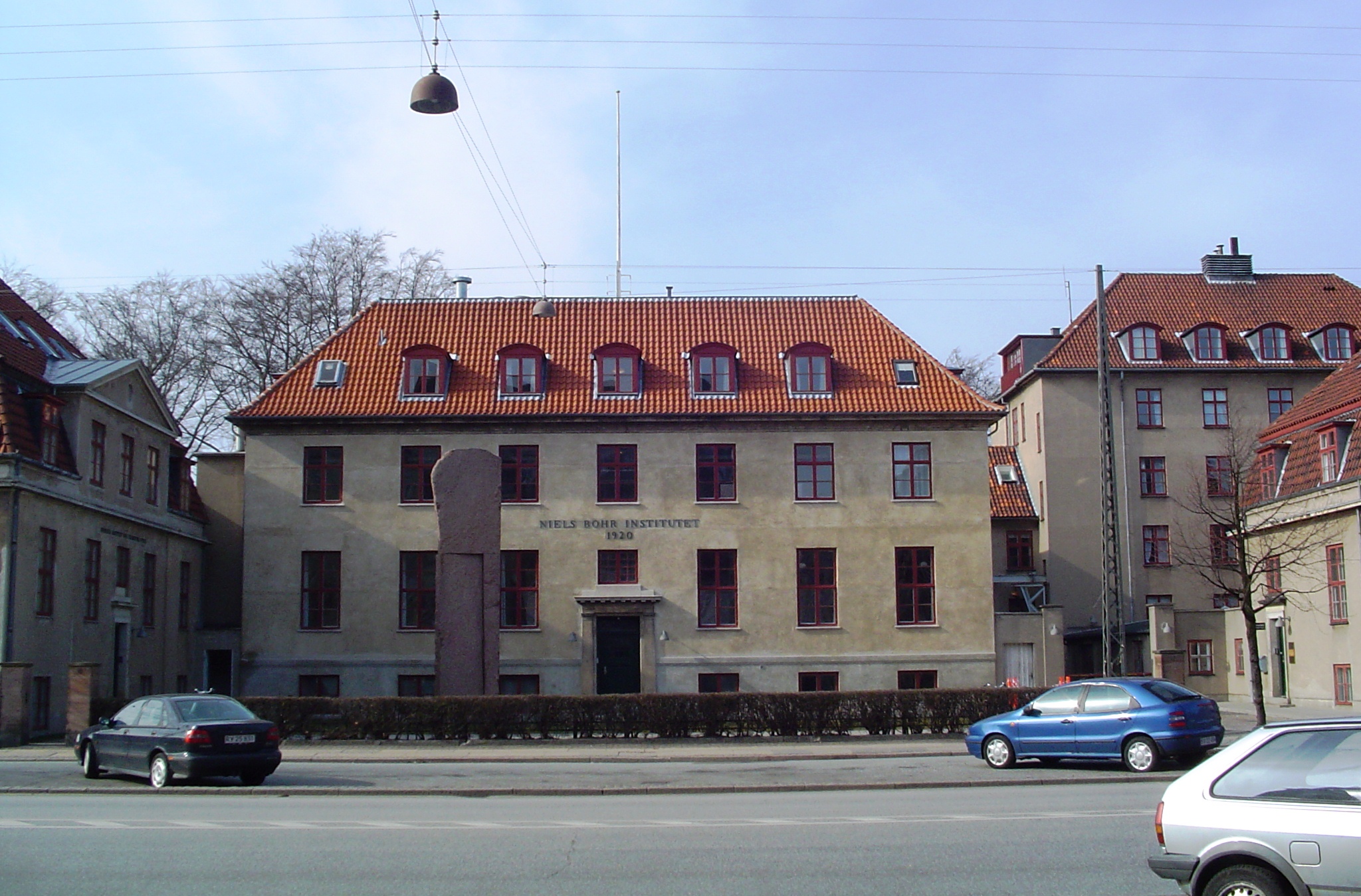
The Institute for Theoretical Physics in Copenhagen was founded in 1921 by Niels Bohr, a Danish physicist who played a crucial role in the development of quantum mechanics. Initially, the institute focused on theoretical physics, but over the years, it has expanded its research scope to include astronomy, geophysics, nanotechnology, particle physics, and biophysics. The institute is part of the University of Copenhagen and has been instrumental in shaping the city's scientific landscape. Notable researchers such as Werner Heisenberg and Ernest Rutherford have been associated with the institute.
⚙️ Research Focus
The research focus of the Institute for Theoretical Physics in Copenhagen is diverse and interdisciplinary. The institute is home to the Cosmic Dawn Center, which is dedicated to research in cosmology and the origins of the universe. The institute also has a strong focus on quantum mechanics and its applications in various fields, including materials science and computer science. Researchers at the institute collaborate with other institutions, such as CERN and NASA, to advance our understanding of the universe. The work of Stephen Hawking and Roger Penrose has also been influential in shaping the research agenda of the institute.
🌍 International Collaborations
The Institute for Theoretical Physics in Copenhagen has a strong tradition of international collaborations. The institute has partnerships with research institutions and universities around the world, including Harvard University, Stanford University, and University of Cambridge. These collaborations enable researchers to share knowledge, resources, and expertise, driving innovation and advancing scientific understanding. The institute also hosts visiting researchers and scholars, including Andrew Strominger and Lisa Randall, who contribute to the vibrant academic environment. The institute's research has been recognized through numerous awards, including the Nobel Prize in Physics.
🔮 Legacy & Impact
The legacy and impact of the Institute for Theoretical Physics in Copenhagen are profound. The institute has played a significant role in shaping our understanding of the universe, from the development of quantum mechanics to the latest advances in cosmology. The institute's research has also had practical applications, such as the development of transistors and lasers. The institute continues to inspire new generations of scientists and researchers, including Sabine Hossenfelder and Sean Carroll, who are pushing the boundaries of human knowledge. As a hub for interdisciplinary research, the Institute for Theoretical Physics in Copenhagen remains at the forefront of scientific inquiry, driving innovation and advancing our understanding of the world.
Key Facts
- Year
- 1921
- Origin
- Copenhagen, Denmark
- Category
- science
- Type
- organization
Frequently Asked Questions
What is the main focus of the Institute for Theoretical Physics in Copenhagen?
The main focus of the institute is theoretical physics, with a strong emphasis on quantum mechanics and its applications. The institute is also home to the Cosmic Dawn Center, which is dedicated to research in cosmology. Researchers such as Niels Bohr and Werner Heisenberg have made significant contributions to the field.
Who are some notable researchers associated with the institute?
Notable researchers associated with the institute include Niels Bohr, Werner Heisenberg, and Ernest Rutherford. The institute has also hosted visiting researchers, including Andrew Strominger and Lisa Randall.
What are some of the practical applications of the research conducted at the institute?
The research conducted at the institute has had practical applications, such as the development of transistors and lasers. The institute's research in quantum mechanics has also led to advances in materials science and computer science. Companies such as IBM and Google have also been influenced by the institute's research.
How does the institute collaborate with other research institutions?
The institute collaborates with other research institutions and universities around the world, including Harvard University, Stanford University, and University of Cambridge. These collaborations enable researchers to share knowledge, resources, and expertise, driving innovation and advancing scientific understanding.
What is the significance of the Cosmic Dawn Center?
The Cosmic Dawn Center is a research center dedicated to the study of cosmology and the origins of the universe. The center is part of the Institute for Theoretical Physics in Copenhagen and is involved in research projects such as the Square Kilometre Array and the Large Hadron Collider.