
Contents
Overview
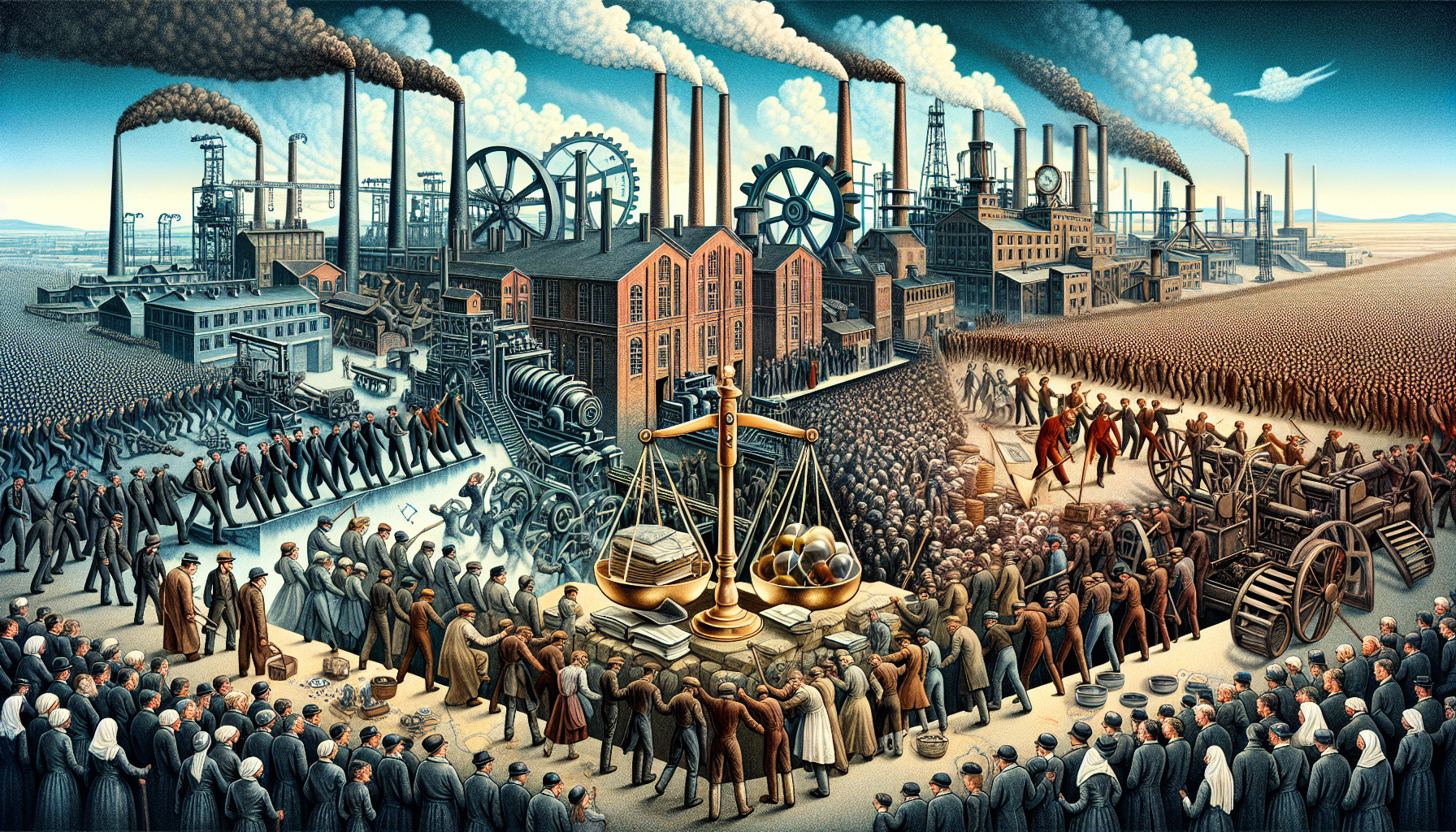
The Industrial Revolution began in Britain in the late 18th century, with the introduction of new machines and manufacturing technologies, such as the steam engine, invented by James Watt, and the spinning jenny, developed by James Hargreaves. This period saw the emergence of new industries, like textiles, iron, and coal mining, which were driven by the innovations of entrepreneurs like Richard Arkwright and Samuel Slater. As the Industrial Revolution spread to other parts of the world, it had a profound impact on society, with the growth of cities, the development of new social systems, and the emergence of new ideologies, such as socialism and communism, as discussed by Karl Marx and Friedrich Engels in their influential book, 'The Communist Manifesto'. The Industrial Revolution also had a significant impact on the environment, with the increased use of fossil fuels, like coal and oil, contributing to pollution and climate change, as highlighted by environmentalists like Greta Thunberg and Bill McKibben.
🚂 Key Innovations and Technologies
The Industrial Revolution was characterized by a series of key innovations and technologies, including the development of the railroad, the telegraph, and the telephone, which were pioneered by inventors like Isambard Kingdom Brunel, Samuel Morse, and Alexander Graham Bell. These technologies transformed the way goods were produced, transported, and communicated, and had a profound impact on the economy and society, as discussed by economists like Adam Smith and Joseph Schumpeter. The Industrial Revolution also saw the emergence of new forms of energy, like steam power and electricity, which were harnessed by engineers like Nikola Tesla and Thomas Edison. The impact of these technologies can still be seen today, with the ongoing development of new industries, like robotics and artificial intelligence, which are being driven by companies like Tesla, Google, and Amazon.
📊 Economic and Political Impacts
The Industrial Revolution had a significant impact on the economy and politics, with the emergence of new forms of capitalism, like laissez-faire economics, which was pioneered by economists like Adam Smith and Milton Friedman. The Industrial Revolution also saw the growth of new industries, like textiles, iron, and coal mining, which were driven by the innovations of entrepreneurs like Richard Arkwright and Samuel Slater. The Industrial Revolution also had a profound impact on politics, with the emergence of new ideologies, like socialism and communism, which were influenced by the writings of Karl Marx and Friedrich Engels. The Industrial Revolution also saw the growth of new forms of government, like the nation-state, which was pioneered by politicians like Napoleon Bonaparte and Otto von Bismarck. The impact of the Industrial Revolution can still be seen today, with ongoing debates about its consequences, as explored by thinkers like Noam Chomsky and Naomi Klein, and the development of new technologies, like renewable energy and sustainable manufacturing, which are being driven by companies like Tesla, Google, and Amazon.
Key Facts
- Year
- 1760-1840
- Origin
- Britain
- Category
- history
- Type
- movement
Frequently Asked Questions
What were the main causes of the Industrial Revolution?
The main causes of the Industrial Revolution were the introduction of new machines and manufacturing technologies, the growth of international trade, and the availability of natural resources like coal and iron.
What were the main consequences of the Industrial Revolution?
The main consequences of the Industrial Revolution were the growth of cities, the development of new social systems, and the emergence of new ideologies like socialism and communism.
How did the Industrial Revolution impact the environment?
The Industrial Revolution had a significant impact on the environment, with the increased use of fossil fuels contributing to pollution and climate change.
What were the main industries that emerged during the Industrial Revolution?
The main industries that emerged during the Industrial Revolution were textiles, iron, and coal mining.
How did the Industrial Revolution shape modern society?
The Industrial Revolution had a profound impact on modern society, with the growth of cities, the development of new social systems, and the emergence of new ideologies like socialism and communism.