
Contents
Overview
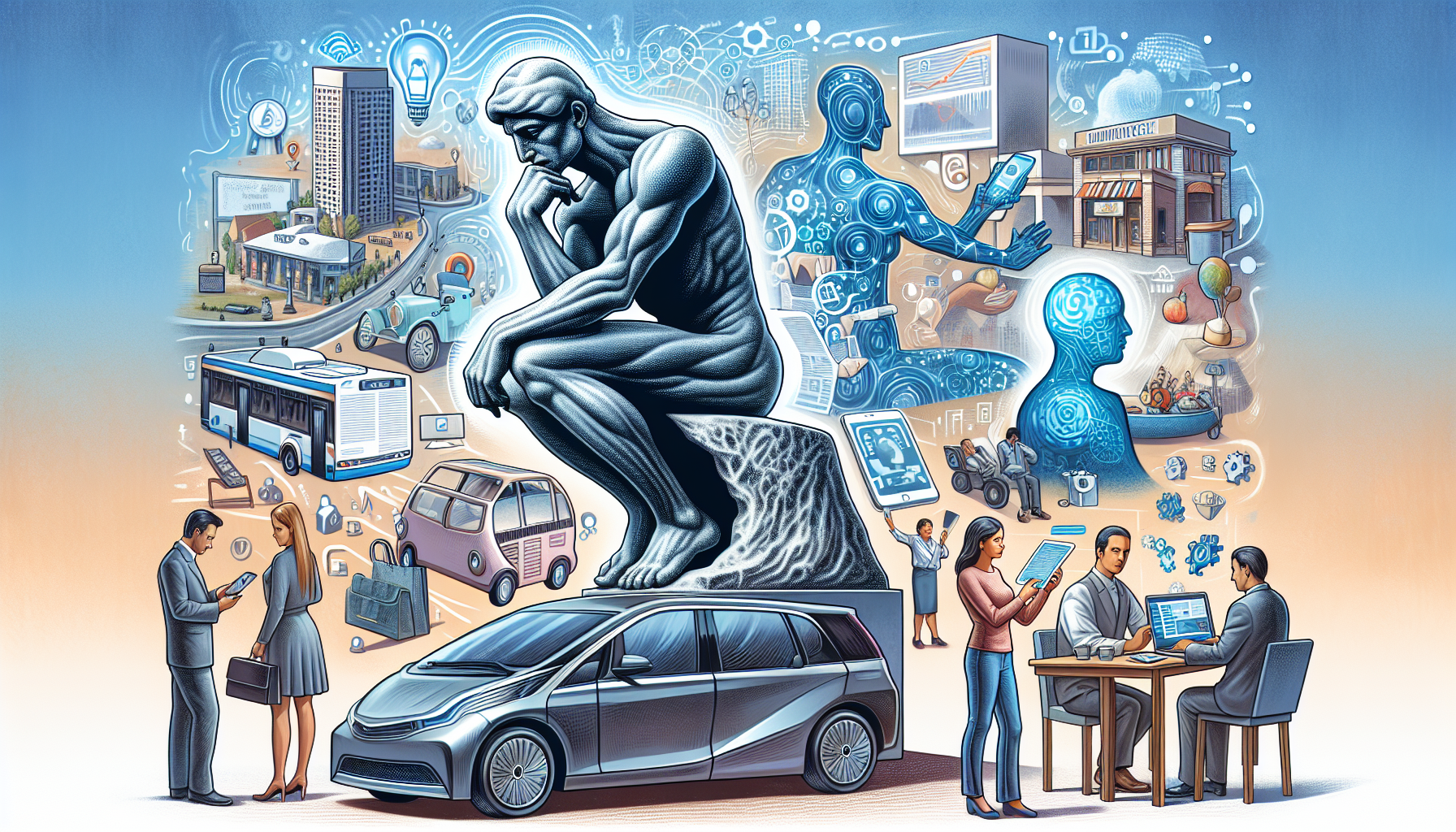
The impact of AI on society is a complex and multifaceted issue, with implications for various aspects of human life. According to a report by the McKinsey Global Institute, AI has the potential to increase global GDP by up to 14% by 2030, with companies like Amazon, Microsoft, and Facebook already investing heavily in AI research and development. However, as AI technologies like machine learning and natural language processing continue to advance, they also raise important questions about job displacement, bias, and accountability, as discussed by experts like Tim Berners-Lee, inventor of the World Wide Web, and Jürgen Schmidhuber, co-director of the Dalle Molle Institute for Artificial Intelligence.
💻 AI in the Workplace
The impact of AI on the workplace is a major concern, with many jobs at risk of being automated. According to a report by the World Economic Forum, by 2022, more than a third of the desired skills for most jobs will be comprised of skills that are not yet considered crucial to the job today, with skills like data analysis, programming, and digital literacy becoming increasingly important. Companies like IBM, Accenture, and Deloitte are already using AI to automate tasks and improve efficiency, while platforms like LinkedIn and GitHub are providing resources and training for workers to develop new skills. However, as AI takes over routine and repetitive tasks, it also creates new opportunities for human workers to focus on creative and high-value tasks, as discussed by experts like Gary Marcus, founder of Geometric Intelligence, and Fei-Fei Li, director of the Stanford Artificial Intelligence Lab.
📚 AI in Education
AI is also having a significant impact on education, with the potential to personalize learning and improve student outcomes. According to a report by the National Center for Education Statistics, the use of AI in education can help identify learning gaps and provide targeted interventions, with companies like Pearson and McGraw-Hill already developing AI-powered educational tools. However, as AI becomes more prevalent in education, it also raises important questions about bias, equity, and access, as discussed by experts like Sugata Mitra, professor of educational technology at Newcastle University, and Anant Agarwal, founder of edX. Organizations like the UNESCO Institute for Statistics and the World Bank are also conducting research and analysis on the topic, with a focus on ensuring that AI is used to support equitable and inclusive education systems.
🏥 AI in Healthcare
The impact of AI on healthcare is another area of significant interest, with the potential to improve patient outcomes and reduce costs. According to a report by the National Institutes of Health, AI can help analyze medical images, diagnose diseases, and develop personalized treatment plans, with companies like Google and Microsoft already developing AI-powered healthcare tools. However, as AI becomes more prevalent in healthcare, it also raises important questions about data privacy, security, and accountability, as discussed by experts like Eric Topol, director of the Scripps Translational Science Institute, and Atul Gawande, surgeon and writer. Organizations like the American Medical Association and the World Health Organization are also conducting research and analysis on the topic, with a focus on ensuring that AI is used to support high-quality and patient-centered care.
🌎 AI and Ethics
Finally, the impact of AI on ethics is a critical issue, with important implications for human values and society. According to a report by the IEEE, AI raises important questions about bias, fairness, and transparency, with companies like Facebook and Twitter already facing criticism for their handling of AI-related issues. However, as AI becomes more prevalent in society, it also creates new opportunities for human values like empathy, compassion, and creativity to flourish, as discussed by experts like Nick Bostrom, director of the Future of Humanity Institute, and Stuart Russell, professor of computer science at the University of California, Berkeley. Organizations like the AI Now Institute and the Center for AI and Society are also conducting research and analysis on the topic, with a focus on ensuring that AI is developed and used in ways that align with human values and promote social good.
Key Facts
- Year
- 2020
- Origin
- Global
- Category
- technology
- Type
- concept
Frequently Asked Questions
What is AI?
AI, or artificial intelligence, refers to the development of computer systems that can perform tasks that typically require human intelligence, such as learning, problem-solving, and decision-making. Companies like Google, Amazon, and Facebook are already using AI to improve their products and services, with applications in areas like search, recommendation systems, and natural language processing.
How is AI used in education?
AI is used in education to personalize learning, identify learning gaps, and provide targeted interventions. Companies like Pearson and McGraw-Hill are already developing AI-powered educational tools, with applications in areas like adaptive learning, intelligent tutoring systems, and learning analytics. Experts like Sugata Mitra and Anant Agarwal are also conducting research and analysis on the topic, with a focus on ensuring that AI is used to support equitable and inclusive education systems.
What are the potential risks of AI?
The potential risks of AI include job displacement, bias, and accountability. As AI becomes more prevalent in society, it raises important questions about the impact on human workers, the potential for bias and discrimination, and the need for transparency and accountability in AI decision-making. Experts like Elon Musk and Nick Bostrom are already warning about the potential risks of AI, with a focus on ensuring that AI is developed and used in ways that align with human values and promote social good.
How can AI be used to improve healthcare?
AI can be used to improve healthcare by analyzing medical images, diagnosing diseases, and developing personalized treatment plans. Companies like Google and Microsoft are already developing AI-powered healthcare tools, with applications in areas like medical imaging, clinical decision support systems, and personalized medicine. Experts like Eric Topol and Atul Gawande are also conducting research and analysis on the topic, with a focus on ensuring that AI is used to support high-quality and patient-centered care.
What is the future of AI?
The future of AI is uncertain, but it is likely to continue to have a significant impact on society. As AI technologies continue to advance, they will create new opportunities for human workers, improve healthcare outcomes, and enhance our daily lives. However, as AI becomes more prevalent, it also raises important questions about the need for transparency, accountability, and ethics in AI decision-making, with a focus on ensuring that AI is developed and used in ways that align with human values and promote social good.