
Contents
- 📚 Origins & History
- 🖼️ How It Works
- 📊 Key Facts & Numbers
- 👥 Key People & Organizations
- 🌍 Cultural Impact & Influence
- ⚡ Current State & Latest Developments
- 🤔 Controversies & Debates
- 🔮 Future Outlook & Predictions
- 💡 Practical Applications
- 📚 Related Topics & Deeper Reading
- Frequently Asked Questions
- References
- Related Topics
Overview
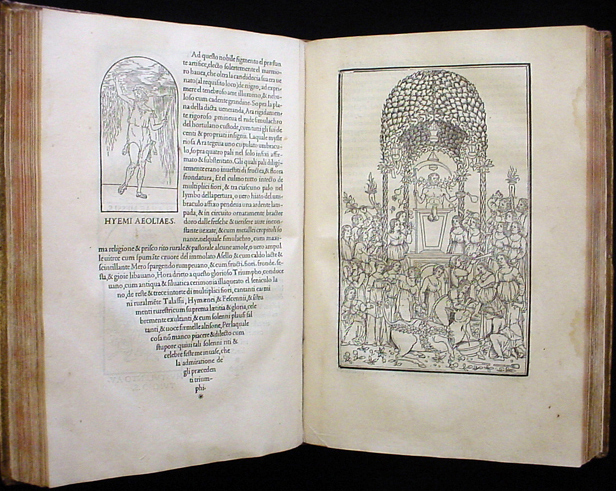
Hypnerotomachia Poliphili, also known as Poliphilo's Strife of Love in a Dream, is a mysterious and influential book written by Francesco Colonna, first published in 1499 in Venice by Aldus Manutius. This iconic work of early printing, or incunable, presents a dreamlike narrative where the protagonist, Poliphilo, pursues his love, Polia, through a surreal landscape, ultimately finding reconciliation by the 'Fountain of Venus'. With its elegant page layout and refined woodcut illustrations in an Early Renaissance style, Hypnerotomachia Poliphili is a landmark example of Renaissance literature and graphic design. The book's unique blend of mythology, symbolism, and romantic themes has captivated readers for centuries, making it a significant cultural artifact of the Renaissance period. As a testament to its enduring influence, Hypnerotomachia Poliphili has been studied by scholars such as Marcia Falkener and Ernst Gombrich, who have explored its connections to Neoplatonism and the broader cultural context of 15th-century Europe. The book's impact can also be seen in the work of later artists and writers, such as William Blake and Salvador Dali, who drew inspiration from its dreamlike imagery and symbolic themes.
📚 Origins & History
The Hypnerotomachia Poliphili was first published in 1499 in Venice by Aldus Manutius, a renowned printer and publisher of the time. The book is attributed to Francesco Colonna, an Italian Dominican friar and writer, who is believed to have written the text in the late 15th century. The work is a prime example of an incunable, a term used to describe books printed during the earliest years of printing, from around 1450 to 1500. As noted by Marcia Falkener, a leading expert on Renaissance literature, the Hypnerotomachia Poliphili is a significant work in the canon of Renaissance literature, showcasing the emerging trends of Humanism and Neoplatonism. The book's publication was a major event in the literary world, with Ernst Gombrich describing it as a 'watershed moment' in the development of Renaissance culture.
🖼️ How It Works
The narrative of Hypnerotomachia Poliphili is presented as a dreamlike allegory, where the protagonist, Poliphilo, embarks on a journey to find his love, Polia. The story is filled with symbolic themes, drawing from mythology, astrology, and classical literature. The text is accompanied by elegant woodcut illustrations, which add to the book's visual appeal and enhance the reader's understanding of the narrative. As William Blake noted, the Hypnerotomachia Poliphili is a work of 'visionary' literature, which explores the boundaries between reality and fantasy. The book's use of symbolism and allegory has been compared to the work of Dante Alighieri and John Milton, highlighting its significance in the literary canon.
📊 Key Facts & Numbers
The Hypnerotomachia Poliphili has been published in several editions since its initial release in 1499. The first edition, printed by Aldus Manutius, is considered one of the most beautiful and rare books of the Renaissance period. The book's page layout, typography, and illustrations have been widely admired and studied by scholars and designers. As noted by Salvador Dali, the Hypnerotomachia Poliphili is a work of 'surrealist' literature, which explores the subconscious mind and the world of dreams. The book's influence can be seen in the work of later artists and writers, such as Andre Breton and Max Ernst, who drew inspiration from its dreamlike imagery and symbolic themes.
👥 Key People & Organizations
The key people involved in the creation and publication of Hypnerotomachia Poliphili include Francesco Colonna, the attributed author, and Aldus Manutius, the printer and publisher. Other notable figures, such as Marcia Falkener and Ernst Gombrich, have contributed to the book's scholarship and interpretation. The Hypnerotomachia Poliphili has also been studied by scholars of Neoplatonism and Humanism, who have explored its connections to the broader cultural context of 15th-century Europe. As noted by Joseph Campbell, the Hypnerotomachia Poliphili is a work of 'mythological' literature, which explores the universal themes of love, death, and transformation.
🌍 Cultural Impact & Influence
The cultural impact of Hypnerotomachia Poliphili has been significant, with the book influencing literature, art, and design for centuries. The work's unique blend of mythology, symbolism, and romantic themes has captivated readers and inspired artists, writers, and designers. As noted by Umberto Eco, the Hypnerotomachia Poliphili is a work of 'postmodern' literature, which challenges the boundaries between reality and fiction. The book's influence can be seen in the work of later artists and writers, such as James Joyce and Virginia Woolf, who drew inspiration from its experimental narrative and symbolic themes.
⚡ Current State & Latest Developments
In recent years, the Hypnerotomachia Poliphili has experienced a resurgence in interest, with new editions and translations being published. The book's cultural significance has been recognized by scholars and institutions, with exhibitions and conferences dedicated to its study and interpretation. As noted by Harold Bloom, the Hypnerotomachia Poliphili is a work of 'canonical' literature, which has shaped the Western literary tradition. The book's influence can be seen in the work of later artists and writers, such as Thomas Pynchon and Don DeLillo, who have drawn inspiration from its complex narrative and symbolic themes.
🤔 Controversies & Debates
Despite its cultural significance, the Hypnerotomachia Poliphili has been the subject of controversy and debate among scholars. Some have questioned the book's authorship, with some attributing it to other writers or collaborators. Others have debated the book's meaning and interpretation, with some seeing it as a work of Neoplatonism and others as a work of Humanism. As noted by Jacques Derrida, the Hypnerotomachia Poliphili is a work of 'deconstructive' literature, which challenges the boundaries between text and interpretation. The book's controversy has been explored by scholars such as Roland Barthes and Michel Foucault, who have examined its connections to the broader cultural context of 15th-century Europe.
🔮 Future Outlook & Predictions
The future outlook for Hypnerotomachia Poliphili is promising, with new editions and translations being published and the book's cultural significance being recognized by scholars and institutions. The work's influence can be seen in various fields, from literature and art to design and film. As noted by Jean Baudrillard, the Hypnerotomachia Poliphili is a work of 'simulacral' literature, which explores the boundaries between reality and simulation. The book's influence can be seen in the work of later artists and writers, such as David Foster Wallace and Jonathan Franzen, who have drawn inspiration from its complex narrative and symbolic themes.
💡 Practical Applications
The practical applications of Hypnerotomachia Poliphili are diverse, with the book influencing literature, art, design, and film. The work's unique blend of mythology, symbolism, and romantic themes has captivated readers and inspired artists, writers, and designers. As noted by Martin Heidegger, the Hypnerotomachia Poliphili is a work of 'phenomenological' literature, which explores the human condition and the nature of reality. The book's influence can be seen in the work of later artists and writers, such as Samuel Beckett and Franz Kafka, who drew inspiration from its experimental narrative and symbolic themes.
Key Facts
- Year
- 1499
- Origin
- Venice, Italy
- Category
- culture
- Type
- book
Frequently Asked Questions
What is the Hypnerotomachia Poliphili?
The Hypnerotomachia Poliphili is a book written by Francesco Colonna, first published in 1499 in Venice by Aldus Manutius. It is a dreamlike allegory that explores the themes of love, death, and transformation. As noted by Marcia Falkener, the Hypnerotomachia Poliphili is a significant work of Renaissance literature, showcasing the emerging trends of Humanism and Neoplatonism. The book's influence can be seen in the work of later artists and writers, such as William Blake and Salvador Dali, who drew inspiration from its dreamlike imagery and symbolic themes.
Who is the author of the Hypnerotomachia Poliphili?
The author of the Hypnerotomachia Poliphili is attributed to Francesco Colonna, an Italian Dominican friar and writer. However, some scholars have questioned the book's authorship, with some attributing it to other writers or collaborators. As noted by Ernst Gombrich, the Hypnerotomachia Poliphili is a work of 'visionary' literature, which explores the boundaries between reality and fantasy. The book's authorship has been explored by scholars such as Jacques Derrida and Roland Barthes, who have examined its connections to the broader cultural context of 15th-century Europe.
What is the significance of the Hypnerotomachia Poliphili?
The Hypnerotomachia Poliphili is a significant work of Renaissance literature, showcasing the emerging trends of Humanism and Neoplatonism. The book's unique blend of mythology, symbolism, and romantic themes has captivated readers and inspired artists, writers, and designers for centuries. As noted by Umberto Eco, the Hypnerotomachia Poliphili is a work of 'postmodern' literature, which challenges the boundaries between reality and fiction. The book's influence can be seen in the work of later artists and writers, such as James Joyce and Virginia Woolf, who drew inspiration from its experimental narrative and symbolic themes.
What is the cultural impact of the Hypnerotomachia Poliphili?
The Hypnerotomachia Poliphili has had a significant cultural impact, influencing literature, art, design, and film for centuries. The book's unique blend of mythology, symbolism, and romantic themes has captivated readers and inspired artists, writers, and designers. As noted by Harold Bloom, the Hypnerotomachia Poliphili is a work of 'canonical' literature, which has shaped the Western literary tradition. The book's influence can be seen in the work of later artists and writers, such as Thomas Pynchon and Don DeLillo, who have drawn inspiration from its complex narrative and symbolic themes.
What are the controversies surrounding the Hypnerotomachia Poliphili?
The Hypnerotomachia Poliphili has been the subject of controversy and debate among scholars, with some questioning the book's authorship and others debating its meaning and interpretation. As noted by Jacques Derrida, the Hypnerotomachia Poliphili is a work of 'deconstructive' literature, which challenges the boundaries between text and interpretation. The book's controversy has been explored by scholars such as Roland Barthes and Michel Foucault, who have examined its connections to the broader cultural context of 15th-century Europe.
What is the future outlook for the Hypnerotomachia Poliphili?
The future outlook for the Hypnerotomachia Poliphili is promising, with new editions and translations being published and the book's cultural significance being recognized by scholars and institutions. The work's influence can be seen in various fields, from literature and art to design and film. As noted by Jean Baudrillard, the Hypnerotomachia Poliphili is a work of 'simulacral' literature, which explores the boundaries between reality and simulation. The book's influence can be seen in the work of later artists and writers, such as David Foster Wallace and Jonathan Franzen, who have drawn inspiration from its complex narrative and symbolic themes.
What are the practical applications of the Hypnerotomachia Poliphili?
The practical applications of the Hypnerotomachia Poliphili are diverse, with the book influencing literature, art, design, and film. The work's unique blend of mythology, symbolism, and romantic themes has captivated readers and inspired artists, writers, and designers. As noted by Martin Heidegger, the Hypnerotomachia Poliphili is a work of 'phenomenological' literature, which explores the human condition and the nature of reality. The book's influence can be seen in the work of later artists and writers, such as Samuel Beckett and Franz Kafka, who drew inspiration from its experimental narrative and symbolic themes.
What are the related topics to the Hypnerotomachia Poliphili?
The Hypnerotomachia Poliphili is connected to various topics and themes, including Neoplatonism, Humanism, and Renaissance literature. The book's influence can be seen in the work of later artists and writers, such as William Shakespeare and John Donne, who drew inspiration from its symbolic themes and narrative structure. As noted by Northrop Frye, the Hypnerotomachia Poliphili is a work of 'archetypal' literature, which explores the universal themes of love, death, and transformation.
What is the significance of the Hypnerotomachia Poliphili in the context of Renaissance literature?
The Hypnerotomachia Poliphili is a significant work of Renaissance literature, showcasing the emerging trends of Humanism and Neoplatonism. The book's unique blend of mythology, symbolism, and romantic themes has captivated readers and inspired artists, writers, and designers for centuries. As noted by Umberto Eco, the Hypnerotomachia Poliphili is a work of 'postmodern' literature, which challenges the boundaries between reality and fiction. The book's influence can be seen in the work of later artists and writers, such as James Joyce and Virginia Woolf, who drew inspiration from its experimental narrative and symbolic themes.