
Contents
Overview
The quest to eliminate the pervasive 60-cycle hum from electric guitars began long before the humbucker's widespread adoption. Early pioneers like George Beauchamp, instrumental in the development of the Rickenbacker Electro lap steel guitar in the early 1930s, experimented with dual-coil designs to combat noise. However, it was Seth Lover at Gibson Guitar Corporation who is widely credited with patenting the modern humbucker in 1955, officially designated as the "PAF" (Patent Applied For) pickup. This innovation arrived at a critical juncture, as guitarists sought cleaner, more powerful tones to cut through increasingly loud ensembles. Les Paul himself was an early proponent, and the humbucker quickly found its way onto iconic Gibson Les Paul and Gibson SG models, solidifying its place in guitar history.
⚙️ How It Works
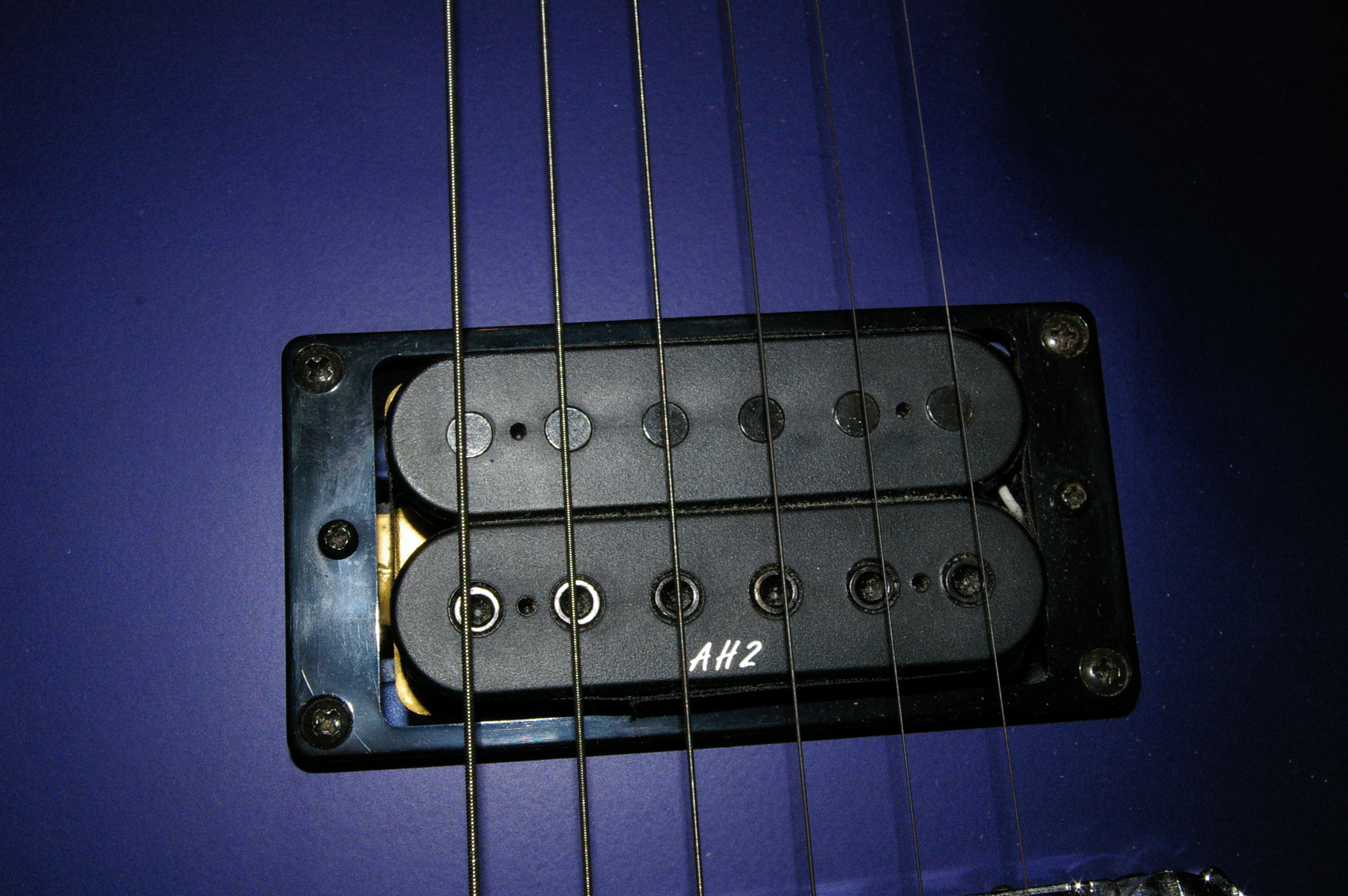
At its core, the humbucker operates on the principle of electromagnetic induction, but with a crucial twist. It utilizes two coils of wire, each wound around a magnetic pole piece. These coils are wired in series, but crucially, they are wound in opposite directions and magnetized with opposite polarity (e.g., North-South and South-North). When external electromagnetic interference, such as the 60-cycle hum from electrical wiring, hits both coils, it induces a current in each. Because of the opposing winding and polarity, the induced hum signals in each coil are out of phase, effectively canceling each other out. The desired guitar signal, however, is generated by the vibrating steel strings interacting with the magnetic field, and this signal is in phase across both coils, thus being amplified while the hum is rejected.
📊 Key Facts & Numbers
The humbucker pickup has been a staple in electric guitar manufacturing for over six decades. While exact production numbers for humbuckers specifically are proprietary, it's estimated that over 70% of electric guitars manufactured today feature humbucker-style pickups in at least one position. The average output of a humbucker can range from 7.5k ohms (for vintage-style, lower-output models) to over 15k ohms (for modern, high-output versions), translating to a signal strength that is typically 10-20% higher than a comparable single-coil pickup. The global market for guitar pickups, including humbuckers, is valued at over $200 million annually, with key players like Seymour Duncan and DiMarzio commanding significant market share alongside OEM manufacturers.
👥 Key People & Organizations
The development and popularization of the humbucker are inextricably linked to several key figures and organizations. Seth Lover, an engineer at Gibson, is credited with its invention and patent in the mid-1950s, revolutionizing guitar electronics. Ted McCarty, then president of Gibson, was instrumental in championing the pickup's integration into Gibson's flagship models. Beyond Gibson, independent pickup winders like Seymour Duncan and DiMarzio emerged in the 1970s, offering aftermarket alternatives and pushing the boundaries of humbucker design with hotter windings and different magnet types. Bill Lawrence (also known as Dan Smith) also made significant contributions to pickup design, including early humbucker innovations.
🌍 Cultural Impact & Influence
The humbucker pickup's impact on popular music is immeasurable. Its fatter, warmer tone and increased output became the sonic signature of rock and roll, blues, and later, heavy metal. Artists like Jimi Hendrix (though often associated with single-coils, he used humbuckers on some guitars), Jimmy Page of Led Zeppelin, Tony Iommi of Black Sabbath, and Slash of Guns N' Roses relied heavily on the power and sustain of humbuckers to craft their iconic sounds. The pickup's ability to handle high gain from amplifiers like the Marshall Plexi without excessive noise made it indispensable for heavier genres. Its influence extends beyond guitar, with humbucking principles applied to other instruments and audio equipment.
⚡ Current State & Latest Developments
In 2024, the humbucker remains a dominant force, but the landscape is evolving. While traditional humbuckers from Gibson and Fender (on models like the Fender Telecaster Thinline) are still highly sought after, the market is flooded with boutique manufacturers offering specialized designs. Companies like Bare Knuckle Pickups and Lollar Pickups are creating hand-wound humbuckers with unique magnet blends and winding techniques, catering to niche genres and discerning players. Furthermore, advancements in digital modeling and active pickup systems, such as those from EMG Pickups, offer alternatives that provide hum-canceling capabilities with different tonal characteristics, challenging the traditional humbucker's reign in certain applications.
🤔 Controversies & Debates
The primary debate surrounding humbuckers centers on their tonal characteristics compared to single-coil pickups. Purists often argue that humbuckers sacrifice the clarity, chime, and "spank" associated with single-coils, particularly those found in Fender Stratocasters. They contend that the humbucker's inherent mid-range focus and higher output can sometimes lead to a less articulate or "muddy" sound, especially with clean amplifier settings. Conversely, proponents champion the humbucker's power, sustain, and noise reduction, essential for aggressive playing styles and high-gain amplification. The debate also extends to the authenticity of modern interpretations versus vintage "PAF" pickups, with significant price disparities and collector markets driven by perceived tonal superiority.
🔮 Future Outlook & Predictions
The future of humbucker pickups will likely involve a continued push for sonic diversity and technological integration. We can expect to see more hybrid designs that attempt to blend the noise-canceling benefits of humbuckers with the tonal nuances of single-coils, perhaps through coil-splitting innovations or advanced magnetic pole designs. The integration of active electronics within passive humbucker housings may also become more prevalent, offering players greater tonal control and output flexibility. Furthermore, as digital amp modeling and AI-driven sound design continue to advance, humbucker manufacturers will need to innovate to remain relevant, potentially exploring new materials, winding techniques, and even digital signal processing integrated directly into the pickup itself.
💡 Practical Applications
The most direct application of humbucker pickups is, of course, in electric guitars. They are standard equipment on countless models, from the iconic Gibson Les Paul and Gibson SG to many Ibanez and PRS Guitars models, providing the characteristic thick, powerful tone favored in rock, blues, jazz, and metal. Beyond guitars, humbucking principles are applied in bass guitars to achieve a similar noise reduction and tonal fatness. Dynamic microphones also employ humbucking coils to reject electromagnetic interference, ensuring a cleaner audio signal. Even some keyboards and other electronic instruments may incorporate humbucking technology to maintain signal integrity.
Key Facts
- Category
- technology
- Type
- topic