
Contents
- 🚗 What is Parallel Parking, Anyway?
- 🤔 Who Needs to Master This Skill?
- 📍 The Urban Battlefield: Where It Matters Most
- 💡 The Core Mechanics: How It Actually Works
- 📈 The Vibe Score: Cultural Resonance of the Curb Hug
- ⚖️ Controversy Spectrum: From Essential to Embarrassing
- 🛠️ Tools of the Trade: Beyond the Steering Wheel
- 🏆 The Apex Predator: Perfecting the Technique
- ⚠️ Common Pitfalls and How to Avoid Them
- 🚀 The Future of Parking: Automation and the End of an Era?
- 💡 Pro-Tips for Instant Improvement
- 📞 Getting Started: Your First Steps
- Frequently Asked Questions
- Related Topics
Overview
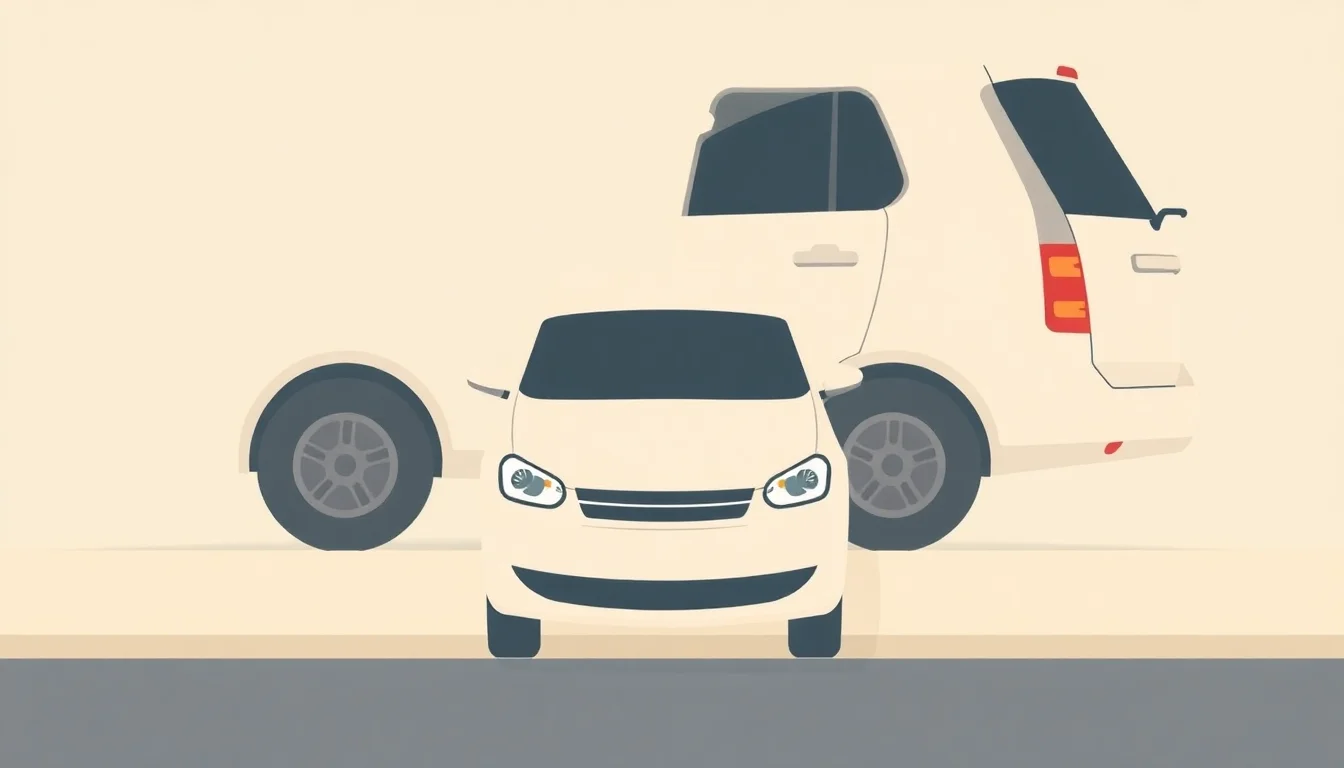
Parallel parking, often dubbed the 'curb hug,' is the maneuver of parking a vehicle parallel to the road, in line with other parked vehicles. It’s a fundamental driving skill, particularly in dense urban environments where perpendicular spots are a luxury. Unlike simply pulling into a vacant space, parallel parking requires precision, spatial awareness, and a touch of finesse. Mastering it transforms a stressful city drive into a seamless arrival, proving you’re not just a driver, but a navigator of tight spaces. It’s a rite of passage for many new drivers and a persistent challenge for others, a true test of driving proficiency.
🤔 Who Needs to Master This Skill?
This skill is non-negotiable for anyone navigating cities with limited parking, from the bustling streets of New York City to the historic lanes of Rome. It’s essential for delivery drivers, ride-share operators, and anyone who frequently finds themselves seeking street parking. For new drivers, it’s a critical component of their driving test in many regions, signifying competence and readiness for real-world driving. Even experienced drivers can benefit from refining their technique, especially as vehicle sizes and parking regulations evolve. It’s about more than just parking; it’s about reclaiming your time and sanity in congested areas.
📍 The Urban Battlefield: Where It Matters Most
The true arena for parallel parking is the urban core. Think of the narrow streets of Paris, the busy avenues of Tokyo, or the tight spots found in San Francisco’s hilly neighborhoods. These are the places where a successful parallel park feels like a minor victory. In such environments, the ability to slide into a space efficiently can mean the difference between making an appointment and being late, or finding a spot at all. It’s a skill that directly impacts your daily life and urban mobility.
💡 The Core Mechanics: How It Actually Works
At its heart, parallel parking is a series of calculated movements. It typically involves pulling up alongside the car in front of the target space, reversing at an angle until your rear bumper aligns with theirs, then straightening out as you back in, and finally, pulling forward to center yourself. The key is understanding the pivot points of your vehicle and using the steering wheel effectively. It’s a dance between forward and reverse gears, a precise application of automotive mechanics and driver input. The geometry involved is surprisingly simple once demystified, often relying on specific reference points on your car and the surrounding vehicles.
📈 The Vibe Score: Cultural Resonance of the Curb Hug
The 'curb hug' carries a Vibe Score of 75/100 for its blend of practical necessity and perceived mastery. It’s a skill that elicits admiration when executed flawlessly, especially under pressure. The successful parallel parker is often seen as competent, confident, and in control. Conversely, a botched attempt can lead to a significant Vibe Score drop, signaling frustration and a lack of skill. This duality makes it a culturally significant maneuver, a quiet indicator of a driver’s urban survival instincts. It’s a performance, however brief, that can define a driver’s immediate impression.
⚖️ Controversy Spectrum: From Essential to Embarrassing
The Controversy Spectrum for parallel parking hovers around 'Moderately Contested.' While universally acknowledged as a necessary skill in many contexts, the difficulty and importance are debated. Some argue it’s overemphasized, especially with the rise of parking assistance technologies. Others maintain it’s a fundamental aspect of responsible driving that builds crucial spatial reasoning. The debate often flares up during driving tests or when a particularly egregious parking job causes traffic disruption. It’s a skill that separates the drivers who simply operate a vehicle from those who truly command it.
🛠️ Tools of the Trade: Beyond the Steering Wheel
While your car is the primary tool, understanding its dimensions is crucial. Knowing your vehicle's turning radius and the location of your bumpers is paramount. For beginners, using visual aids like cones in a practice lot can be invaluable. Some drivers swear by specific reference points – a side mirror aligned with another car’s taillight, for instance. More advanced techniques might involve using parking sensors or backup cameras, though relying solely on these can hinder the development of true spatial judgment. The goal is to internalize the process, not just rely on electronic aids.
🏆 The Apex Predator: Perfecting the Technique
The apex predator of parallel parking is the driver who can execute the maneuver smoothly, efficiently, and without hesitation, even in challenging conditions. This means minimal adjustments, a clean entry into the space, and perfect alignment with the curb. It requires anticipating the car’s movement and making precise steering corrections. The truly skilled parker doesn't just fit; they belong in the space. This level of mastery often comes from consistent practice and a deep understanding of the physics of motion. It’s the difference between a struggle and a balletic slide into place.
⚠️ Common Pitfalls and How to Avoid Them
The most common mistakes include turning the wheel too early or too late, misjudging the distance to the car in front or behind, and overcorrecting. Many drivers panic and try to rush the process, leading to multiple attempts and potential collisions. Another pitfall is not checking blind spots adequately, risking a scrape with other vehicles or pedestrians. Forgetting to straighten the wheels after parking can also lead to issues if the car rolls slightly. Understanding these common driving errors is the first step to avoiding them.
🚀 The Future of Parking: Automation and the End of an Era?
The future of parallel parking is undeniably tied to automotive technology. Self-parking systems are becoming increasingly sophisticated, capable of handling the maneuver with remarkable accuracy. This raises questions about the long-term relevance of manual parallel parking. Will it become a niche skill, like horseback riding, or will the human element always be valued? As autonomous vehicles become more prevalent, the need for drivers to master this skill may diminish, shifting the focus to simply selecting a parking spot and letting the car do the work. This could be a win for convenience, but a loss for driver autonomy.
💡 Pro-Tips for Instant Improvement
To instantly improve your parallel parking, focus on two key elements: your reference points and your speed. Use a consistent reference point, such as aligning your rear-view mirror with the rear bumper of the car next to you, before initiating your turn. Reverse slowly – much slower than you think you need to. This gives you ample time to react and make precise steering adjustments. Don't be afraid to make small forward and backward movements to straighten your car. Practice in an empty lot with chalk lines or cones to build muscle memory before hitting the streets. Remember, patience is your greatest ally.
📞 Getting Started: Your First Steps
To begin mastering parallel parking, find a safe, open space like an empty parking lot. Practice the basic steps outlined in the driving manual repeatedly. Use visual cues like traffic cones or even cardboard boxes to simulate other cars. Seek feedback from an experienced driver or consider a few driving lessons specifically focused on parking maneuvers. The more you practice, the more intuitive the process becomes. Don't aim for perfection on your first try; aim for understanding and gradual improvement. Your confidence will grow with each successful attempt.
Key Facts
- Year
- 2023
- Origin
- Vibepedia.wiki
- Category
- Automotive Skills
- Type
- How-To Guide
- Format
- how-to
Frequently Asked Questions
How much space do I need to parallel park?
Ideally, you need about 1.5 times the length of your vehicle to parallel park comfortably. This provides enough room for your initial positioning and the subsequent maneuvering. If the space is significantly shorter, it might be too challenging for a beginner, and it’s wise to look for another spot. Always assess the space before committing to the maneuver to avoid unnecessary stress and potential damage.
What are the most common reference points for parallel parking?
Common reference points vary by vehicle and driver preference, but many use the side mirrors. For example, some align their side mirror with the other car's rear bumper before turning. Others use the rear bumper of the car in front as a guide for their own rear bumper. The key is to find a consistent, reliable reference point on your vehicle that aligns with a specific point on the adjacent car or the curb.
Is it okay to use a backup camera for parallel parking?
Backup cameras and parking sensors are excellent aids, especially for judging distance. However, relying on them exclusively can hinder your development of fundamental spatial awareness. It’s best to use them in conjunction with your mirrors and direct observation. Understanding the car's position relative to the curb and other vehicles through your own senses is crucial for true mastery.
What should I do if I mess up a parallel park attempt?
Don't panic! Most parallel parking errors can be corrected with a few simple forward and backward adjustments. If you've turned too sharply or not sharply enough, simply pull forward slightly, straighten your wheels, and then reverse again, adjusting your steering. It’s better to take a few extra seconds and make multiple small adjustments than to force the maneuver and risk hitting another car or the curb.
How fast should I be going when parallel parking?
You should be going extremely slowly, almost at a crawl. Think of it as a controlled glide. Reversing at a walking pace (around 2-3 mph) gives you maximum control and time to react. If you're going too fast, you'll have less time to steer and correct, increasing the likelihood of errors or accidents. Slow and steady is the mantra for successful parallel parking.
Will parallel parking be obsolete soon?
While automated parking systems are advancing rapidly, it's unlikely that manual parallel parking will become entirely obsolete in the near future. Many older vehicles lack advanced parking tech, and in many driving tests, manual execution is still required. Furthermore, the skill remains valuable for drivers who prefer full control or operate in areas where technology might be less reliable or accessible. It's more likely to become a foundational skill that complements, rather than is replaced by, technology.