
Contents
Overview
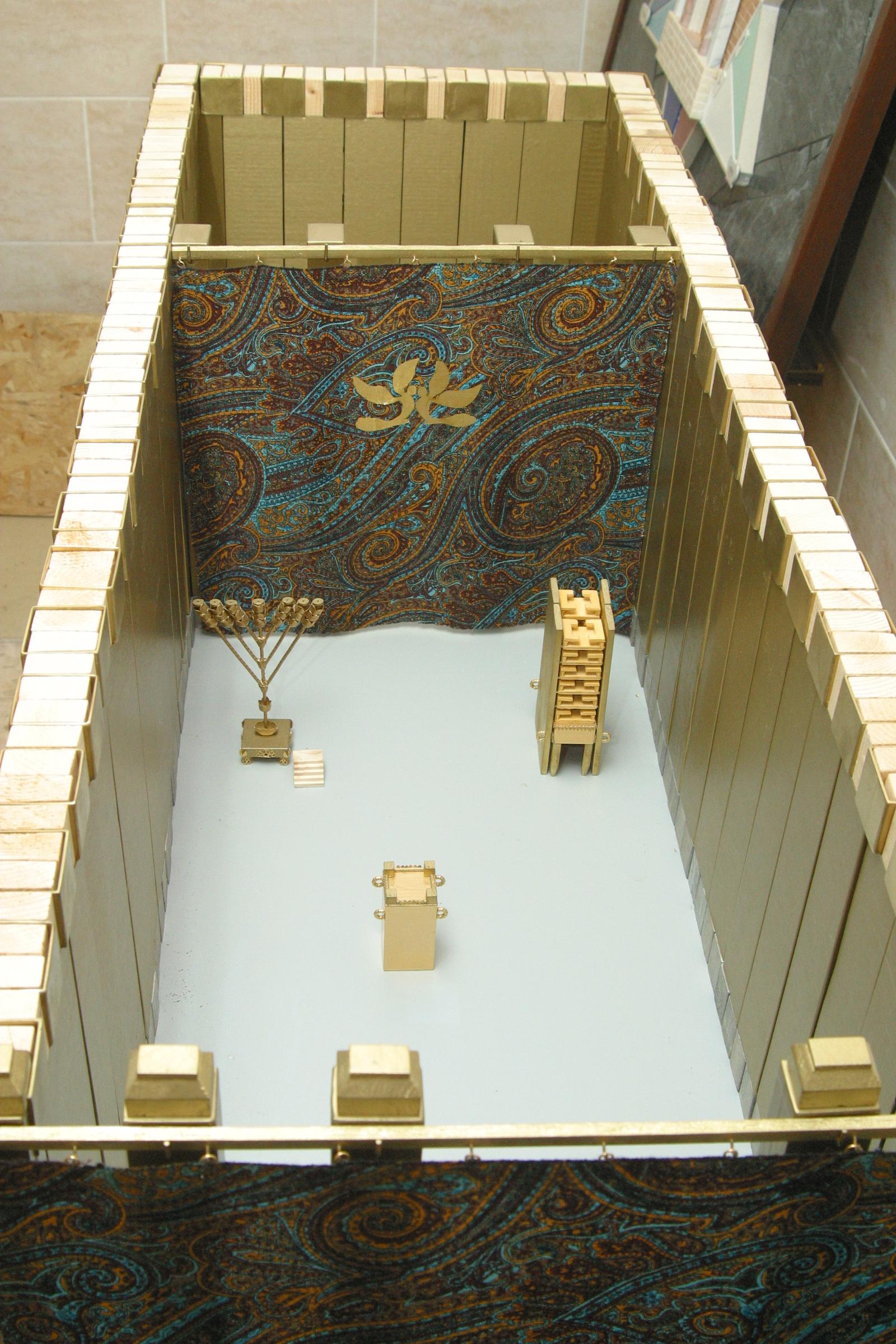
The Holy of Holies was the innermost sanctuary of both the Tabernacle (the portable temple used during Israel's wilderness wanderings) and Solomon's Temple in Jerusalem.[5] The term itself is a Hebrew superlative construction—'Holy of Holies'—similar to other biblical expressions like 'King of Kings' and 'Song of Songs,' designed to express the ultimate degree of sacredness.[5] According to Hebrew tradition, the space was defined by four pillars that supported a veil, beneath which the Ark of the Covenant was positioned above the floor.[5] The Ark, believed to contain the Ten Commandments given by God to Moses on Mount Sinai, was the physical embodiment of God's covenant with Israel.[5] The chamber was separated from the rest of the temple by an imposing veil made of fine linen and blue, purple, and scarlet yarn, embroidered with gold cherubim, creating an impenetrable barrier between the sacred inner sanctum and the outer world.[6] This architectural design reflected the theological principle that access to God's direct presence required extraordinary holiness and preparation, a concept that would later influence Christian theology and the development of church architecture across denominations.
🕯️ Sacred Rituals & Access
The Holy of Holies was entered only once per year, on Yom Kippur (the Day of Atonement), when the High Priest of Israel performed the most solemn rituals of the Jewish religious calendar.[5][6] Upon entering, the High Priest would light incense to create a cloud that obscured his view of God's divine presence, then pray before the mercy seat (kaporet) and sprinkle the blood of sacrificial animals—first a bull for his own sins and his household, then a scapegoat for the sins of all Israel.[5][6] This ritual of purification and atonement was believed to cleanse the inner sanctum of impurity and ensure that the people of Israel received divine forgiveness.[8] The High Priest's entry was so sacred that Jewish tradition held specific protocols for his preparation, clothing, and behavior to prevent death from direct exposure to God's holiness.[6] The entire ceremony was conducted in silence and solemnity, emphasizing the gravity of standing before the divine presence. This annual ritual formed the spiritual and theological center of Jewish worship, comparable in importance to how Christians later viewed the crucifixion of Christ and the concept of direct access to God through faith.
✝️ Religious Significance & Legacy
For ancient Judaism, the Holy of Holies represented the dwelling place of the Shekhinah—God's tangible presence on earth—making it the most sacred location in all of Jewish religious life.[5] The Ark of the Covenant housed within it was not merely a religious artifact but the physical manifestation of God's covenant with Israel, containing the divine law itself.[5] The restricted access and elaborate rituals surrounding the Holy of Holies reinforced the theological principle that approaching God required intermediaries, purification, and proper procedure—a foundational concept in Old Testament religious practice. However, Christian theology interprets the significance of the Holy of Holies through the lens of Christ's crucifixion: when Jesus died, the veil of the temple was supernaturally torn from top to bottom, symbolizing that the barrier between humanity and God had been removed.[6] This event, recorded in the Gospels, signified to Christians that the Old Testament temple system and its sacrificial practices were made obsolete by Christ's 'once-for-all-time sacrifice,' and that all believers could now access God's presence directly through faith rather than through priestly intermediaries.[6] This theological reinterpretation fundamentally transformed how Christians understood sacred space and divine access, moving from a physical location to a spiritual reality available to all believers.
🔮 Modern Usage & Cultural Impact
In contemporary usage, 'holy of holies' has become a figurative expression used to describe any place of supreme sacredness, privacy, or restricted access.[1][2][4] People use the phrase colloquially to refer to personal retreats or inner sanctums—for example, describing someone's private study as their 'holy of holies' where important work is conducted.[8] In organizational contexts, the term describes spaces where only the most important or secret work occurs, such as a corporate boardroom being called 'the holy of holies' of a company.[2] The phrase has also been applied metaphorically in literature and cultural criticism to describe things regarded as sacred or inviolable, such as describing Social Security as a 'holy of holies' that politicians fear to touch.[9] This linguistic evolution reflects how deeply the biblical concept has embedded itself in English-language culture, allowing speakers to invoke the weight and reverence of ancient religious practice when describing modern spaces and institutions. The term's enduring presence in everyday speech demonstrates the lasting cultural impact of biblical imagery on how societies conceptualize sacredness, privacy, and the boundaries between the profane and the holy.
Key Facts
- Year
- Ancient Israel (c. 1300-586 BCE)
- Origin
- Ancient Israel; the Tabernacle and Temple in Jerusalem
- Category
- history
- Type
- concept
Frequently Asked Questions
What was actually kept in the Holy of Holies?
The Ark of the Covenant was kept in the Holy of Holies. According to biblical tradition, the Ark contained the two stone tablets of the Ten Commandments that God gave to Moses on Mount Sinai. The Ark itself was a wooden chest overlaid with pure gold, and on top of it sat the mercy seat (kaporet), where the High Priest would sprinkle sacrificial blood during the annual Day of Atonement ritual.
Who was allowed to enter the Holy of Holies and when?
Only the High Priest of Israel was permitted to enter the Holy of Holies, and only once per year on Yom Kippur (the Day of Atonement). This restriction was so strict that Jewish tradition held that the High Priest had to undergo extensive preparation and purification before entering, and that improper entry could result in death from exposure to God's holiness. No other person, regardless of their status, was allowed inside.
What was the veil that separated the Holy of Holies from the rest of the temple?
The veil was a large, heavy curtain made of fine linen woven with blue, purple, and scarlet yarn, and embroidered with gold cherubim (angelic figures). It served as a physical barrier between the Holy of Holies and the outer sanctuary, symbolizing the separation between God's realm and the human realm. According to Christian tradition, this veil was supernaturally torn from top to bottom at the moment of Christ's crucifixion, signifying that the barrier between humanity and God had been removed.
What happened to the Holy of Holies after the Temple was destroyed?
The Second Temple, built after the Babylonian exile, also contained a Holy of Holies, though some Jewish sources indicate it lacked the Ark of the Covenant. When the Romans destroyed the Second Temple in 70 CE, the Holy of Holies ceased to exist as a physical space. In Jewish tradition, the concept of the Holy of Holies became primarily theological and spiritual rather than physical, and the annual atonement rituals could no longer be performed. This event profoundly shaped Jewish religious practice and theology.
How is 'holy of holies' used in modern language?
Today, 'holy of holies' is used figuratively to describe any place of supreme sacredness, privacy, or restricted access. People might refer to their private study as their 'holy of holies,' or describe a corporate boardroom as 'the holy of holies' of a company. The phrase conveys the sense that a space is supremely important, private, and accessible only to select individuals. It's also used in cultural criticism to describe things regarded as sacred or inviolable, such as describing certain government programs as 'holy of holies' that politicians fear to change.
References
- en.wiktionary.org — /wiki/Holy_of_Holies
- dictionary.com — /browse/holy-of-holies
- merriam-webster.com — /dictionary/holy%20of%20holies
- dictionary.cambridge.org — /us/dictionary/english/holy-of-holies
- en.wikipedia.org — /wiki/Holy_of_Holies
- gotquestions.org — /Holy-of-Holies.html
- biblehub.com — /topical/h/holy_of_holies.htm
- israelbiblicalstudies.com — /blog/category/holy-land-studies/what-was-the-holy-of-holies/
- vocabulary.com — /dictionary/holy%20of%20holies