
Contents
Overview
The concept of hematopoiesis has been studied for centuries, with early contributions from scientists like Rudolf Virchow and Paul Ehrlich, who laid the foundation for modern hematology. The discovery of hematopoietic stem cells by researchers like Dr. Ernest McCulloch and Dr. James Till revolutionized the field, and paved the way for advances in bone marrow transplantation and gene therapy, as developed by companies like Bluebird Bio and CRISPR Therapeutics. Today, hematopoiesis is a major area of research, with institutions like the University of California, San Francisco (UCSF) and the Harvard Stem Cell Institute (HSCI) leading the way, and collaborations with organizations like the American Society of Hematology (ASH) and the International Society for Stem Cell Research (ISSCR).
🧬 How It Works
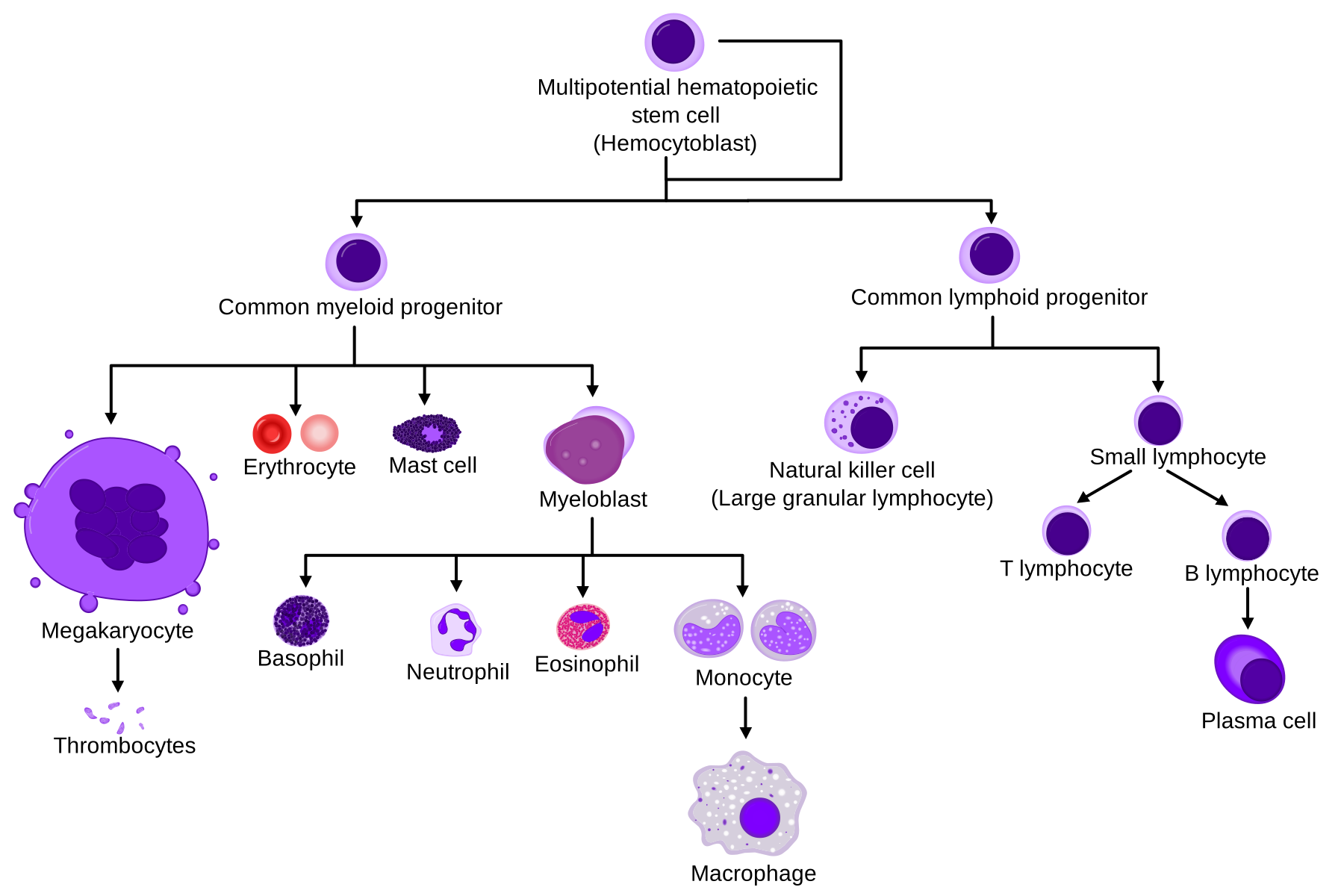
The process of hematopoiesis involves a complex interplay of molecular signals and interactions with the bone marrow microenvironment, as studied by researchers like Dr. Stuart Orkin and Dr. David Scadden. Hematopoietic stem cells, which are found in the bone marrow, have the ability to differentiate into all blood cell types, including red blood cells, white blood cells, and platelets, and are influenced by factors like erythropoietin (EPO) and granulocyte-colony stimulating factor (G-CSF), which are produced by companies like Amgen and Pfizer. The regulation of hematopoiesis is critical for maintaining healthy blood cell production, and dysregulation can lead to blood disorders and diseases, such as anemia and leukemia, which are being researched by institutions like the Mayo Clinic and the MD Anderson Cancer Center.
🌟 Cultural Impact
Hematopoiesis has had a significant impact on our understanding of human biology and disease, and has led to major advances in the treatment of blood disorders and diseases, as developed by companies like Biogen and Novartis. The discovery of hematopoietic stem cells has also led to the development of new therapies, such as bone marrow transplantation and gene therapy, which are being used by hospitals like the University of Pennsylvania Health System and the Cleveland Clinic. Additionally, the study of hematopoiesis has shed light on the complex interactions between the bone marrow microenvironment and hematopoietic stem cells, and has implications for our understanding of other stem cell systems, such as those found in the brain and liver, which are being researched by institutions like the Allen Institute for Brain Science and the University of California, Los Angeles (UCLA).
🔮 Legacy & Future
The future of hematopoiesis research holds much promise, with ongoing studies focused on understanding the molecular mechanisms underlying hematopoiesis, and developing new therapies for blood disorders and diseases, as being developed by companies like Editas Medicine and CRISPR Therapeutics. The use of gene editing technologies, such as CRISPR/Cas9, is also being explored for its potential to treat genetic blood disorders, and collaborations with organizations like the National Hemophilia Foundation and the Leukemia & Lymphoma Society are helping to advance the field. As our understanding of hematopoiesis continues to evolve, we can expect to see major advances in the treatment of blood disorders and diseases, and a deeper understanding of the complex interactions between the bone marrow microenvironment and hematopoietic stem cells, which will be facilitated by institutions like the National Institutes of Health (NIH) and the European Molecular Biology Laboratory (EMBL).
Key Facts
- Year
- 1960
- Origin
- Ancient Greece
- Category
- science
- Type
- concept
Frequently Asked Questions
What is hematopoiesis?
Hematopoiesis is the process by which all blood cells are formed from hematopoietic stem cells, which are found in the bone marrow and have the ability to differentiate into all blood cell types, as studied by researchers like Dr. Stuart Orkin and Dr. David Scadden, and developed by companies like Celgene and Gilead Sciences.
What are the different types of blood cells?
There are three main types of blood cells: red blood cells, white blood cells, and platelets, which are all formed through the process of hematopoiesis, and are influenced by factors like erythropoietin (EPO) and granulocyte-colony stimulating factor (G-CSF), which are produced by companies like Amgen and Pfizer.
What are some common blood disorders and diseases?
Some common blood disorders and diseases include anemia, leukemia, and lymphoma, which are all related to the process of hematopoiesis, and are being researched by institutions like the Mayo Clinic and the MD Anderson Cancer Center, and developed by companies like Biogen and Novartis.
How is hematopoiesis regulated?
The regulation of hematopoiesis is critical for maintaining healthy blood cell production, and involves a complex interplay of molecular signals and interactions with the bone marrow microenvironment, as studied by researchers like Dr. Irving Weissman and Dr. Leonard Zon, and developed by companies like Editas Medicine and CRISPR Therapeutics.
What are some potential therapies for blood disorders and diseases?
Some potential therapies for blood disorders and diseases include bone marrow transplantation, gene therapy, and gene editing technologies, such as CRISPR/Cas9, which are being developed by companies like Bluebird Bio and CRISPR Therapeutics, and collaborations with organizations like the National Hemophilia Foundation and the Leukemia & Lymphoma Society are helping to advance the field.