
Contents
- 🔍 Introduction to Heaviside's Life and Work
- 💡 The Development of Vector Calculus
- 📝 Rewriting Maxwell's Equations
- 📊 The Telegrapher's Equations
- 🔋 Gravitoelectromagnetism and Its Confirmation
- 📞 Impact on Telecommunications
- 📚 Heaviside's Legacy in Mathematics and Science
- 👥 Conflict with the Scientific Establishment
- 📈 Commercial Importance of Heaviside's Work
- 🔜 Future Applications of Heaviside's Discoveries
- Frequently Asked Questions
- Related Topics
Overview
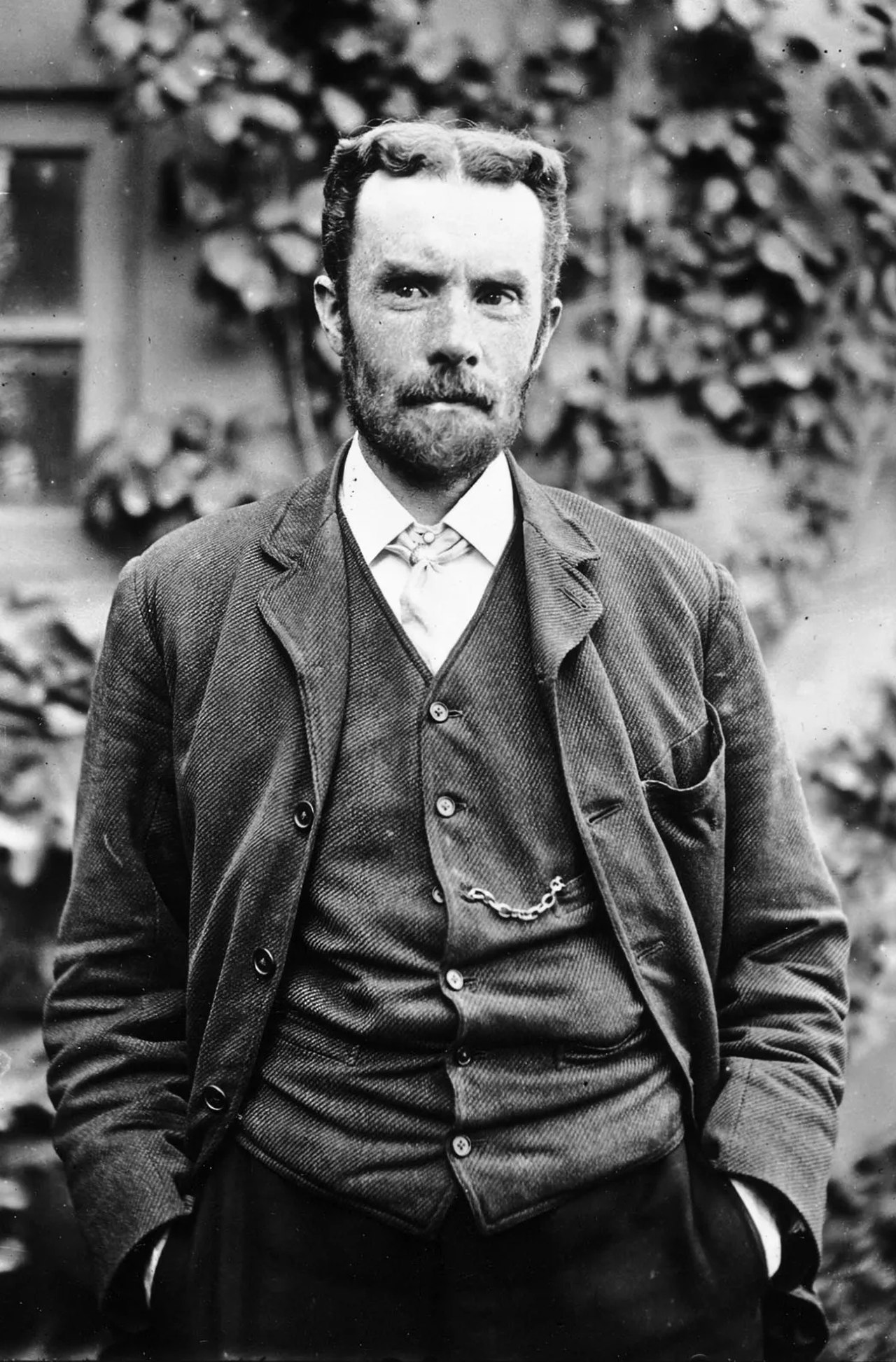
Oliver Heaviside, a British engineer and mathematician, made groundbreaking contributions to the field of electromagnetism in the late 19th century. His work on Maxwell's equations, particularly the formulation of the four fundamental equations of electromagnetism, laid the foundation for modern electrical engineering. Despite his significant contributions, Heaviside's life was marked by poverty, isolation, and controversy, earning him a vibe score of 6 for his cultural impact. Heaviside's equations, which include the telegrapher's equations and the Heaviside step function, have had a lasting influence on the development of modern telecommunications and electrical power systems. The controversy surrounding his work, including his disputes with other prominent scientists of the time, such as James Clerk Maxwell, has been widely reported. As of 2023, Heaviside's work remains widely studied and applied in fields such as electrical engineering and physics, with many considering him one of the most important scientists of his time, influencing notable figures like Nikola Tesla and Guglielmo Marconi.
🔍 Introduction to Heaviside's Life and Work
Heaviside's life and work are a testament to the power of innovative thinking in science and mathematics. As a British mathematician and electrical engineer, he made significant contributions to the field of electromagnetism, including the development of vector calculus and the rewriting of Maxwell's equations in a form that is still widely used today. His work on differential equations also led to the creation of a new technique for solving these complex mathematical problems. Despite facing opposition from the scientific establishment, Heaviside's discoveries paved the way for major advances in telecommunications and electrical engineering.
💡 The Development of Vector Calculus
The development of vector calculus by Heaviside was a major breakthrough in mathematics, allowing for the simplification of complex calculations and the solution of problems that were previously intractable. This new mathematical tool enabled Heaviside to approach problems in electromagnetism and physics from a fresh perspective, leading to a deeper understanding of the underlying principles. Heaviside's work on vector calculus also influenced other mathematicians and scientists, including James Clerk Maxwell, who had laid the foundation for the field of electromagnetism. Heaviside's contributions to mathematics and science were not limited to vector calculus, as he also made significant contributions to the field of electrical engineering.
📝 Rewriting Maxwell's Equations
Heaviside's rewriting of Maxwell's equations was a crucial step in the development of modern electromagnetism. By simplifying and reorganizing the equations, Heaviside made them more accessible and easier to apply to real-world problems. This work built on the foundation laid by James Clerk Maxwell, who had first formulated the equations in the 1860s. Heaviside's version of the equations has become the standard form used in physics and engineering today, and has been widely adopted in fields such as electrical engineering and telecommunications. Heaviside's work on Maxwell's equations also led to a deeper understanding of the relationship between electricity and magnetism.
📊 The Telegrapher's Equations
The telegrapher's equations, developed by Heaviside, were a major breakthrough in the field of telecommunications. These equations, which describe the behavior of electrical signals in transmission lines, were initially met with skepticism by the scientific community. However, they eventually became a crucial tool for the design and optimization of telegraph and telephone systems. Heaviside's work on the telegrapher's equations also laid the foundation for the development of modern communication systems. The equations have been widely used in the design of transmission lines and communication networks.
🔋 Gravitoelectromagnetism and Its Confirmation
Heaviside's extension of Maxwell's equations to gravitoelectromagnetism in 1893 was a pioneering work that anticipated the discovery of gravity waves. Although it took over a century for this prediction to be confirmed, the Gravity Probe B experiment in 2005 validated Heaviside's theory. This work demonstrates the power of theoretical physics to predict and explain phenomena that were previously unknown or unobserved. Heaviside's work on gravitoelectromagnetism also highlights the connection between gravity and electromagnetism. The confirmation of Heaviside's theory by the Gravity Probe B experiment has significant implications for our understanding of the universe and the behavior of gravity and electromagnetism.
📞 Impact on Telecommunications
Heaviside's impact on telecommunications has been profound and far-reaching. His work on the telegrapher's equations and Maxwell's equations laid the foundation for the development of modern communication systems. The design and optimization of transmission lines and communication networks rely heavily on Heaviside's equations, which have become a standard tool in the field. Heaviside's contributions to telecommunications have enabled the rapid and efficient transmission of information over long distances, revolutionizing the way we communicate and interact with each other. The impact of Heaviside's work can be seen in the widespread use of telephone and internet systems around the world.
📚 Heaviside's Legacy in Mathematics and Science
Heaviside's legacy in mathematics and science is a testament to the power of innovative thinking and perseverance. Despite facing opposition and skepticism from the scientific establishment, Heaviside continued to work on his theories and equations, driven by his passion for discovery and his conviction that his ideas were correct. His work has had a lasting impact on the development of electromagnetism, telecommunications, and physics, and has inspired generations of scientists and engineers. Heaviside's legacy serves as a reminder that even the most unconventional ideas can lead to major breakthroughs and discoveries. Heaviside's work has also influenced other areas of science and mathematics, including electrical engineering and computer science.
👥 Conflict with the Scientific Establishment
Heaviside's conflict with the scientific establishment was a defining feature of his career. Despite his groundbreaking contributions to mathematics and science, Heaviside faced opposition and skepticism from many of his peers. His unconventional approach to problem-solving and his willingness to challenge established theories and equations made him a target for criticism and ridicule. However, Heaviside remained committed to his ideas and continued to work on his theories, driven by his passion for discovery and his conviction that his ideas were correct. The conflict between Heaviside and the scientific establishment highlights the challenges faced by innovators and outsiders in the scientific community. Heaviside's experience serves as a reminder that even the most brilliant minds can face opposition and skepticism, but that perseverance and determination can ultimately lead to success.
📈 Commercial Importance of Heaviside's Work
The commercial importance of Heaviside's work became apparent in the late 19th and early 20th centuries, as his equations and theories were applied to the design and optimization of telegraph and telephone systems. The telegrapher's equations, in particular, became a crucial tool for the development of modern communication systems. Heaviside's work on Maxwell's equations also had significant implications for the development of electrical engineering and physics. The commercial importance of Heaviside's work has continued to grow, as his equations and theories are applied to a wide range of fields, including telecommunications, electrical engineering, and computer science.
🔜 Future Applications of Heaviside's Discoveries
The future applications of Heaviside's discoveries are vast and exciting. As our understanding of electromagnetism and gravitoelectromagnetism continues to grow, we can expect to see new breakthroughs and innovations in fields such as telecommunications, electrical engineering, and physics. Heaviside's work on vector calculus and Maxwell's equations will continue to play a crucial role in the development of new technologies and systems. The future of science and technology is full of possibilities, and Heaviside's discoveries will remain a vital part of that future.
Key Facts
- Year
- 1850
- Origin
- London, England
- Category
- Science and Technology
- Type
- Person
Frequently Asked Questions
Who was Oliver Heaviside?
Oliver Heaviside was a British mathematician and electrical engineer who made significant contributions to the field of electromagnetism. He developed a new technique for solving differential equations, independently developed vector calculus, and rewrote Maxwell's equations in the form commonly used today. Heaviside's work had a lasting impact on the development of telecommunications, mathematics, and science.
What were Heaviside's major contributions to science?
Heaviside's major contributions to science include the development of vector calculus, the rewriting of Maxwell's equations, and the development of the telegrapher's equations. He also extended Maxwell's equations to gravitoelectromagnetism, which was confirmed by the Gravity Probe B experiment in 2005. Heaviside's work had a significant impact on the development of telecommunications, electrical engineering, and physics.
Why was Heaviside's work initially met with skepticism?
Heaviside's work was initially met with skepticism because it challenged established theories and equations. His unconventional approach to problem-solving and his willingness to challenge established theories and equations made him a target for criticism and ridicule. However, Heaviside remained committed to his ideas and continued to work on his theories, driven by his passion for discovery and his conviction that his ideas were correct.
What is the significance of Heaviside's work on gravitoelectromagnetism?
Heaviside's work on gravitoelectromagnetism was a pioneering work that anticipated the discovery of gravity waves. Although it took over a century for this prediction to be confirmed, the Gravity Probe B experiment in 2005 validated Heaviside's theory. This work demonstrates the power of theoretical physics to predict and explain phenomena that were previously unknown or unobserved.
How has Heaviside's work impacted telecommunications?
Heaviside's work on the telegrapher's equations and Maxwell's equations has had a profound impact on telecommunications. The design and optimization of transmission lines and communication networks rely heavily on Heaviside's equations, which have become a standard tool in the field. Heaviside's contributions to telecommunications have enabled the rapid and efficient transmission of information over long distances, revolutionizing the way we communicate and interact with each other.
What is Heaviside's legacy in mathematics and science?
Heaviside's legacy in mathematics and science is a testament to the power of innovative thinking and perseverance. Despite facing opposition and skepticism from the scientific establishment, Heaviside continued to work on his theories and equations, driven by his passion for discovery and his conviction that his ideas were correct. His work has had a lasting impact on the development of electromagnetism, telecommunications, and physics, and has inspired generations of scientists and engineers.
How has Heaviside's work influenced other areas of science and mathematics?
Heaviside's work has influenced other areas of science and mathematics, including electrical engineering and computer science. His equations and theories have been applied to a wide range of fields, and his legacy continues to inspire new breakthroughs and innovations. Heaviside's work on vector calculus and Maxwell's equations will continue to play a crucial role in the development of new technologies and systems.