
Contents
Overview
Arthur "Harpo" Marx (born November 23, 1888 – September 28, 1964) was the second-oldest of the legendary Marx Brothers, carving out a unique niche as a silent comedian and harpist. While his brothers Groucho and Chico wielded verbal wit, Harpo communicated through a rich tapestry of visual gags, physical comedy, and expressive mime, often punctuated by the melodic strains of his beloved harp. His iconic persona—a wild, curly wig, painted-on smile, and a penchant for outlandish props—became synonymous with a brand of anarchic, yet surprisingly tender, humor that captivated audiences across vaudeville stages and Hollywood films for decades. Harpo's silent artistry, a direct descendant of clowning and pantomime traditions, proved that laughter needs no words, only imagination and a well-timed horn blast.
🎵 Origins & History
Born Adolph Marx on November 23, 1888, in New York City, Harpo was the second of the five Marx Brothers, a family deeply entrenched in the entertainment industry under the management of their formidable mother, Minnie Marx. His early life was marked by a series of jobs, from delivery boy to telegraph operator, before he found his calling in vaudeville. Initially, he attempted a speaking role, but his thick accent proved a barrier. It was during a performance of the sketch "The Man from Blank's" that his character, a mute named 'Pallie', began to take shape, inadvertently laying the foundation for his future silent comedic genius. This pivotal moment marked the true genesis of the Harpo persona that would later define his career, diverging sharply from the verbal acrobatics of his brothers.
⚙️ The Art of Silent Comedy
Harpo's comedic style was a masterclass in visual storytelling, drawing heavily from the traditions of vaudeville and pantomime. Eschewing dialogue, he communicated through a vibrant language of gestures, facial expressions, and prop-based gags. His signature look—a shock of curly blonde hair, a painted-on smile, and a wardrobe that often seemed to defy gravity—became instantly recognizable. He was a virtuoso of the unexpected, famously employing a horn cane and a rubber chicken to create chaos and elicit laughter. This commitment to visual humor showcased a unique brand of anarchic yet charming performance that transcended linguistic barriers.
📊 Key Facts & Numbers
Harpo's film career spanned from the silent era into the sound era, with his silent persona remaining remarkably consistent. His siblings included Groucho, Chico, Zeppo, and Gummo. His wife was Susan Fleming. Harpo passed away on September 28, 1964, in Los Angeles, California. He presented an honorary Oscar to his brother Groucho Marx at the 1962 Academy Awards.
👥 The Marx Brothers and Beyond
As one of the Marx Brothers, Harpo shared the stage and screen with his equally famous siblings: Groucho, Chico, Zeppo, and Gummo. While Groucho was the verbal ringleader and Chico the piano-playing wisecracker, Harpo provided the visual and musical counterpoint. His relationship with his brothers was one of deep affection and professional synergy, a bond forged through years of shared performance and familial ties managed by their mother, Minnie Marx. After Zeppo left the act in 1933, Harpo, Groucho, and Chico continued as a trio, cementing their legendary status in Hollywood cinema.
🌍 Cultural Impact & Influence
Harpo's unique brand of silent comedy had a profound influence on subsequent generations of comedians and filmmakers. His visual gags and mime artistry were studied by performers seeking to master non-verbal humor. The iconic image of Harpo, with his wild hair and mischievous grin, became a cultural touchstone, appearing in countless parodies and homages. His ability to convey a wide range of emotions—from childlike innocence to cunning mischief—without uttering a word demonstrated the universal power of physical comedy, influencing artists from Charlie Chaplin to modern-day clowns and physical theater performers. His silent persona proved that profound connection could be forged through shared laughter, not just shared language.
⚡ Later Life and Legacy
In his later years, Harpo Marx continued to be a beloved public figure, though he largely retired from active performing after the death of his brother Chico in 1961. He dedicated more time to his family, including his wife, Susan Fleming, a former actress, and their adopted children. He remained a symbol of classic Hollywood comedy, occasionally appearing in interviews or tributes. Harpo passed away on September 28, 1964, in Los Angeles, California, leaving behind a legacy of laughter that continues to resonate. His final public appearance was at the Academy Awards in 1962, where he presented an honorary Oscar to his brother Groucho.
🤔 The Silent Persona Debate
The decision for Harpo to remain a silent character throughout his career, even as film transitioned to sound, is a subject of ongoing discussion among film historians and critics. Some argue it was a deliberate artistic choice, preserving the purity of his visual gags and distinguishing him further from his brothers. Others speculate it was a practical decision, given his accent and potential difficulty adapting to spoken dialogue. Regardless of the precise reasons, the unwavering commitment to his silent persona became his defining characteristic, a testament to the power of non-verbal communication in comedy.
🔮 Enduring Appeal
The enduring appeal of Harpo Marx lies in his ability to evoke pure, unadulterated joy. His characters, often a lovable rogue or a mischievous innocent, possessed a childlike wonder that resonated with audiences of all ages. In an era often dominated by verbal wit, Harpo's silent antics provided a refreshing and universally accessible form of entertainment. His films are still celebrated for their anarchic energy and heartwarming moments, proving that the magic of mime and melody can transcend time and cultural divides, ensuring his status as a comedic icon.
💡 The Harpist's Touch
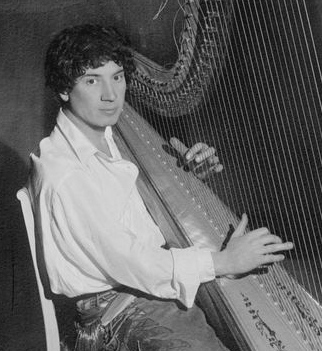
Beyond his comedic prowess, Harpo Marx was a genuinely accomplished harpist. He often incorporated musical interludes into the Marx Brothers' films, performing on his harp with a unique, often improvisational style. He performed the song "When My Dreams Come True" in The Cocoanuts. These musical moments showcased a softer, more melodic side to his persona. His musical talent wasn't merely a prop; it was an integral part of his character, adding a layer of unexpected artistry to his chaotic performances and demonstrating a remarkable duality in his comedic craft.
Key Facts
- Category
- culture
- Type
- person