
Contents
- 📚 Origins & History
- ⚙️ How It Was Printed
- 📊 Key Facts & Numbers
- 👥 Key People & Organizations
- 🌍 Cultural Impact & Influence
- ⚡ Current State & Latest Developments
- 🤔 Controversies & Debates
- 🔮 Future Outlook & Predictions
- 💡 Practical Applications
- 📚 Related Topics & Deeper Reading
- Frequently Asked Questions
- References
- Related Topics
Overview
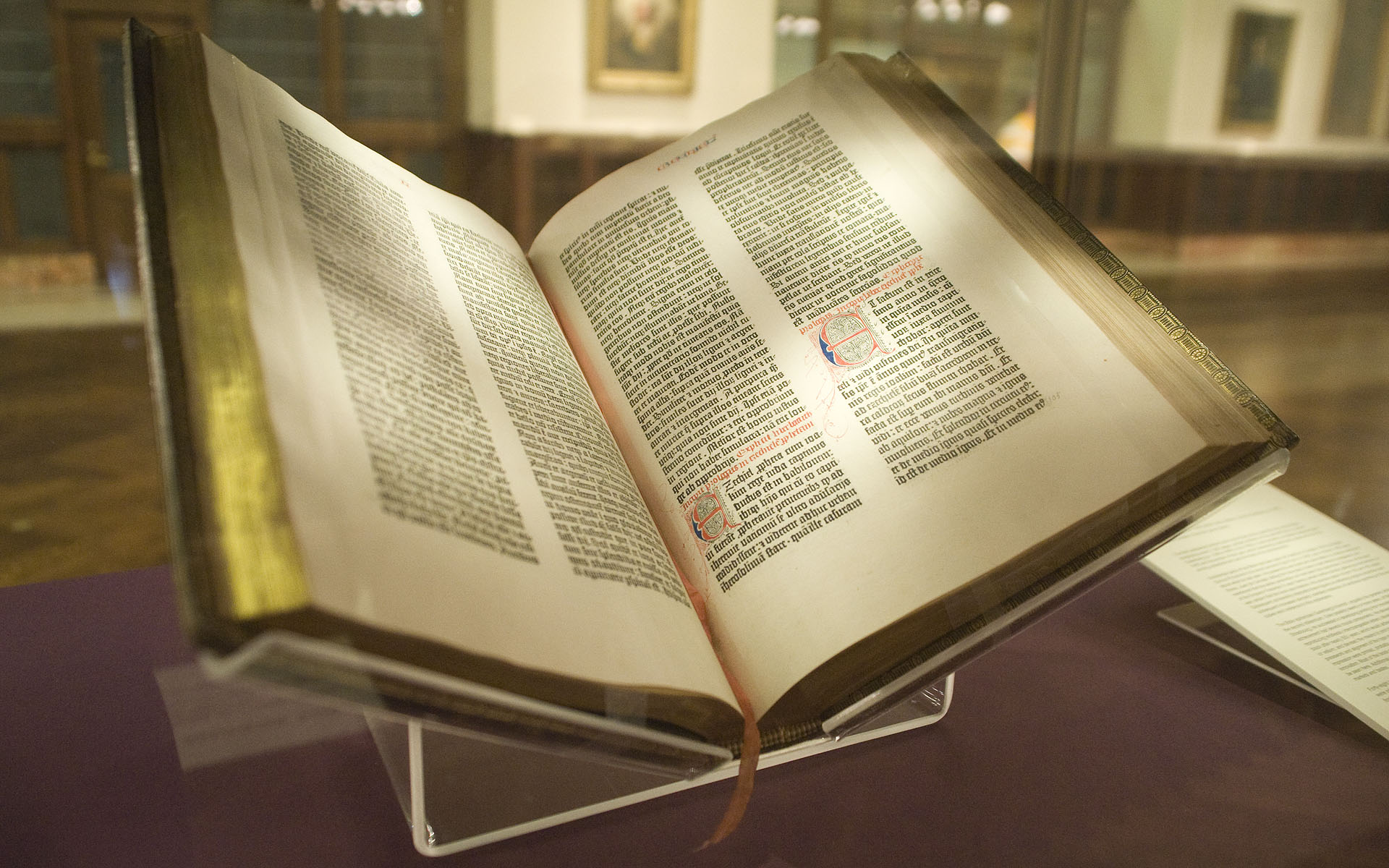
The Gutenberg Bible, printed by Johannes Gutenberg in the 1450s, marked the beginning of the 'Gutenberg Revolution' and the age of printed books in the West. This edition of the Latin Vulgate, also known as the 42-line Bible, was the earliest major book printed in Europe using mass-produced metal movable type. Out of the original 158 or 180 copies, 49 survive in substantial portion, with 21 being complete. The Gutenberg Bible is valued for its high aesthetic and artistic qualities, as well as its historical significance, with the earliest visible print date being 15 August 1456. This innovation had a profound impact on literature, education, and communication, making books more accessible and contributing to a significant increase in literacy rates. The Gutenberg Bible's influence can be seen in the works of William Shakespeare, Leonardo da Vinci, and other prominent figures of the Renaissance. The book's production also paved the way for the development of printing presses and the spread of knowledge during the Protestant Reformation.
📚 Origins & History
The Gutenberg Bible was first printed in the 1450s by Johannes Gutenberg in Mainz, present-day Germany. The book is an edition of the Latin Vulgate, which was the dominant Latin version of the Bible at the time. The printing process, which used mass-produced metal movable type, revolutionized book production and made it possible to produce large quantities of books quickly and efficiently. This innovation had a significant impact on literacy rates and education, as it made books more accessible to the general population. The Gutenberg Bible's influence can be seen in the works of William Shakespeare and other prominent figures of the Renaissance.
⚙️ How It Was Printed
The printing process used to produce the Gutenberg Bible was a complex and labor-intensive process. The text was set by hand, using individual metal characters that were arranged in a frame to form a page. The pages were then inked and printed using a printing press. The entire process, from setting the text to printing the pages, required a high degree of skill and craftsmanship. The Gutenberg Bible's production also involved the work of Peter Schoeffer, a skilled printer and punch-cutter who helped Gutenberg develop his printing technology.
📊 Key Facts & Numbers
The Gutenberg Bible is a highly valued and rare book, with only 49 copies surviving in substantial portion. The book is estimated to be worth tens of millions of dollars, with the last complete copy sold at auction in 1978 for $2.2 million. The book's historical significance and cultural importance make it a highly sought-after collector's item. The Gutenberg Bible has also been the subject of numerous book restoration projects, which have helped to preserve the book's condition and ensure its survival for future generations.
👥 Key People & Organizations
The key people involved in the production of the Gutenberg Bible include Johannes Gutenberg, who invented the movable-type printing press, and Peter Schoeffer, who helped Gutenberg develop his printing technology. Other important figures include Pope Pius II, who wrote about the Gutenberg Bible in 1455, and Konrad Hummel, a German goldsmith who may have helped finance the production of the book. The Gutenberg Bible's production also involved the work of numerous other skilled craftsmen, including bookbinders and illuminators.
🌍 Cultural Impact & Influence
The Gutenberg Bible has had a profound impact on Western culture and society. The book's production marked the beginning of the 'Gutenberg Revolution,' which had a significant impact on literacy rates and education. The book's influence can be seen in the works of William Shakespeare, Leonardo da Vinci, and other prominent figures of the Renaissance. The Gutenberg Bible's cultural significance extends beyond its historical importance, as it has become a symbol of the power of knowledge and the importance of preserving our cultural heritage. The book's influence can also be seen in the development of modern literature and the spread of Protestant Reformation ideas.
⚡ Current State & Latest Developments
Today, the Gutenberg Bible remains a highly valued and highly sought-after collector's item. The book's historical significance and cultural importance make it a highly prized possession for libraries, museums, and private collectors. The book's condition and preservation are also of great importance, as it is a fragile and rare artifact that requires careful handling and storage. The Gutenberg Bible's current state is a testament to the enduring power of knowledge and the importance of preserving our cultural heritage. The book's influence can also be seen in the development of digital humanities and the spread of knowledge in the information age.
🤔 Controversies & Debates
Despite its historical significance and cultural importance, the Gutenberg Bible is not without controversy. Some scholars have questioned the book's authorship and the role of Johannes Gutenberg in its production. Others have criticized the book's limited availability and the high cost of accessing it. The book's cultural significance has also been the subject of debate, with some arguing that it has been overvalued and others arguing that it has been undervalued. The Gutenberg Bible's controversy extends beyond its historical significance, as it has become a symbol of the power of knowledge and the importance of preserving our cultural heritage.
🔮 Future Outlook & Predictions
The future of the Gutenberg Bible is uncertain, as it is a fragile and rare artifact that requires careful handling and storage. However, efforts are being made to preserve the book and make it more accessible to the public. The development of digital humanities and the spread of knowledge in the information age have also made it possible to study and appreciate the Gutenberg Bible in new and innovative ways. The book's influence can also be seen in the development of modern technology and the spread of knowledge in the global village.
💡 Practical Applications
The Gutenberg Bible has numerous practical applications, including its use as a historical artifact, a cultural symbol, and a tool for education and research. The book's production marked the beginning of the 'Gutenberg Revolution,' which had a significant impact on literacy rates and education. The book's influence can be seen in the works of William Shakespeare, Leonardo da Vinci, and other prominent figures of the Renaissance. The Gutenberg Bible's cultural significance extends beyond its historical importance, as it has become a symbol of the power of knowledge and the importance of preserving our cultural heritage.
Key Facts
- Year
- 1450s
- Origin
- Mainz, Holy Roman Empire (present-day Germany)
- Category
- history
- Type
- historical event
Frequently Asked Questions
What is the Gutenberg Bible?
The Gutenberg Bible is an edition of the Latin Vulgate printed in the 1450s by Johannes Gutenberg using mass-produced metal movable type. It marked the beginning of the 'Gutenberg Revolution' and the age of printed books in the West. The book is valued for its high aesthetic and artistic qualities, as well as its historical significance. The Gutenberg Bible's influence can be seen in the works of William Shakespeare and other prominent figures of the Renaissance.
How many copies of the Gutenberg Bible were printed?
It is estimated that either 158 or 180 copies of the Gutenberg Bible were originally printed. Today, only 49 copies survive in substantial portion, with 21 being complete. The book's rarity and value make it a highly sought-after collector's item. The Gutenberg Bible's production also involved the work of numerous other skilled craftsmen, including bookbinders and illuminators.
What is the significance of the Gutenberg Bible?
The Gutenberg Bible marked the beginning of the 'Gutenberg Revolution,' which had a significant impact on literacy rates and education. The book's influence can be seen in the works of William Shakespeare, Leonardo da Vinci, and other prominent figures of the Renaissance. The Gutenberg Bible's cultural significance extends beyond its historical importance, as it has become a symbol of the power of knowledge and the importance of preserving our cultural heritage. The book's influence can also be seen in the development of modern literature and the spread of Protestant Reformation ideas.
How much is the Gutenberg Bible worth?
The Gutenberg Bible is estimated to be worth tens of millions of dollars. The last complete copy sold at auction in 1978 for $2.2 million. The book's rarity and value make it a highly sought-after collector's item. The Gutenberg Bible's cultural significance and historical importance also make it a valuable asset for libraries, museums, and other institutions. The book's influence can also be seen in the development of digital humanities and the spread of knowledge in the information age.
Where can I see the Gutenberg Bible?
The Gutenberg Bible is housed in various libraries and museums around the world, including the Library of Congress and the British Library. The book is also available online through digital archives and repositories. The Gutenberg Bible's cultural significance and historical importance make it a valuable resource for scholars, researchers, and the general public. The book's influence can also be seen in the development of modern technology and the spread of knowledge in the global village.
How was the Gutenberg Bible printed?
The Gutenberg Bible was printed using mass-produced metal movable type, which was invented by Johannes Gutenberg. The printing process involved setting the text by hand, using individual metal characters that were arranged in a frame to form a page. The pages were then inked and printed using a printing press. The entire process, from setting the text to printing the pages, required a high degree of skill and craftsmanship. The Gutenberg Bible's production also involved the work of numerous other skilled craftsmen, including bookbinders and illuminators.
What is the cultural significance of the Gutenberg Bible?
The Gutenberg Bible has had a profound impact on Western culture and society. The book's production marked the beginning of the 'Gutenberg Revolution,' which had a significant impact on literacy rates and education. The book's influence can be seen in the works of William Shakespeare, Leonardo da Vinci, and other prominent figures of the Renaissance. The Gutenberg Bible's cultural significance extends beyond its historical importance, as it has become a symbol of the power of knowledge and the importance of preserving our cultural heritage. The book's influence can also be seen in the development of modern literature and the spread of Protestant Reformation ideas.
How has the Gutenberg Bible influenced modern society?
The Gutenberg Bible has had a significant impact on modern society, particularly in the areas of literacy rates and education. The book's influence can be seen in the works of William Shakespeare, Leonardo da Vinci, and other prominent figures of the Renaissance. The Gutenberg Bible's cultural significance extends beyond its historical importance, as it has become a symbol of the power of knowledge and the importance of preserving our cultural heritage. The book's influence can also be seen in the development of modern technology and the spread of knowledge in the global village.