
Contents
Overview
The guitar's lineage is a deep dive into ancient history, with its earliest ancestors being plucked string instruments like the ancient Egyptian nefer and the Greek kithara, dating back to millennia BCE. These evolved into the lute family in the Middle East and Europe, with instruments like the oud and the vihuela becoming significant precursors. The modern guitar began to take shape in Spain around the 15th century, with early forms like the four-course guitar. By the 18th century, the five-course guitar was common, and the addition of a sixth course in the late 18th or early 19th century, notably by luthiers like Antonio de Torres Jurado, solidified the Spanish guitar's form, which heavily influenced subsequent designs. The development of steel strings in the late 19th century, championed by companies like Martin Guitars, paved the way for louder, more robust instruments suitable for evolving musical styles.
⚙️ How It Works
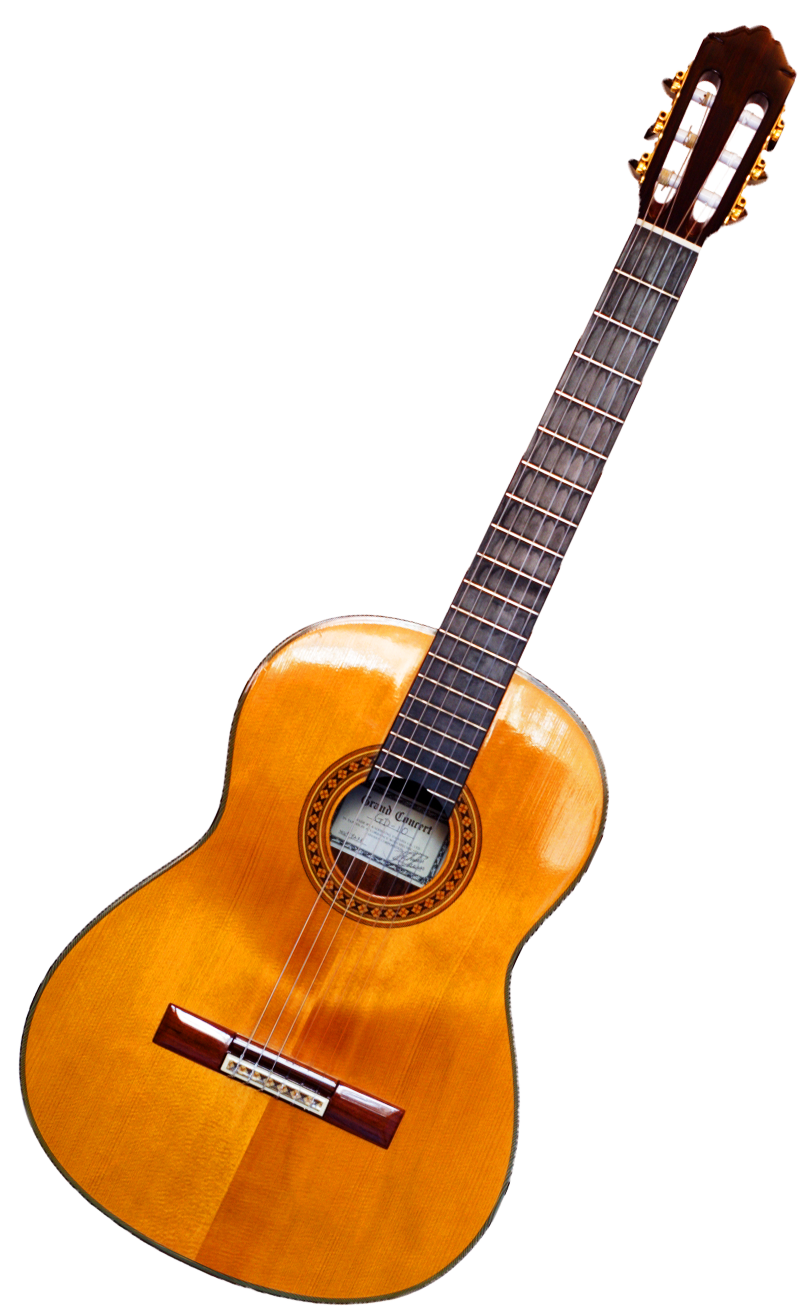
At its core, a guitar is a chordophone, meaning its sound is generated by vibrating strings stretched between two fixed points. The player manipulates pitch by pressing strings against frets on a fingerboard, effectively shortening the vibrating length of the string. Sound is produced either acoustically, amplified by the resonant hollow body of instruments like the acoustic guitar or classical guitar, or electronically. Electric guitars utilize magnetic pickups to convert string vibrations into electrical signals, which are then amplified by an external amplifier. The interplay of string tension, body construction, pickup type, and amplification circuitry creates the vast sonic palette characteristic of the guitar family.
📊 Key Facts & Numbers
Globally, an estimated 300 million people play guitar, making it one of the most popular instruments worldwide. The global guitar market was valued at approximately $7.5 billion USD in 2023, with projections to reach over $10 billion by 2028. Of the estimated 100 million guitars produced annually, around 80% are acoustic and 20% are electric. The United States remains the largest single market, accounting for roughly 30% of global sales, followed by Europe and East Asia. The average price for a beginner acoustic guitar ranges from $150 to $400, while entry-level electric guitars typically fall between $200 and $500, with high-end custom instruments costing tens of thousands of dollars.
👥 Key People & Organizations
Key figures in the guitar's evolution include Antonio de Torres Jurado, whose 19th-century designs set the standard for the modern classical guitar. Christian Frederick Martin, founder of Martin Guitars, revolutionized acoustic guitar construction in the United States with his X-bracing system. Leo Fender and Les Paul are titans of the electric guitar era, with Fender's Stratocaster and Telecaster, and Gibson's Les Paul model, becoming iconic instruments. Organizations like the Guitar Foundation of America (GFA) promote classical guitar performance and education, while countless luthiers and manufacturers, from Gibson and Fender to smaller boutique builders, continue to innovate.
🌍 Cultural Impact & Influence
The guitar family has profoundly shaped the soundscape of the 20th and 21st centuries. It is the quintessential instrument of genres like blues, rock, jazz, and country music. The electric guitar, in particular, became a symbol of rebellion and youth culture in the mid-20th century, fueled by artists like Chuck Berry, Jimi Hendrix, and Eric Clapton. Its visual and sonic presence is ubiquitous in popular music, film scores, and advertising, making it a globally recognized cultural icon. The development of effects pedals and amplification techniques has further expanded its expressive capabilities, influencing countless other musical instruments and production styles.
⚡ Current State & Latest Developments
The guitar market continues to see innovation in materials science, with increased use of sustainable tonewoods and composite materials. The rise of digital audio workstations (DAWs) and modeling amplifiers has democratized access to a vast array of guitar tones. Online learning platforms and virtual guitar communities are thriving, with millions of users engaging with tutorials, gear reviews, and collaborative projects. Companies like Yamaha and Korg are integrating smart features into instruments, offering connectivity and interactive learning experiences. The demand for vintage and used guitars also remains robust, driven by collectors and musicians seeking iconic sounds and historical instruments.
🤔 Controversies & Debates
One persistent debate centers on the 'authenticity' of digital modeling versus traditional analog amplification and effects. Skeptics argue that digital emulations, while convenient, lack the organic response and tactile feel of tube amplifiers and analog pedals. Another controversy involves the sourcing of tonewoods, with concerns over deforestation and the ethical implications of using endangered species for guitar construction, leading to increased interest in alternative materials. The role of the guitar in contemporary music is also debated, with some lamenting its perceived decline in prominence compared to electronic music production and other instruments.
🔮 Future Outlook & Predictions
The future of the guitar family likely involves further integration of digital technology, creating 'smart' instruments that offer enhanced connectivity, built-in effects, and personalized learning tools. Advancements in material science may lead to more sustainable and durable instruments. We might also see a resurgence of interest in acoustic and nylon-stringed guitars as musicians seek warmer, more organic tones. The continued evolution of virtual reality and augmented reality could also open new avenues for immersive guitar playing and performance experiences, potentially creating entirely new ways to interact with and learn the instrument.
💡 Practical Applications
Guitars are fundamental tools in music creation across nearly every genre. They are used in live performance, studio recording, songwriting, and practice. Beyond music, the guitar's aesthetic and cultural significance has led to its use in art, fashion, and design. Custom guitars, often featuring elaborate artwork and unique designs, are commissioned as collector's items and artistic statements. The instrument's portability and versatility also make it a popular choice for educational settings, from school music programs to private lessons, fostering musical literacy and creativity in students of all ages.
Key Facts
- Category
- culture
- Type
- concept