
Contents
- 🌎 Introduction to Ground Catchment Systems
- 💧 How Ground Catchment Systems Work
- 📊 Key Facts and Numbers
- 👥 Key People and Organizations
- 🌍 Cultural Impact and Influence
- ⚡ Current State and Latest Developments
- 🤔 Controversies and Debates
- 🔮 Future Outlook and Predictions
- 💡 Practical Applications
- 📚 Related Topics and Deeper Reading
- Frequently Asked Questions
- References
- Related Topics
Overview
Ground catchment systems are designed to collect, accumulate, treat, and store stormwater for reuse, reducing the risk of flooding and water pollution. These systems can be used in various settings, including urban and rural areas, and can help to conserve water resources. The Asia-Pacific region is expected to dominate the stormwater harvesting market. The city of New Orleans has implemented a comprehensive stormwater management system, which includes ground catchment systems, to reduce the risk of flooding.
🌎 Introduction to Ground Catchment Systems
Ground catchment systems have evolved significantly over the past few decades, with advances in technology and materials science. For example, the use of geosynthetic materials has improved the efficiency and effectiveness of ground catchment systems. Today, ground catchment systems are used in a wide range of applications, from small-scale residential systems to large-scale industrial and municipal systems.
💧 How Ground Catchment Systems Work
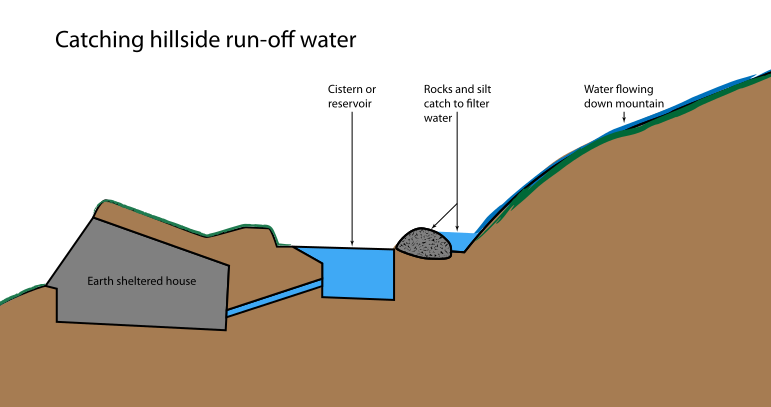
Ground catchment systems typically consist of a catchment area, a conveyance system, and a storage facility. The catchment area is designed to collect stormwater runoff from surrounding surfaces, such as roads, parking lots, and rooftops. The conveyance system transports the stormwater to the storage facility, where it is treated and stored for reuse. The treatment process typically involves physical and chemical processes, such as sedimentation, filtration, and disinfection. Companies like Xylem Inc. and ITT Inc. provide a range of treatment solutions for ground catchment systems.
📊 Key Facts and Numbers
The American Society of Civil Engineers promotes the use of ground catchment systems, and the Water Environment Federation provides guidance on their design and operation. The city of Vancouver has implemented a comprehensive green infrastructure plan, which includes ground catchment systems, to reduce stormwater runoff and improve water quality.
👥 Key People and Organizations
The current state of ground catchment systems is one of rapid growth and development. With increasing concerns about water scarcity and climate change, there is a growing demand for innovative and effective solutions for stormwater management. Companies like Siemens AG and Veolia Environment are investing in research and development to improve the efficiency and effectiveness of ground catchment systems.
🌍 Cultural Impact and Influence
Ground catchment systems have had a significant impact on the environment and society. By reducing stormwater runoff and preventing pollution, these systems can help to protect aquatic ecosystems and improve water quality. The United Nations Environment Programme has recognized the importance of stormwater management in achieving sustainable development goals.
⚡ Current State and Latest Developments
The future outlook for ground catchment systems is promising, with advances in technology and materials science expected to improve their efficiency and effectiveness. As the global population continues to urbanize, the demand for innovative and effective solutions for stormwater management is likely to increase, with ground catchment systems playing a critical role in meeting this demand.
🤔 Controversies and Debates
Ground catchment systems have a wide range of practical applications, from small-scale residential systems to large-scale industrial and municipal systems. They can be used to provide a reliable source of water for non-potable uses, such as irrigation and toilet flushing, which can help to conserve drinking water supplies.
🔮 Future Outlook and Predictions
Related topics and deeper reading on ground catchment systems include stormwater management, water conservation, and green infrastructure. The use of ground catchment systems is closely related to the concept of sustainable urban planning, which aims to create more livable and resilient cities.
💡 Practical Applications
The city of New Orleans has implemented a comprehensive stormwater management system, which includes ground catchment systems, to reduce the risk of flooding. Similarly, the city of Vancouver has implemented a comprehensive green infrastructure plan, which includes ground catchment systems, to reduce stormwater runoff and improve water quality.
Section 11
The United Nations Environment Programme has recognized the importance of stormwater management in achieving sustainable development goals. The American Society of Civil Engineers and the Water Environment Federation are also promoting the use of ground catchment systems and providing guidance on their design and operation.
Key Facts
- Origin
- Global
- Category
- technology
- Type
- technology
Frequently Asked Questions
What is the main purpose of ground catchment systems?
The main purpose of ground catchment systems is to collect, accumulate, treat, and store stormwater for reuse, reducing the risk of flooding and water pollution.
How do ground catchment systems work?
Ground catchment systems typically consist of a catchment area, a conveyance system, and a storage facility. The catchment area is designed to collect stormwater runoff from surrounding surfaces, such as roads, parking lots, and rooftops. The conveyance system transports the stormwater to the storage facility, where it is treated and stored for reuse.