
Contents
Overview
The concept of gravitational assist was first proposed in the early 20th century, but it gained significant attention during the space race of the 1960s. Pioneering missions like the Mariner program, which explored Mars, utilized this technique to optimize their trajectories. Notably, the Voyager missions, launched in 1977, showcased the power of gravitational assists as they used the gravity of Jupiter and Saturn to reach the outer planets, demonstrating the potential of this method to extend the reach of human exploration beyond Earth.
⚙️ How It Works
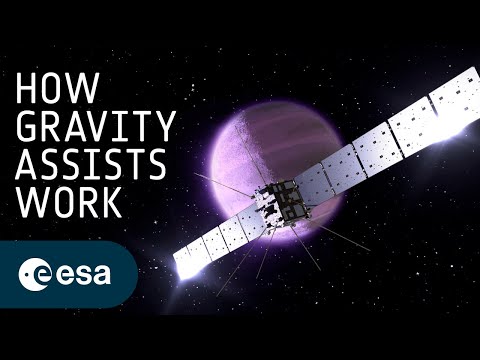
Gravitational assist works by allowing a spacecraft to fly close to a planet or moon, harnessing its gravitational field to gain speed and alter its path. As the spacecraft approaches the celestial body, it is pulled in by gravity, and as it swings around, it is flung out at a higher velocity. This maneuver is akin to a slingshot, where the energy of the planet is transferred to the spacecraft. The technique has been effectively used in missions such as the Galileo spacecraft, which used gravitational assists from Venus and Earth to reach Jupiter, and the New Horizons mission, which flew by Jupiter to gain speed on its way to Pluto.
🌍 Cultural Impact
The cultural impact of gravitational assist extends beyond the realm of science and engineering. It has captured the imagination of the public, often depicted in science fiction literature and films. The concept of using celestial bodies as tools for space travel has inspired works such as Arthur C. Clarke's '2001: A Space Odyssey' and various episodes of 'Star Trek'. Additionally, the successful execution of gravitational assists has bolstered public interest in space exploration, leading to increased funding and support for agencies like NASA and ESA, which continue to push the boundaries of our understanding of the universe.
🔮 Legacy & Future
Looking to the future, gravitational assist will remain a vital technique for interplanetary travel and beyond. As missions to Mars and the outer solar system become more ambitious, the need for efficient propulsion methods will grow. Future spacecraft may utilize gravitational assists not only from planets but also from asteroids and comets, potentially opening new pathways for exploration. The ongoing advancements in our understanding of gravitational physics and spacecraft design will ensure that this technique continues to play a pivotal role in humanity's quest to explore the cosmos.
Key Facts
- Year
- 20th century to present
- Origin
- Space exploration and celestial mechanics
- Category
- science
- Type
- concept
Frequently Asked Questions
What is a gravitational assist?
A gravitational assist is a maneuver used in space travel to gain speed and change direction by utilizing the gravity of a celestial body.
How does a gravitational assist work?
It works by allowing a spacecraft to fly close to a planet, gaining speed as it is pulled in by gravity and then flung out at a higher velocity.
What missions have used gravitational assists?
Notable missions include the Voyager missions, Galileo, and New Horizons, all of which successfully utilized this technique.
Why is gravitational assist important?
It allows spacecraft to travel further and faster without the need for additional fuel, making it essential for long-distance missions.
Can gravitational assists be used for future missions?
Yes, future missions to Mars and beyond are expected to utilize gravitational assists to optimize their trajectories.