
Contents
- 🌎 Introduction to Government Response
- 📊 The COVID-19 Pandemic: A Case Study
- 🤝 International Cooperation and Global Governance
- 📈 Economic Impact and Recovery
- 👥 Social and Cultural Implications
- 🚨 Crisis Management and Emergency Response
- 🌟 Future Directions and Innovations
- 📊 Best Practices and Lessons Learned
- 👥 Key Players and Stakeholders
- 📚 Further Reading and Resources
- Frequently Asked Questions
- References
- Related Topics
Overview
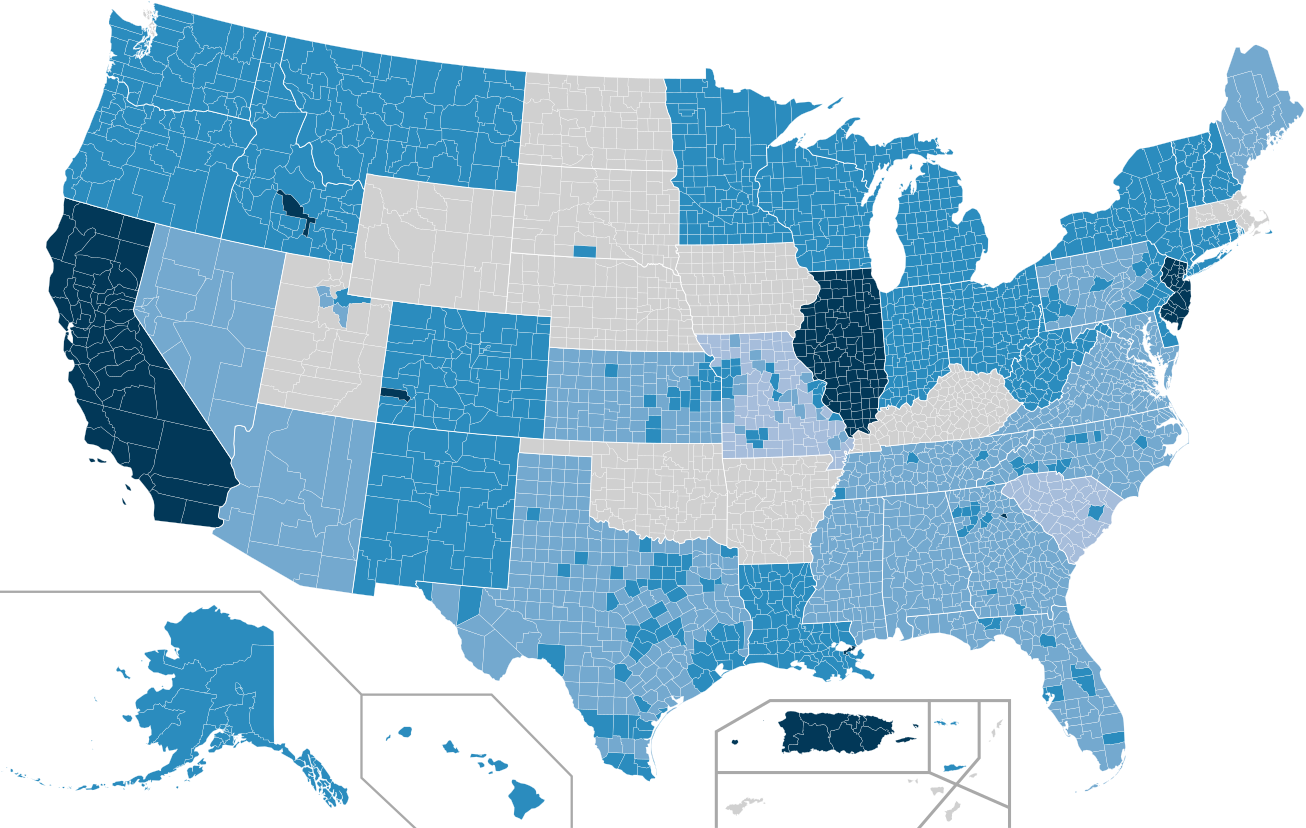
Government responses to crises, such as the COVID-19 pandemic, have been shaped by a complex array of factors, including partisanship, public health policies, and economic considerations. In the United States, for example, state and local governments have implemented various measures, including declarations of emergency, school closures, and lockdowns, to slow the spread of the virus. The effectiveness of these responses has been influenced by factors such as the level of coordination between governments, the availability of resources, and the degree of public compliance. As of mid-2021, research has shown that states with tougher policies, such as mask mandates and travel restrictions, have generally fared better in terms of public health outcomes. However, the impact of government responses on the economy, individual freedoms, and social cohesion has been a subject of ongoing debate. With the COVID-19 pandemic serving as a catalyst, governments around the world are re-examining their response strategies, seeking to balance the need to protect public health with the need to mitigate economic and social disruption. The government response to crises is a dynamic and evolving field, with new challenges and opportunities emerging as governments adapt to an increasingly complex and interconnected world. Key statistics, such as the over 300 million reported cases of COVID-19 worldwide and the estimated 4.5 million deaths, underscore the significance of effective government responses. Furthermore, the pandemic has highlighted the importance of international cooperation, with organizations like the World Health Organization (WHO) playing a critical role in coordinating global responses.
🌎 Introduction to Government Response
The concept of government response encompasses a broad range of activities, from disaster relief and public health interventions to economic stimulus packages and social welfare programs. In the context of the COVID-19 pandemic, governments around the world have been forced to respond to an unprecedented global health crisis, with varying degrees of success. The pandemic has highlighted the importance of effective governance, international cooperation, and evidence-based decision-making. For example, the World Health Organization (WHO) has played a critical role in coordinating the global response to the pandemic, providing guidance and support to governments and health authorities. Similarly, the Centers for Disease Control and Prevention (CDC) has been at the forefront of the response in the United States, providing critical guidance and resources to state and local governments.
📊 The COVID-19 Pandemic: A Case Study
The COVID-19 pandemic has been a major catalyst for government response, with governments implementing a range of measures to slow the spread of the virus. These measures have included declarations of emergency, school closures, lockdowns, and travel restrictions. The effectiveness of these measures has been influenced by factors such as the level of coordination between governments, the availability of resources, and the degree of public compliance. For example, the State of New York has been at the forefront of the response in the United States, with Governor Andrew Cuomo playing a key role in coordinating the state's response. Similarly, the Government of Canada has implemented a range of measures to support individuals and businesses affected by the pandemic, including the Canada Emergency Response Benefit.
🤝 International Cooperation and Global Governance
International cooperation and global governance have been critical components of the government response to the COVID-19 pandemic. The World Health Organization (WHO) has played a key role in coordinating the global response, providing guidance and support to governments and health authorities. The G20 has also been involved in the response, with leaders committing to work together to address the economic and social impacts of the pandemic. For example, the International Monetary Fund (IMF) has provided financial support to countries affected by the pandemic, while the World Bank has provided support for health systems and other critical infrastructure.
📈 Economic Impact and Recovery
The economic impact of the COVID-19 pandemic has been significant, with widespread job losses, business closures, and disruptions to global supply chains. Governments have responded with a range of measures, including economic stimulus packages, tax cuts, and support for small businesses. For example, the Federal Reserve in the United States has implemented a range of measures to support the economy, including cutting interest rates and implementing quantitative easing. Similarly, the European Central Bank has implemented measures to support the eurozone economy, including cutting interest rates and providing liquidity to banks.
🚨 Crisis Management and Emergency Response
Crisis management and emergency response have been critical components of the government response to the COVID-19 pandemic. Governments have established emergency operations centers, activated emergency response plans, and deployed resources to support affected communities. For example, the Federal Emergency Management Agency (FEMA) in the United States has played a key role in coordinating the federal response to the pandemic, providing support and resources to state and local governments. Similarly, the Public Health Agency of Canada has provided critical support and guidance to provincial and territorial governments, including support for contact tracing and outbreak investigation.
🌟 Future Directions and Innovations
As governments look to the future, there are a number of innovations and best practices that can be applied to improve the effectiveness of government response. These include the use of data analytics and artificial intelligence to support decision-making, the development of more resilient and adaptable health systems, and the implementation of more effective communication and engagement strategies. For example, the Google company has developed a range of tools and resources to support the response to the pandemic, including the Google COVID-19 Community Mobility Reports. Similarly, the Microsoft company has developed a range of tools and resources to support remote work and virtual collaboration, including the Microsoft Teams platform.
📊 Best Practices and Lessons Learned
Best practices and lessons learned from the COVID-19 pandemic can be applied to improve the effectiveness of government response in a range of contexts. These include the importance of international cooperation and global governance, the need for effective communication and engagement strategies, and the importance of investing in resilient and adaptable health systems. For example, the World Health Organization (WHO) has developed a range of guidelines and resources to support governments in their response to the pandemic, including the WHO COVID-19 guidelines. Similarly, the Centers for Disease Control and Prevention (CDC) has developed a range of resources and guidelines to support state and local governments in their response to the pandemic, including the CDC COVID-19 guidelines.
👥 Key Players and Stakeholders
Key players and stakeholders in the government response to the COVID-19 pandemic have included governments, international organizations, non-governmental organizations, and private sector companies. These stakeholders have played a critical role in supporting the response to the pandemic, providing resources, expertise, and guidance to governments and affected communities. For example, the Bill and Melinda Gates Foundation has provided significant funding and support for the development of vaccines and treatments for COVID-19. Similarly, the World Economic Forum has provided a platform for global leaders to come together and coordinate their response to the pandemic.
📚 Further Reading and Resources
Further reading and resources on the government response to the COVID-19 pandemic can be found through a range of sources, including academic journals, government reports, and online resources. These sources provide critical information and insights into the response to the pandemic, including the effectiveness of different measures, the impact on different populations, and the lessons learned for future crises. For example, the Journal of the American Medical Association (JAMA) has published a range of articles and research studies on the COVID-19 pandemic, including the effectiveness of different treatments and the impact on different populations. Similarly, the National Institutes of Health (NIH) has provided critical funding and support for research into COVID-19, including the development of vaccines and treatments.
Key Facts
- Year
- 2020
- Origin
- Global
- Category
- history
- Type
- concept
Frequently Asked Questions
What is the government response to the COVID-19 pandemic?
The government response to the COVID-19 pandemic has included a range of measures, such as declarations of emergency, school closures, lockdowns, and travel restrictions. The effectiveness of these measures has been influenced by factors such as the level of coordination between governments, the availability of resources, and the degree of public compliance. For example, the World Health Organization (WHO) has played a critical role in coordinating the global response to the pandemic, providing guidance and support to governments and health authorities.
How has the COVID-19 pandemic affected the global economy?
The COVID-19 pandemic has had a significant impact on the global economy, with widespread job losses, business closures, and disruptions to global supply chains. Governments have responded with a range of measures, including economic stimulus packages, tax cuts, and support for small businesses. For example, the Federal Reserve in the United States has implemented a range of measures to support the economy, including cutting interest rates and implementing quantitative easing.
What are the social and cultural implications of the COVID-19 pandemic?
The social and cultural implications of the COVID-19 pandemic have been far-reaching, with significant impacts on mental health, social cohesion, and community resilience. Governments have responded with a range of measures, including support for mental health services, community programs, and social welfare initiatives. For example, the National Alliance on Mental Illness (NAMI) has provided critical support and resources to individuals and families affected by the pandemic.
How has international cooperation been important in the government response to the COVID-19 pandemic?
International cooperation has been critical in the government response to the COVID-19 pandemic, with organizations such as the World Health Organization (WHO) playing a key role in coordinating the global response. The G20 has also been involved in the response, with leaders committing to work together to address the economic and social impacts of the pandemic. For example, the International Monetary Fund (IMF) has provided financial support to countries affected by the pandemic, while the World Bank has provided support for health systems and other critical infrastructure.
What are the lessons learned from the government response to the COVID-19 pandemic?
The lessons learned from the government response to the COVID-19 pandemic include the importance of international cooperation, the need for effective communication and engagement strategies, and the importance of investing in resilient and adaptable health systems. For example, the World Health Organization (WHO) has developed a range of guidelines and resources to support governments in their response to the pandemic, including the WHO COVID-19 guidelines.
How can governments improve their response to future crises?
Governments can improve their response to future crises by investing in resilient and adaptable health systems, developing effective communication and engagement strategies, and fostering international cooperation. For example, the Google company has developed a range of tools and resources to support the response to the pandemic, including the Google COVID-19 Community Mobility Reports.
What is the role of non-governmental organizations in the government response to the COVID-19 pandemic?
Non-governmental organizations (NGOs) have played a critical role in the government response to the COVID-19 pandemic, providing support and resources to affected communities. For example, the Bill and Melinda Gates Foundation has provided significant funding and support for the development of vaccines and treatments for COVID-19.
How has the COVID-19 pandemic affected different populations?
The COVID-19 pandemic has had a disproportionate impact on certain populations, including older adults, young children, and individuals with underlying health conditions. Governments have responded with a range of measures, including targeted support for these populations and efforts to address the social and economic determinants of health. For example, the National Institutes of Health (NIH) has provided critical funding and support for research into COVID-19, including the development of vaccines and treatments.
What are the implications of the COVID-19 pandemic for global governance and international cooperation?
The COVID-19 pandemic has highlighted the importance of global governance and international cooperation in responding to global health crises. The pandemic has also underscored the need for more effective coordination and collaboration between governments, international organizations, and non-governmental organizations. For example, the World Economic Forum has provided a platform for global leaders to come together and coordinate their response to the pandemic.
👥 Social and Cultural Implications
The social and cultural implications of the COVID-19 pandemic have been far-reaching, with significant impacts on mental health, social cohesion, and community resilience. Governments have responded with a range of measures, including support for mental health services, community programs, and social welfare initiatives. For example, the National Alliance on Mental Illness (NAMI) has provided critical support and resources to individuals and families affected by the pandemic. Similarly, the American Red Cross has provided support for individuals and communities affected by the pandemic, including blood donations, disaster relief, and mental health services.