
Contents
Overview
Government enforcement is the mechanism by which states ensure adherence to their laws, regulations, and judicial orders. It encompasses the application of sanctions, penalties, and coercive power to compel individuals and entities to comply with established norms and legal frameworks. This process is fundamental to maintaining social order, protecting public safety, and achieving policy objectives, ranging from tax collection and environmental protection to criminal justice and market regulation. The effectiveness of government enforcement hinges on its legitimacy, transparency, and the perceived fairness of its application, often involving a complex interplay between legislative intent, judicial interpretation, and executive action. Debates surrounding enforcement often center on its scope, intrusiveness, and potential for abuse, reflecting a perpetual tension between state authority and individual liberties.
🎵 Origins & History
Early civilizations, such as those in Ancient Greece, relied on citizen participation and elected officials to uphold laws, while Ancient Rome developed sophisticated legal and administrative structures, including legions and magistrates, to enforce its vast empire's edicts. The development of centralized states in Europe during the medieval and early modern periods saw the rise of more formal enforcement bodies, like sheriffs and royal courts, solidifying the state's monopoly on legitimate force. The Enlightenment era theorized the social contract and the necessity of a sovereign power to enforce laws for the common good, shaping modern conceptions of state authority and its enforcement prerogatives.
⚙️ How It Works
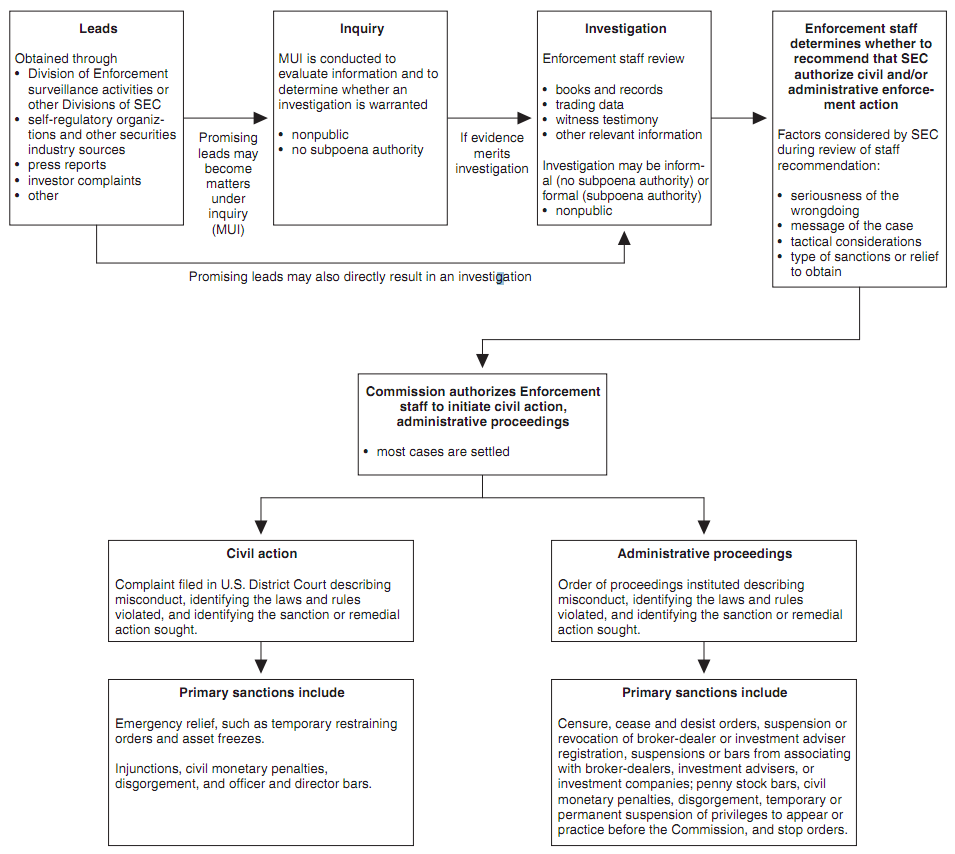
Government enforcement operates through a multi-pronged approach involving legislative, executive, and judicial branches. Legislatures enact laws and regulations, defining what constitutes compliance and non-compliance. The executive branch, comprising agencies like the FBI, EPA, and IRS, is responsible for implementing and enforcing these laws through investigations, inspections, and administrative actions. This often involves issuing permits, conducting audits, and levying fines. The judicial branch, through courts and judges, interprets laws, adjudicates disputes, and imposes penalties, including imprisonment, fines, and injunctions, for violations. Enforcement can be proactive, through surveillance and prevention programs, or reactive, responding to reported infractions. The process relies on legal frameworks, such as administrative law and criminal procedure, to ensure due process and accountability.
📊 Key Facts & Numbers
Numerous individuals and organizations are central to the machinery of government enforcement. At the highest level, heads of state and their cabinets set enforcement priorities. Key figures include attorneys general, such as Merrick Garland in the U.S., who oversee vast prosecutorial and investigative networks. Independent regulatory bodies, like the FTC and FDA, employ specialized agents and lawyers to enforce sector-specific rules. Law enforcement agencies, from local police departments to federal bureaus like the DEA, are the front-line implementers. Judicial figures, including Supreme Court justices and lower court judges, play a critical role in interpreting and applying enforcement powers. International bodies like INTERPOL facilitate cross-border enforcement cooperation.
👥 Key People & Organizations
Government enforcement profoundly shapes societal norms, individual behavior, and economic activity. The visible presence of law enforcement officers and the threat of legal repercussions influence daily life, from traffic laws to public conduct. Enforcement of environmental regulations has driven significant shifts in industrial practices and consumer awareness regarding sustainability. Criminal justice enforcement, while often controversial, aims to deter crime and provide a sense of security, impacting community dynamics and perceptions of safety. The enforcement of intellectual property rights influences innovation and the creative industries. Conversely, perceptions of unfair or overly aggressive enforcement can erode public trust and lead to civil disobedience or political unrest, as seen in historical movements against oppressive regimes.
🌍 Cultural Impact & Influence
In the contemporary landscape, government enforcement is increasingly influenced by technological advancements and evolving societal expectations. The rise of digital surveillance, data analytics, and artificial intelligence is transforming how enforcement agencies gather intelligence and monitor compliance. For example, the NSA utilizes sophisticated cyber tools for national security enforcement. Regulatory bodies are grappling with enforcing laws in rapidly evolving digital markets, such as those governed by the Digital Markets Act in the European Union, which targets large online platforms. There's also a growing emphasis on data-driven enforcement, with agencies using big data to identify patterns of non-compliance and allocate resources more effectively. Simultaneously, movements advocating for police reform and decarceration are challenging traditional enforcement models, pushing for community-based solutions and a greater focus on rehabilitation over punishment.
⚡ Current State & Latest Developments
The controversies surrounding government enforcement are as persistent as enforcement itself. A central debate revolves around the balance between state power and individual liberties, particularly concerning surveillance, search and seizure, and due process. Critics often point to instances of overreach, such as the Patriot Act's broad surveillance powers, or racial bias in policing and sentencing, as documented by organizations like the ACLU. The effectiveness and fairness of punitive measures, including mass incarceration in countries like the United States, are also heavily debated. Furthermore, the selective enforcement of laws, where certain groups or individuals appear to be targeted more rigorously than others, raises questions of equity and justice. The debate over civil asset forfeiture, where law enforcement can seize property suspected of being involved in crime without necessarily securing a conviction, exemplifies the tension between enforcement tools and property rights.
🤔 Controversies & Debates
The future of government enforcement is likely to be shaped by ongoing technological integration and a reevaluation of societal priorities. Expect to see greater reliance on predictive analytics and AI for identifying potential violations, from financial fraud to environmental breaches. The challenge will be ensuring these tools are unbiased and transparent. There's also a growing movement towards restorative justice, which seeks to repair harm rather than solely punish offenders, potentially leading to enforcement models that prioritize mediation and community-based solutions over traditional punitive measures. International cooperation in enforcement will likely intensify, particularly concerning cybercrime, terrorism, and transnational organized crime, potentially through expanded roles for bodies like Europol. The ongoing tension between security imperatives and privacy rights will continue to drive policy debates and legal challenges.
🔮 Future Outlook & Predictions
Government enforcement has myriad practical applications across virtually every sector of society. In finance, agencies like the Financial Conduct Authority (FCA) in the U.K. play a crucial role in regulating financial markets and protecting consumers.
Key Facts
- Category
- philosophy
- Type
- topic