
Contents
Overview
The concept of 'gongfu' (工夫) as a descriptor for skill achieved through sustained effort and practice has ancient roots in Chinese philosophy, predating its specific application to martial arts or tea. Its earliest manifestations can be traced to the cultivation of personal virtue and scholarly pursuits. However, the term became indelibly linked with martial arts during the Ming Dynasty (1368-1644), with various regional styles developing their unique 'gongfu' systems. Simultaneously, in the southeastern coastal regions of China, particularly Fujian and Guangdong, a distinct tea preparation method emerged, also termed 'gongfu cha.' This tea practice, literally 'tea made with skill,' likely developed from the need to extract the most flavor from high-quality, often oolong, teas using smaller vessels and precise brewing times, a stark contrast to the more utilitarian methods prevalent elsewhere. The shared linguistic root underscores a cultural emphasis on dedication and refinement across disparate disciplines.
⚙️ How It Works
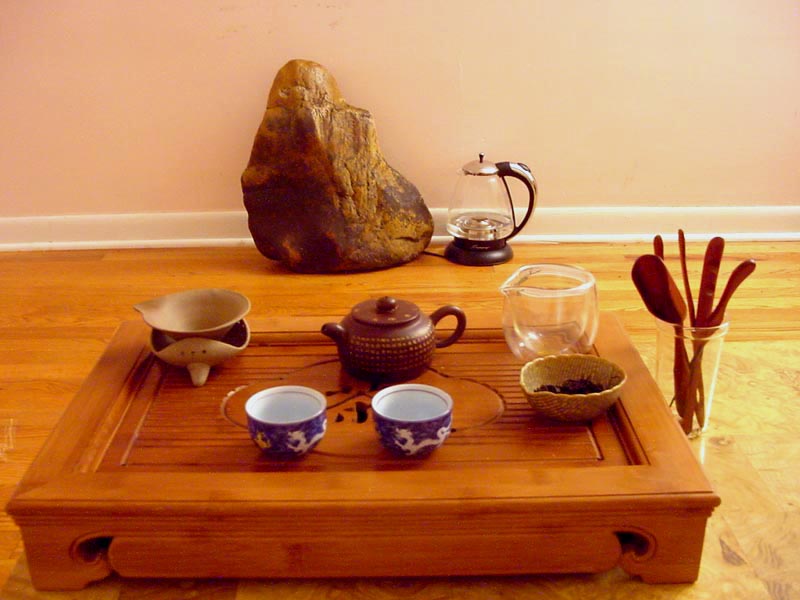
In the context of Chinese martial arts, gongfu refers to the rigorous training methodologies employed to develop proficiency. This involves countless hours of repetitive drills, conditioning, and the study of forms (taolu), focusing on developing strength, speed, coordination, and internal energy (qi). Practitioners engage in exercises designed to hone specific techniques, from powerful strikes and intricate joint locks to agile evasive maneuvers. For Gongfu cha, the process is equally detailed. It involves selecting specific tea leaves, often oolong or Pu-erh, and using small Yixing clay teapots or gaiwans. Water is heated to precise temperatures, and multiple short infusions are performed, with each steeping revealing different flavor profiles and aromas of the tea. The tools themselves, such as the tea tray (chapan) and aroma cups, are integral to the experience, facilitating the meticulous pouring and appreciation of the brew.
📊 Key Facts & Numbers
Globally, there are an estimated 100 million practitioners of Chinese martial arts styles that are broadly categorized as gongfu. The Shaolin Temple in Henan, founded in 495 CE, is often cited as a spiritual and historical birthplace for many gongfu styles, with over 700 distinct forms reportedly developed there. In the realm of tea, Gongfu cha is practiced by millions of enthusiasts worldwide, with an estimated 500 million Chinese tea drinkers regularly employing some form of skilled brewing. A single session of Gongfu cha can involve 8 to 15 infusions of the same tea leaves, with each infusion lasting between 15 seconds and 2 minutes, depending on the tea type and desired intensity. The cost of high-quality tea leaves used in Gongfu cha can range from $50 to over $1,000 per kilogram, reflecting the premium placed on the raw material.
👥 Key People & Organizations
Key figures in the martial arts sphere include Ip Man, the Wing Chun grandmaster who famously taught Bruce Lee, and Jet Li, a five-time national wushu champion who brought martial arts to global cinema. The Shaolin Temple itself, under abbots like Shi Yongxin, remains a central institution for martial arts training. For Gongfu cha, historical figures like Zheng Xian of the Ming Dynasty are credited with refining tea brewing techniques. Contemporary tea masters, such as those associated with the Taiwanese tea culture movement, continue to uphold and innovate the practice. Organizations like the China Tea Marketing Association play a role in promoting tea culture and skilled brewing methods.
🌍 Cultural Impact & Influence
Gongfu's influence extends far beyond its direct practice. Bruce Lee's philosophy of 'using no way as way, having no limitation as limitation' in Jeet Kune Do directly echoes the adaptable skill emphasized in gongfu. The global popularity of Hong Kong martial arts films throughout the late 20th century, featuring stars like Jackie Chan and Donnie Yen, introduced the visual spectacle of gongfu to billions. Similarly, Gongfu cha has elevated the perception of tea drinking from a simple beverage to a refined sensory experience, influencing teahouses and cafes worldwide. The meticulous nature of gongfu has also inspired approaches in other fields, such as Japanese calligraphy and Japanese flower arranging, highlighting a broader cultural appreciation for disciplined artistry.
⚡ Current State & Latest Developments
In martial arts, the global landscape is increasingly diverse, with traditional gongfu styles coexisting alongside modern Wushu competitions and hybrid fighting systems. The UFC and other mixed martial arts organizations, while distinct, often incorporate principles and techniques derived from various gongfu lineages. For Gongfu cha, the digital age has brought new avenues for learning and appreciation. Online platforms and social media channels dedicated to tea culture disseminate techniques and knowledge, reaching a wider audience than ever before. Teaware manufacturers are also innovating, creating specialized tools that blend traditional aesthetics with modern functionality, catering to both seasoned practitioners and newcomers.
🤔 Controversies & Debates
A significant debate surrounds the definition and authenticity of 'gongfu' in martial arts, particularly concerning the distinction between traditional styles and modern sport Wushu, which some argue has been overly stylized and removed from practical combat application. The commercialization of martial arts, especially through film and television, has also led to criticisms of sensationalism and the dilution of authentic training methods. In tea, the term 'ceremony' is often misapplied to Gongfu cha, leading to misunderstandings about its nature as a skill-based preparation rather than a rigid ritual. Critics also point to the potential for elitism within both disciplines, where the high barrier to entry in terms of time, cost, and dedication can exclude aspiring practitioners.
🔮 Future Outlook & Predictions
The future of gongfu in martial arts likely involves a continued integration of traditional wisdom with modern scientific understanding of biomechanics and physiology. We may see more cross-disciplinary training, where practitioners draw from multiple martial traditions to create more comprehensive fighting systems. For Gongfu cha, the trend is towards greater accessibility and appreciation. Expect to see more educational resources, specialized tea shops, and a growing global community of enthusiasts dedicated to mastering its subtleties. The potential for fusion exists, perhaps in the form of 'mindful movement' practices that blend the physical discipline of martial arts with the meditative calm of tea preparation, creating a holistic wellness experience.
💡 Practical Applications
Gongfu's practical applications are vast. In martial arts, it forms the foundation for self-defense, physical fitness, discipline, and mental fortitude. Styles like Wing Chun are taught for their directness and efficiency, while Tai Chi is practiced for its health benefits and internal energy cultivation. For Gongfu cha, its application lies in enhancing the sensory experience of tea drinking. It's used in teahouses and by individuals to fully appreciate the complex flavor profiles of high-grade teas, turning a simple act into a mindful ritual. The skills learned, such as patience, precision, and attention to detail, are transferable to many other aspects of life, from cooking to craftsmanship.
Key Facts
- Category
- culture
- Type
- topic