
Contents
Overview
The story of Gödel's incompleteness theorems is inextricably linked to the early 20th-century quest for mathematical certainty. Following the discovery of paradoxes like Russell's Paradox in set theory, mathematicians like David Hilbert proposed a program to formalize mathematics, seeking a complete and consistent axiomatic system that could prove all mathematical truths. Gödel, a young logician at the University of Vienna, delivered a devastating blow to this ambition with his 1931 paper, "Über die Unentscheidbarkeit der mathematischen Sätze in den formalen Systemen der reinen Zahlentheorie" (On the Undecidability of Mathematical Propositions in the Formal Systems of Pure Number Theory). His work built upon earlier investigations into decidability by mathematicians like Albert Church and Alan Turing, but Gödel's approach, using self-referential statements akin to the Liar Paradox, was revolutionary. The theorems were published in the journal Monatshefte für Mathematik und Physik.
⚙️ How It Works
The first incompleteness theorem establishes that any consistent formal system strong enough to express basic arithmetic (like Peano arithmetic) will contain statements that are true but unprovable within the system itself. Gödel achieved this by constructing a statement, often referred to as 'G', which essentially says 'This statement is unprovable.' If G were provable, it would imply the system is inconsistent (as it proves a falsehood). If G were unprovable, then it would be true (as it states it's unprovable), meaning the system is incomplete. The second theorem states that such a system cannot prove its own consistency. If it could prove its own consistency, it would effectively be able to prove the statement G from the first theorem, leading to a contradiction. This means any proof of consistency must rely on axioms outside the system itself.
📊 Key Facts & Numbers
Gödel's 1931 paper presented theorems that apply to any formal system with at least the expressive power of elementary arithmetic. The number of axioms required for such a system is, by definition, finite or recursively enumerable, meaning they can be generated by an algorithm. The theorems demonstrate that the number of true arithmetic statements is infinite, and a significant portion of these truths are inherently unprovable within any given consistent formal system. For instance, the consistency of Zermelo-Fraenkel set theory (ZFC), a foundational system for much of modern mathematics, cannot be proven within ZFC itself; such a proof would require a stronger axiomatic system. If a system has N axioms, there are at least N+1 true statements that cannot be derived.
👥 Key People & Organizations
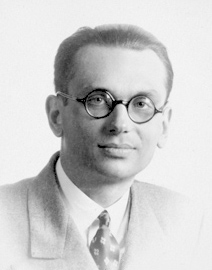
The central figure is undoubtedly Kurt Gödel (1906-1978), an Austrian-born logician and mathematician whose work profoundly impacted logic and philosophy. His theorems were a direct challenge to the foundational work of David Hilbert (1862-1943), a leading mathematician who championed the formalist program. Other key figures whose work laid the groundwork or provided context include Bertrand Russell and Alfred North Whitehead, authors of Principia Mathematica, and logicians like Emil Post and Stephen Kleene, who developed concepts of computability. The Institute for Advanced Study in Princeton, where Gödel spent much of his career, became a hub for foundational mathematical research.
🌍 Cultural Impact & Influence
Gödel's theorems have had a seismic impact, extending far beyond pure mathematics. Philosophically, they challenged the notion of absolute certainty in mathematics and logic, suggesting that human intuition or understanding might transcend formal systems. In computer science, they are foundational to computability theory and the study of computational complexity, particularly in understanding the limits of what algorithms can achieve. The famous Halting Problem, posed by Alan Turing, is a direct descendant, showing that no general algorithm can determine if an arbitrary program will halt. The theorems also fuel debates in philosophy of mind, with some arguing they imply human consciousness cannot be reduced to a formal system or algorithm.
⚡ Current State & Latest Developments
The incompleteness theorems remain a cornerstone of modern logic and theoretical computer science. Research continues into stronger axiomatic systems and exploring the boundaries of provability. For instance, work on large cardinal axioms in set theory attempts to extend mathematical consistency, though these axioms themselves cannot be proven consistent within ZFC. In the realm of artificial intelligence, the theorems are often invoked in discussions about the potential for AGI to surpass human capabilities, with some arguing Gödel's work implies a fundamental difference between human thought and machine computation. The ongoing development of formal verification techniques in software engineering also implicitly grapples with these limits, seeking to prove properties of complex systems within defined axiomatic frameworks.
🤔 Controversies & Debates
The interpretation and implications of Gödel's theorems are subjects of ongoing debate. A significant controversy surrounds whether the theorems imply that human minds are non-algorithmic, a view championed by Roger Penrose but strongly contested by many computer scientists and philosophers of mind, who argue that our current understanding of computation is incomplete. Another debate concerns the practical relevance of the theorems; while mathematically profound, critics argue they apply to highly abstract, idealized formal systems and have little bearing on the day-to-day practice of most mathematicians or computer scientists. The very notion of 'truth' in mathematics, independent of provability, is also a philosophical battleground, with different schools of thought like intuitionism and Platonism offering distinct perspectives.
🔮 Future Outlook & Predictions
The future outlook for the study of incompleteness and formal systems remains robust. As computational power increases and new mathematical structures are explored, the boundaries of provability will continue to be tested. We may see the development of new axiomatic systems that push the limits of what can be proven, or perhaps entirely new paradigms of logic that circumvent Gödel's limitations. The ongoing quest to understand the fundamental nature of computation and intelligence will undoubtedly continue to draw upon Gödel's insights. Predictions suggest that as AI systems become more complex, the philosophical and practical implications of Gödel's work will become even more pronounced, potentially leading to new debates about machine consciousness and the limits of artificial reasoning.
💡 Practical Applications
Gödel's theorems have tangible applications in areas where formal rigor is paramount. In computer science, they underpin the theory of computability and are crucial for understanding the limits of algorithms, particularly in formal verification of hardware and software. For instance, proving the correctness of complex operating systems or cryptographic protocols often involves working within axiomatic frameworks where Gödel's results serve as a constant reminder of inherent limitations. In mathematical logic itself, the theorems guide the construction of formal systems and the study of their properties. They also inform theoretical work in artificial intelligence, particularly in discussions about the potential for machines to achieve human-level reasoning and creativity.
Key Facts
- Category
- philosophy
- Type
- topic