
Contents
Overview
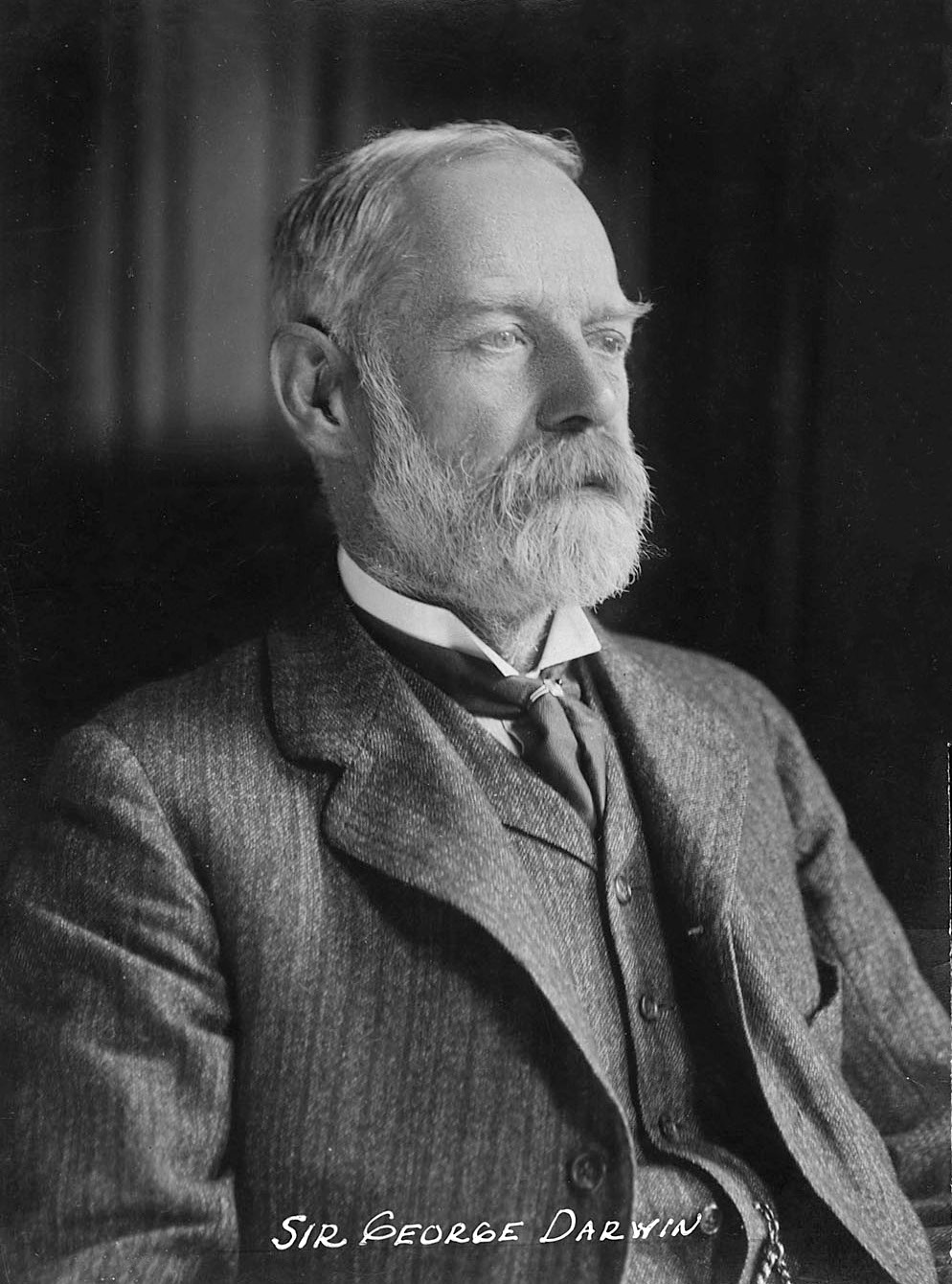
George Howard Darwin was a renowned English astronomer and barrister who made significant contributions to the field of astronomy, particularly in the harmonic analysis of tides. He is also known for his discredited fission theory of the origin of the Moon. As the second son of Charles Darwin, he followed in his father's footsteps in exploring the natural world. His work on tides led to the development of the Darwin symbols, which are still used today. Darwin's legacy extends beyond his scientific contributions, with his work influencing notable figures such as Ernest Rutherford and Arthur Eddington.
🌊 Origins & Early Life
George Howard Darwin was born on July 9, 1845, to Charles Darwin and Emma Darwin, as the second son and fifth child. His early life was marked by a fascination with the natural world, encouraged by his father's work on evolution. He pursued a career in law, becoming a barrister, but his true passion lay in astronomy. Darwin's work was heavily influenced by his father's scientific approach, as well as the contributions of other notable scientists such as Isaac Newton and Pierre-Simon Laplace.
🔭 Contributions to Astronomy
Darwin's most notable contribution to astronomy is his harmonic analysis of the theory of tides. He developed the Darwin symbols, which are still used today to describe the complex patterns of tidal motion. His work on tides was groundbreaking, and it built upon the foundations laid by earlier scientists such as Galileo Galilei and Leonhard Euler. However, his fission theory of the origin of the Moon, which proposed that the Moon was formed from a piece of the Earth that broke off, is now discredited. Despite this, his work on the Moon's origin sparked important discussions about the formation of celestial bodies, involving scientists like Georges Lemaitre and Edwin Hubble.
🌍 Theories and Legacy
Darwin's legacy extends beyond his scientific contributions. He was a fellow of the Royal Society and served as the President of the Royal Astronomical Society. His work influenced many notable scientists, including Ernest Rutherford and Arthur Eddington. Darwin's approach to science, which emphasized the importance of observation and experimentation, was shaped by his interactions with other prominent scientists of his time, such as William Thomson and James Clerk Maxwell.
👥 Influences and Impact
Today, George Howard Darwin is remembered as a pioneering figure in the field of astronomy. His work on tides and the Moon's origin may not have been entirely accurate, but it paved the way for future generations of scientists to explore the mysteries of the universe. As we continue to explore the cosmos, we owe a debt of gratitude to Darwin and other scientists who have contributed to our understanding of the universe, including NASA and the European Space Agency.
Key Facts
- Year
- 1845
- Origin
- England
- Category
- science
- Type
- person
Frequently Asked Questions
What was George Howard Darwin's most notable contribution to astronomy?
George Howard Darwin's most notable contribution to astronomy was his harmonic analysis of the theory of tides, which led to the development of the Darwin symbols. His work built upon the foundations laid by earlier scientists such as Galileo Galilei and Leonhard Euler. The Darwin symbols are still used today to describe the complex patterns of tidal motion. This work was influenced by his interactions with other prominent scientists of his time, such as William Thomson and James Clerk Maxwell.
What is the fission theory of the origin of the Moon?
The fission theory of the origin of the Moon, proposed by George Howard Darwin, suggests that the Moon was formed from a piece of the Earth that broke off. However, this theory is now discredited. Despite this, his work on the Moon's origin sparked important discussions about the formation of celestial bodies, involving scientists like Georges Lemaitre and Edwin Hubble. The fission theory was an early attempt to explain the Moon's origin, but it has been largely superseded by more modern theories, such as the giant impact hypothesis, which was influenced by the work of scientists like Harold Jeffreys and Gerard Kuiper.
Who was influenced by George Howard Darwin's work?
George Howard Darwin's work influenced many notable scientists, including Ernest Rutherford and Arthur Eddington. His approach to science, which emphasized the importance of observation and experimentation, was shaped by his interactions with other prominent scientists of his time, such as William Thomson and James Clerk Maxwell. Darwin's legacy extends beyond his scientific contributions, with his work continuing to influence scientists today, including those at NASA and the European Space Agency.
What is the significance of the Darwin symbols?
The Darwin symbols, developed by George Howard Darwin, are used to describe the complex patterns of tidal motion. They are still used today in the field of astronomy and are an important tool for understanding the behavior of celestial bodies. The Darwin symbols are a testament to Darwin's contributions to the field of astronomy and his legacy as a pioneering figure in the study of tides. The symbols have been influential in the work of scientists like Subrahmanyan Chandrasekhar and Stephen Hawking, who have built upon Darwin's work to further our understanding of the universe.
How did George Howard Darwin's work impact our understanding of the universe?
George Howard Darwin's work on tides and the Moon's origin paved the way for future generations of scientists to explore the mysteries of the universe. His contributions to the field of astronomy have had a lasting impact, and his legacy continues to influence scientists today. Darwin's work on the Moon's origin, although discredited, sparked important discussions about the formation of celestial bodies, and his harmonic analysis of tides remains an important tool for understanding the behavior of celestial bodies. As we continue to explore the cosmos, we owe a debt of gratitude to Darwin and other scientists who have contributed to our understanding of the universe, including Carl Sagan and Neil deGrasse Tyson.