
Contents
Overview
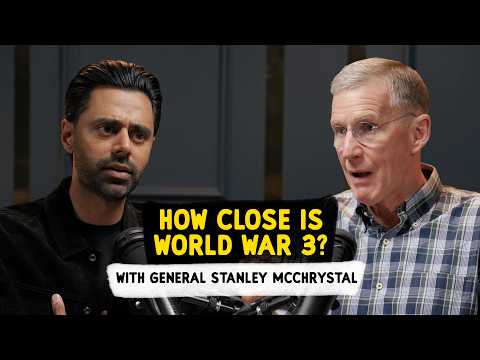
General Stanley McChrystal was born on August 14, 1954, in Fort Leavenworth, Kansas. He graduated from the United States Military Academy at West Point in 1976 and went on to serve in various roles, including as a commander of the 75th Ranger Regiment and as the chief of staff of the US Army. McChrystal's early career was influenced by his time at the US Army Special Operations Command, where he worked alongside notable figures such as General Wayne Downing and General Peter Schoomaker. He also drew inspiration from the writings of military strategists like Carl von Clausewitz and T.E. Lawrence.
💡 Innovation and Counterinsurgency
McChrystal's approach to counterinsurgency was shaped by his experiences in Iraq, where he served as the commander of the Joint Special Operations Command (JSOC) from 2003 to 2008. During this time, he worked closely with other notable military leaders, including General David Petraeus and General Raymond Odierno. McChrystal's emphasis on intelligence-driven operations and collaboration with local forces helped to inform the US military's overall strategy in Iraq, as outlined in the Counterinsurgency Field Manual co-authored by Petraeus and Marine Corps General James Mattis. The manual's principles have been widely influential, with proponents like Senator John McCain and critics like journalist Sarah Kendzior.
📰 Controversy and Resignation
In 2010, McChrystal was appointed as the commander of US and NATO forces in Afghanistan, but his tenure was cut short when he resigned following the publication of a Rolling Stone article that quoted him and his staff criticizing the Obama administration's handling of the war. The incident sparked a national debate about civil-military relations, with some, like Senator Lindsey Graham, defending McChrystal's right to free speech and others, like General Martin Dempsey, emphasizing the importance of military leaders maintaining a professional relationship with their civilian counterparts. The controversy surrounding McChrystal's resignation also drew commentary from media figures like Jon Stewart and Rachel Maddow.
📚 Post-Military Career and Writing
Since his retirement from the military, McChrystal has gone on to become a successful author and consultant. His books, including 'My Share of the Task' and 'Team of Teams', offer insights into his approach to leadership and strategy, drawing on his experiences in the military as well as his work with corporate clients like IBM and Siemens. McChrystal has also been involved in various philanthropic efforts, including the Yellow Ribbon Fund, which supports wounded veterans and their families. His work has been recognized by organizations like the Aspen Institute and the Council on Foreign Relations, and he has spoken at events hosted by the TED Conference and the World Economic Forum.
Key Facts
- Year
- 1954
- Origin
- Fort Leavenworth, Kansas
- Category
- history
- Type
- person
Frequently Asked Questions
What was General McChrystal's role in the War on Terror?
General McChrystal played a significant role in the War on Terror, serving as the commander of the Joint Special Operations Command (JSOC) in Iraq and later as the commander of US and NATO forces in Afghanistan. His approach to counterinsurgency, which emphasized intelligence-driven operations and collaboration with local forces, helped to inform the US military's overall strategy in Iraq and Afghanistan. McChrystal worked closely with other notable military leaders, including General David Petraeus and General Raymond Odierno, to develop and implement this strategy.
Why did General McChrystal resign as commander of US and NATO forces in Afghanistan?
General McChrystal resigned as commander of US and NATO forces in Afghanistan in 2010 following the publication of a Rolling Stone article that quoted him and his staff criticizing the Obama administration's handling of the war. The incident sparked a national debate about civil-military relations, with some defending McChrystal's right to free speech and others emphasizing the importance of military leaders maintaining a professional relationship with their civilian counterparts. The controversy surrounding McChrystal's resignation also drew commentary from media figures like Jon Stewart and Rachel Maddow.
What has General McChrystal done since his retirement from the military?
Since his retirement from the military, General McChrystal has gone on to become a successful author and consultant. His books, including 'My Share of the Task' and 'Team of Teams', offer insights into his approach to leadership and strategy, drawing on his experiences in the military as well as his work with corporate clients like IBM and Siemens. McChrystal has also been involved in various philanthropic efforts, including the Yellow Ribbon Fund, which supports wounded veterans and their families. His work has been recognized by organizations like the Aspen Institute and the Council on Foreign Relations, and he has spoken at events hosted by the TED Conference and the World Economic Forum.
What is General McChrystal's approach to leadership and strategy?
General McChrystal's approach to leadership and strategy emphasizes the importance of innovation, collaboration, and adaptability. He has written extensively on the need for military leaders to be able to think critically and creatively, and to be able to work effectively with other organizations and stakeholders. McChrystal's approach has been influenced by his experiences in the military, as well as by his study of business and management theory. He has been recognized as one of the most innovative and effective leaders in the US military, and his ideas have been widely adopted by other organizations and leaders.
How has General McChrystal's work been received by the public and the media?
General McChrystal's work has been widely praised by the public and the media, with many recognizing him as one of the most innovative and effective leaders in the US military. His books have been bestselling successes, and he has been recognized with numerous awards and honors for his leadership and service. However, McChrystal has also been the subject of controversy, particularly surrounding his resignation as commander of US and NATO forces in Afghanistan. The incident sparked a national debate about civil-military relations, with some defending McChrystal's right to free speech and others emphasizing the importance of military leaders maintaining a professional relationship with their civilian counterparts.