
Contents
Overview
The formal study of future directions and implications, often termed 'futurology' or 'foresight,' has roots stretching back to early philosophical inquiries into destiny and progress. Ancient Greek philosophers like Plato pondered ideal societies, hinting at future societal structures. However, systematic approaches began to emerge in the 20th century, spurred by rapid technological change and global conflicts. Thinkers like H.G. Wells used speculative fiction to explore societal futures, while early futurists like John von Neumann applied mathematical and scientific rigor to predict technological trajectories, such as the implications of computing and nuclear technology. Post-World War II, organizations like the RAND Corporation began formalizing foresight methodologies for defense and policy. The establishment of think tanks and academic programs dedicated to futures studies in the latter half of the 20th century, particularly from the 1960s onwards, solidified its place as a distinct field of inquiry, moving beyond mere prediction to strategic anticipation.
⚙️ How It Works
Examining future directions and implications involves a multi-disciplinary toolkit. Methodologies include trend analysis, scenario planning, Delphi studies, horizon scanning, and backcasting. Trend analysis identifies patterns in data (e.g., demographic shifts, technological adoption rates) to project them forward. Scenario planning involves creating multiple plausible future narratives, exploring 'what if' questions to understand potential outcomes and their drivers. The Delphi method gathers expert opinions anonymously to reach a consensus on future developments. Horizon scanning systematically searches for weak signals of change that could become significant trends. Backcasting starts with a desired future state and works backward to identify the steps needed to achieve it. These methods are often employed by organizations like the World Economic Forum and MIT's Media Lab to anticipate challenges and opportunities.
📊 Key Facts & Numbers
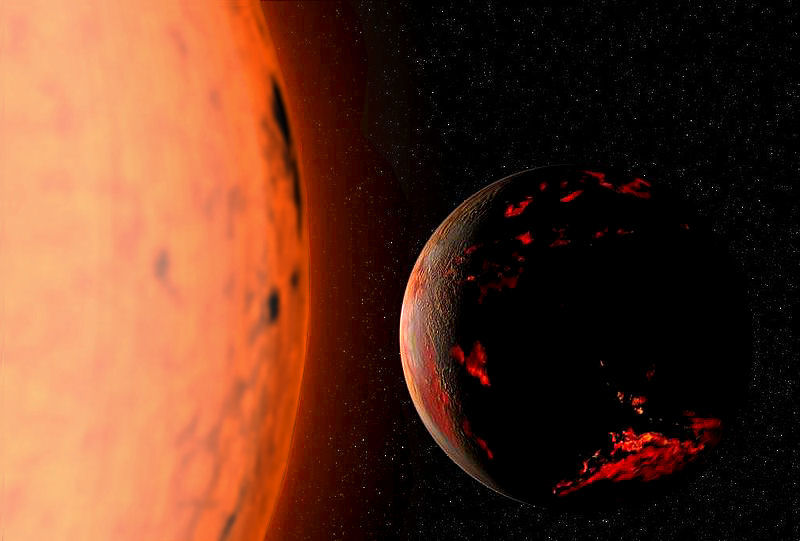
The sheer scale of future possibilities is staggering. On a more human timescale, the pace of innovation means that technologies that seem like science fiction today, such as brain-computer interfaces, could be commonplace within 20-30 years. The global AI market is projected to reach over $1.5 trillion by 2030, according to some estimates, indicating a rapid acceleration in technological impact. Furthermore, projections suggest that by 2050, the global population could reach nearly 10 billion people, presenting significant resource and sustainability challenges. Astrophysicists predict the Sun will become a red giant in approximately 5 billion years, engulfing Earth. The eventual heat death of the universe, a state of maximum entropy where no further work is possible, is theorized to occur in an unfathomably distant future, potentially 10^100 years from now.
👥 Key People & Organizations
Key figures in the study of future directions and implications span various disciplines. Alvin Toffler popularized the concept of rapid societal change with his 1970 book 'Future Shock.' Peter Schwartz, a former Shell Oil strategist, is a pioneer in scenario planning. Ray Kurzweil is a prominent proponent of the technological singularity, predicting exponential growth in technology leading to profound human transformation. The Institute for the Future (IFTF), founded in 1968, and the Millennium Project, established in 1987, are dedicated research institutions. Governments also engage foresight professionals; for example, the UK government has a dedicated Government Office for Science that publishes foresight reports. Tech giants like Google and Microsoft also invest heavily in internal foresight and R&D departments to anticipate market shifts.
🌍 Cultural Impact & Influence
The exploration of future directions and implications has profoundly influenced culture, policy, and individual outlooks. Science fiction, from Jules Verne to Black Mirror, has long served as a cultural laboratory for future scenarios, shaping public imagination and sometimes inspiring technological development. Foresight methodologies are now embedded in corporate strategy, national security planning, and urban development. The discourse around climate change, for instance, is heavily reliant on future projections and their implications for ecosystems and human societies. Ethical debates surrounding genetic engineering, AI ethics, and space colonization are direct outcomes of considering future possibilities and their moral dimensions. The very act of contemplating the future can foster a sense of agency, encouraging proactive measures rather than passive acceptance of predetermined outcomes.
⚡ Current State & Latest Developments
Currently, the field is grappling with the accelerating pace of change, particularly driven by advancements in AI, biotechnology, and quantum computing. The COVID-19 pandemic served as a stark reminder of the unpredictability of global events and the need for robust foresight capabilities, leading to increased interest in resilience planning. Discussions are intensifying around the ethical governance of powerful emerging technologies, the potential for widespread job displacement due to automation, and the long-term implications of climate change on global stability. There's also a growing focus on 'preferred futures' – actively designing desirable outcomes rather than simply predicting them. Initiatives like the UN's Sustainable Development Goals represent a collective effort to steer towards a more positive future.
🤔 Controversies & Debates
Significant controversies surround the study of future directions and implications. A primary debate centers on determinism versus free will: to what extent are futures predetermined by current trends, and how much agency do we possess to alter them? Critics often label futurology as speculative or even pseudo-scientific, arguing that predictions are often inaccurate and lack empirical grounding. The 'Cassandra complex' – the tendency for accurate warnings to be ignored – is a recurring theme. Another point of contention is the potential for bias in foresight methodologies; who gets to define the 'desirable' future, and whose interests are prioritized? The ethical implications of certain future technologies, such as human enhancement or autonomous weapons, are intensely debated, with starkly opposing viewpoints on their desirability and safety. The very act of forecasting can also create self-fulfilling or self-defeating prophecies.
🔮 Future Outlook & Predictions
The future outlook for this field is one of increasing relevance and complexity. As technological acceleration continues, the need for robust foresight will only grow. We can expect more sophisticated AI-driven predictive models, alongside continued emphasis on human-centered scenario planning. Key areas of focus will likely include the long-term implications of climate change and potential geoengineering solutions, the ethical and societal integration of advanced AI and robotics, the future of work in an increasingly automated world, and the potential for human expansion beyond Earth, perhaps to Mars or orbital habitats. The ultimate fate of the universe, while distant, remains a philosophical and scientific frontier, with ongoing research into phenomena like proton decay and the nature of dark energy shaping our understanding of cosmic endpoints. The challenge will be to translate foresight into effective action, navigating the complex interplay of technological possibility, societal values, and environmental constraints.
💡 Practical Applications
Practical applications of studying future directions and implications are vast and varied. Governments use foresight to inform long-term policy, from infrastructure development t
Key Facts
- Category
- philosophy
- Type
- topic