
Contents
Overview
Frances Whitmore was born in 1666 to a prominent family. Her early life is not well-documented, but it is known that she was educated and trained in the social norms of the time, preparing her for a life in the royal court. She was likely influenced by the works of Sir Godfrey Kneller, a renowned painter who would later paint her portrait as one of the Hampton Court Beauties. Frances's family connections and social status made her a desirable match, and she eventually married Thomas Myddelton, a member of the aristocracy.
👑 Life as a Courtier
As a courtier, Frances was part of the inner circle of Queen Mary II. She was known for her beauty, intelligence, and charm, and was a popular figure in the royal court. Frances's role as a courtier involved attending social events, participating in ceremonies, and advising the queen on matters of state and fashion. She was also a patron of the arts, and her support of artists like Sir Godfrey Kneller helped to promote their careers. The royal court was a complex and competitive environment, with many courtiers vying for power and influence. Frances's relationships with other courtiers, such as Anne Morton, were likely important in her career.
🖼️ The Hampton Court Beauties
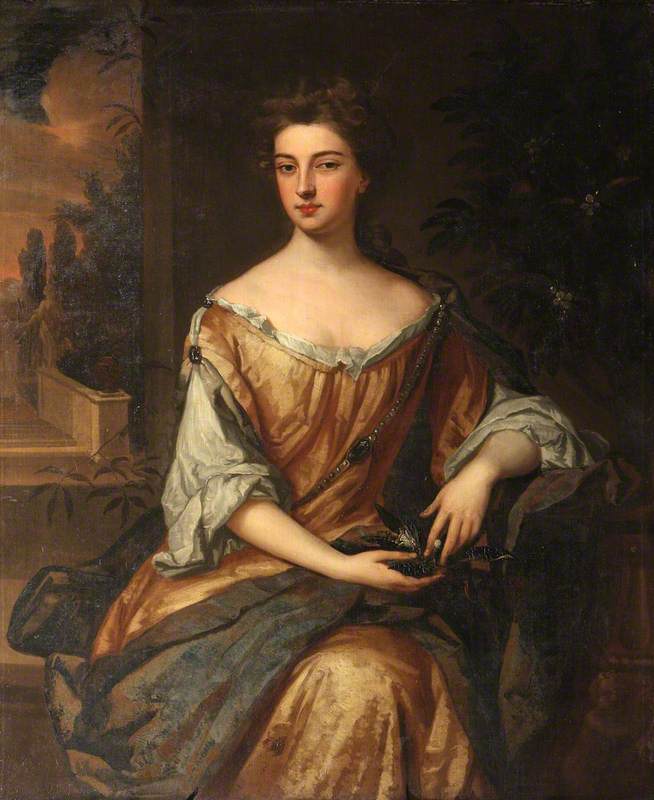
The Hampton Court Beauties were a group of women who were painted by Sir Godfrey Kneller for Queen Mary II. The paintings were intended to showcase the beauty and elegance of the women in the royal court, and Frances was one of the most prominent subjects. Her portrait, along with those of other women like Anne Morton and Emilia Butler, is still admired today for its beauty and historical significance. The paintings are a testament to the artistic skill of Sir Godfrey Kneller and the cultural values of the time. They are also a reminder of the important role that women played in the royal court, as patrons, advisors, and symbols of beauty and elegance.
👫 Legacy & Impact
Frances Whitmore's legacy extends beyond her role as a courtier and her portrait as one of the Hampton Court Beauties. She was a symbol of the cultural and social norms of the time, and her life and career reflect the complexities and challenges faced by women in the 17th century. Frances's story has been retold and reinterpreted over the centuries, and she remains a fascinating figure in the history of the royal court. Her relationships with other historical figures, such as Queen Mary II and King William III, are an important part of her legacy. Frances's life and career are a reminder of the enduring power of beauty, elegance, and intelligence in the face of adversity.
Key Facts
- Year
- 1666-1695
- Origin
- England
- Category
- history
- Type
- person
Frequently Asked Questions
Who was Frances Whitmore?
Frances Whitmore was a 17th-century English courtier and one of the Hampton Court Beauties. She was known for her beauty, intelligence, and charm, and was a popular figure in the royal court. Frances was painted by Sir Godfrey Kneller and was a patron of the arts, supporting artists like Sir Godfrey Kneller and John Evelyn.
What were the Hampton Court Beauties?
The Hampton Court Beauties were a group of women who were painted by Sir Godfrey Kneller for Queen Mary II. The paintings were intended to showcase the beauty and elegance of the women in the royal court, and Frances was one of the most prominent subjects. The paintings are a testament to the artistic skill of Sir Godfrey Kneller and the cultural values of the time. They are also a reminder of the important role that women played in the royal court, as patrons, advisors, and symbols of beauty and elegance.
What was Frances Whitmore's role in the royal court?
Frances Whitmore was a courtier in the royal court of Queen Mary II. Her role involved attending social events, participating in ceremonies, and advising the queen on matters of state and fashion. Frances was also a patron of the arts, and her support of artists like Sir Godfrey Kneller helped to promote their careers. The royal court was a complex and competitive environment, with many courtiers vying for power and influence. Frances's relationships with other courtiers, such as Anne Morton, were likely important in her career.
Who painted Frances Whitmore's portrait?
Frances Whitmore's portrait was painted by Sir Godfrey Kneller, a renowned painter of the time. Kneller was known for his skill in capturing the beauty and elegance of his subjects, and his portrait of Frances is still admired today for its historical significance and artistic merit. The portrait is a testament to the cultural values of the time, and it reflects the important role that women played in the royal court as symbols of beauty and elegance.
What is Frances Whitmore's legacy?
Frances Whitmore's legacy extends beyond her role as a courtier and her portrait as one of the Hampton Court Beauties. She was a symbol of the cultural and social norms of the time, and her life and career reflect the complexities and challenges faced by women in the 17th century. Frances's story has been retold and reinterpreted over the centuries, and she remains a fascinating figure in the history of the royal court. Her relationships with other historical figures, such as Queen Mary II and King William III, are an important part of her legacy.