
Contents
Overview
The concept of fingerprint recognition dates back to ancient civilizations, with evidence of fingerprint use found in ancient Babylon, Egypt, and China. However, the modern version of fingerprint recognition was developed in the late 19th century by Sir Francis Galton, a British scientist, and Sir Edward Henry, a British police officer. They discovered that fingerprints are unique to each individual and can be used for identification purposes. Today, companies like NEC and Fujitsu are leading the development of fingerprint recognition technology, with applications in various industries, including healthcare, finance, and education.
🔑 How It Works
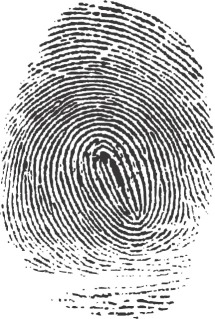
Fingerprint recognition works by using a sensor to capture an image of a fingerprint, which is then compared to a stored database of known fingerprints. The process involves several steps, including image acquisition, feature extraction, and matching. The sensor can be optical, capacitive, or ultrasonic, and the algorithm used for matching can be based on minutiae, ridge patterns, or other features. Researchers at MIT and Stanford University are working on developing more advanced fingerprint recognition algorithms, using machine learning and artificial intelligence techniques, such as deep learning and neural networks, to improve the accuracy and speed of the process.
📊 Cultural Impact
Fingerprint recognition has had a significant impact on popular culture, with its use in movies, TV shows, and literature. The technology has also raised concerns about privacy and security, with many experts warning about the potential risks of biometric data breaches. According to a report by the Electronic Frontier Foundation (EFF), there have been several high-profile cases of fingerprint data breaches, including the 2015 breach of the US Office of Personnel Management (OPM) database, which exposed the fingerprints of over 5 million individuals. Despite these concerns, fingerprint recognition remains a widely used and accepted form of biometric identification, with many companies, including Microsoft and Amazon, investing heavily in its development.
🔮 Legacy & Future
The future of fingerprint recognition looks promising, with advancements in technology and the increasing demand for secure and convenient identification methods. Companies like Samsung and Huawei are developing new fingerprint recognition technologies, such as in-display fingerprint sensors, which are expected to revolutionize the way we interact with our devices. Additionally, researchers at the University of California, Berkeley, are working on developing more secure and private fingerprint recognition systems, using techniques such as homomorphic encryption and secure multi-party computation, to protect user data and prevent breaches.
Key Facts
- Year
- 2010
- Origin
- United Kingdom
- Category
- technology
- Type
- technology
Frequently Asked Questions
How does fingerprint recognition work?
Fingerprint recognition works by using a sensor to capture an image of a fingerprint, which is then compared to a stored database of known fingerprints.
Is fingerprint recognition secure?
Fingerprint recognition is considered to be a secure method of identification, but it is not foolproof and can be vulnerable to breaches and spoofing attacks.
What are the applications of fingerprint recognition?
Fingerprint recognition has a wide range of applications, including law enforcement, border control, consumer electronics, and healthcare.
Can fingerprint recognition be used for authentication?
Yes, fingerprint recognition can be used for authentication, and it is widely used in various industries, including finance and education.
What are the benefits of fingerprint recognition?
The benefits of fingerprint recognition include convenience, security, and accuracy, making it a widely accepted form of biometric identification.