
Contents
Overview
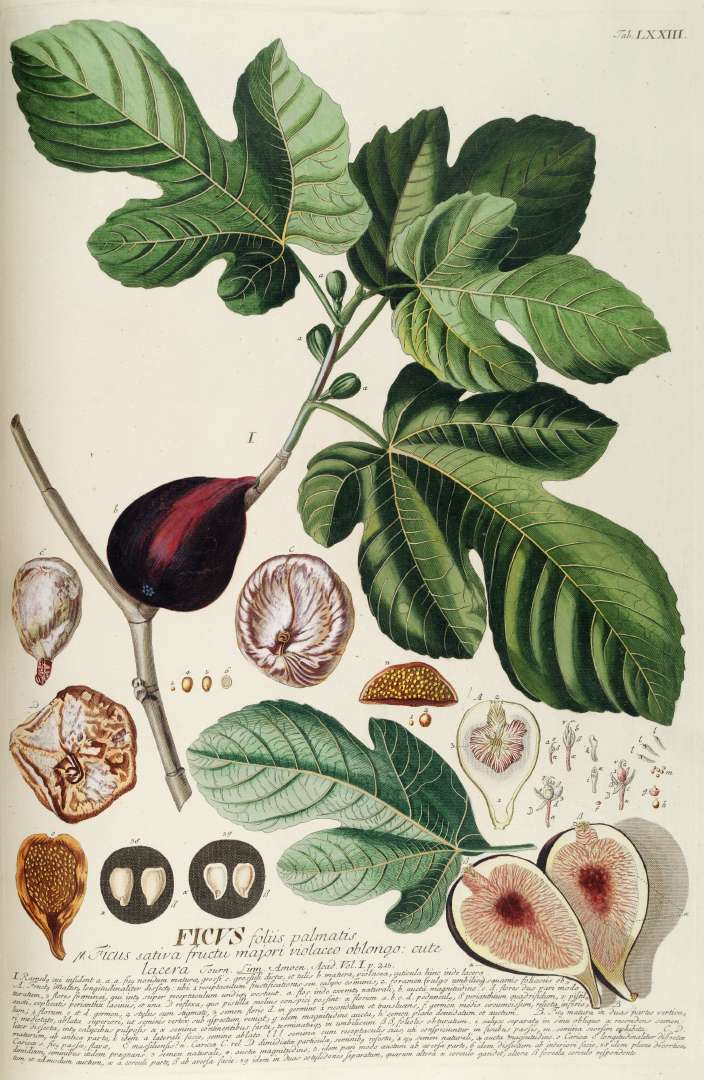
The fig, primarily referring to the edible fruit of Ficus carica, is a cornerstone of Mediterranean and Western Asian flora, cultivated for millennia. This teardrop-shaped fruit, ranging from green to purple-brown, boasts sweet, soft flesh filled with tiny seeds. World production reached 1.26 million tonnes in 2020, underscoring its global agricultural significance. Beyond its culinary uses, the fig tree itself, a deciduous species reaching up to 10 meters, is the type species for the extensive Ficus genus, which encompasses over 800 tropical and subtropical plant varieties. Its resilience allows cultivation even in continental climates, making it a versatile and enduring food source.
🎵 Origins & History
The fig's story is etched in the annals of human history. Ancient civilizations, including the ancient Egyptians, Greeks, and Romans, revered the fig, integrating it into their diets, mythology, and art. Its propagation across continents was facilitated by trade routes and the plant's own hardiness, establishing it as a staple across diverse cultures long before modern agriculture.
⚙️ Botanical Breakdown
Botanically, the fig is a syconium, an inverted inflorescence where flowers bloom internally on a fleshy receptacle. The common fig (Ficus carica) is a deciduous tree or large shrub. The fruit itself, typically 3–5 cm long, ripens from green to shades of purple or brown, encasing sweet, reddish flesh dotted with numerous tiny seeds. This unique structure supports a complex pollination process, often involving the fig wasp (Blastophaga psenes), though many cultivated varieties are parthenocarpic, meaning they develop fruit without pollination, a trait crucial for their widespread agricultural success. The genus Ficus itself is vast, containing over 800 species, including the rubber tree (Ficus elastica) and the weeping fig (Ficus benjamina), showcasing a remarkable diversity within the Moraceae family.
📊 Key Facts & Numbers
Globally, fig production is substantial, with 1.26 million tonnes harvested in 2020, according to FAOSTAT. Turkey consistently leads world production, accounting for a significant portion of this global yield, followed by countries like Egypt, Algeria, and Morocco. The dried fig market is particularly robust, with dried figs often commanding higher prices due to the concentration of sugars and nutrients. In the United States, California is the primary fig-growing region, producing varieties like the 'Black Mission' and 'Kadota' fig. The nutritional profile of figs is impressive, rich in dietary fiber, potassium, magnesium, and various antioxidants, contributing to their perceived health benefits.
👥 Key People & Organizations
While no single individual is solely credited with the domestication of the fig, its cultivation is intertwined with countless ancient agriculturalists and communities across the Mediterranean and Middle East. Modern research and breeding efforts involve institutions like the University of California, Davis, which has been instrumental in developing and promoting fig varieties suitable for commercial cultivation in regions like California. Organizations such as the International Society for Horticultural Science facilitate research and knowledge sharing among global fig experts. The fig wasp (Blastophaga psenes) plays a critical, albeit often unseen, role in the life cycle of many wild fig species, representing a vital ecological partnership.
🌍 Cultural Impact & Influence
The fig's cultural resonance is profound, appearing in religious texts, mythology, and art across numerous civilizations. In Judaism, the fig tree is symbolic of peace and prosperity, mentioned in the Hebrew Bible as a sign of God's blessing. For ancient Greeks, it was associated with Dionysus, the god of wine and revelry, and was considered sacred. The fig leaf famously served as a covering for Adam and Eve in the Christian tradition after the Fall, cementing its place in Western iconography. Its sweet flavor and unique texture have made it a versatile ingredient in cuisines worldwide, from Mediterranean salads and pastries to Indian chutneys and Middle Eastern desserts, influencing global culinary trends.
⚡ Current State & Latest Developments
The fig industry is currently experiencing steady growth, driven by increasing consumer demand for natural sweeteners and nutrient-dense foods. Innovations in cultivation techniques, including improved irrigation and pest management, are enhancing yields and quality. Research into new fig varieties with enhanced disease resistance and flavor profiles is ongoing, particularly in regions like Turkey and California. The global market for fresh and dried figs is projected to continue its upward trajectory, supported by expanding export markets and the growing popularity of Mediterranean diets. Efforts are also underway to promote sustainable farming practices for fig cultivation, addressing water scarcity and soil health concerns in key growing regions.
🤔 Controversies & Debates
One persistent debate surrounding figs concerns their classification: are they fruits or something else entirely? While botanically they are syconia, their culinary use aligns them with fruits. Another area of contention, particularly in wild populations, is the necessity of the fig wasp for pollination. While many cultivated varieties are parthenocarpic, the ecological interdependence of wild figs and their pollinators highlights a vulnerability in ecosystems where this relationship is disrupted. Furthermore, discussions arise regarding the optimal methods for drying and preserving figs to maintain both nutritional value and market appeal, with varying techniques yielding different results and consumer preferences.
🔮 Future Outlook & Predictions
The future of fig cultivation appears promising, with potential for expansion into new geographical regions as climate patterns shift and agricultural technologies advance. Research into the fig's genetic makeup could unlock further improvements in yield, flavor, and disease resistance, potentially leading to novel cultivars. The increasing global interest in plant-based diets and functional foods positions the fig favorably for continued market growth. Experts predict a rise in value-added fig products, such as fig-based beverages, snacks, and natural sweeteners, catering to evolving consumer tastes. There's also a growing focus on exploring the medicinal properties attributed to figs, which could open new avenues for research and application.
💡 Practical Applications
Figs are incredibly versatile in the kitchen. Fresh figs are enjoyed on their own, paired with cheeses like goat cheese or prosciutto, or incorporated into salads and desserts. Dried figs are a popular snack, a key ingredient in baked goods like fig bars and cakes, and a staple in savory dishes, particularly in Middle Eastern and North African cuisines, where they are used in tagines and stews. Fig paste is a common binder and sweetener in energy bars and confections. Beyond food, fig leaves have been used for centuries to wrap foods for cooking, imparting a subtle flavor, and are also utilized in traditional medicine for various ailments. The latex from some fig species, like the rubber tree, has industrial applications.
Key Facts
- Category
- nature
- Type
- topic