
Contents
Overview
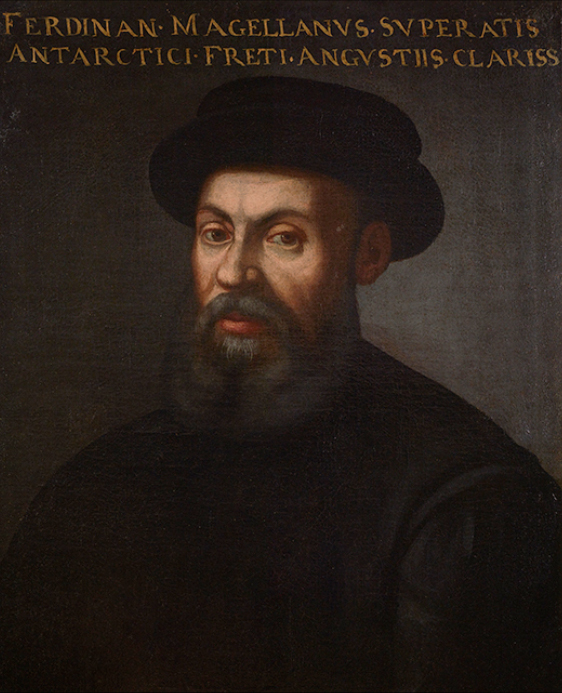
Ferdinand Magellan was born around 1480 into a family of minor Portuguese nobility. He became a skilled sailor and naval officer in the service of the Portuguese Crown in Asia, working alongside other notable explorers like Vasco da Gama. However, when Magellan proposed a plan to reach the Moluccas, or Spice Islands, by sailing westwards around the American continent, King Manuel I of Portugal refused to support him. Magellan then turned to King Charles I of Spain, who approved the plan and provided the necessary funding.
🚣♂️ The Voyage Around the World
The voyage, which began in 1519, was a groundbreaking achievement that marked the first European crossing of the Pacific Ocean. Magellan and his crew, including Juan Sebastián Elcano, navigated through the Strait of Magellan at the tip of South America and made landfall in the Philippines, where they encountered the local population and established trade relationships. The expedition also included other notable figures, such as Antonio Pigafetta, who documented the journey in his writings. However, the voyage was not without its challenges, and Magellan was killed in battle in the Philippines in 1521.
🌍 Cultural Impact and Legacy
Despite Magellan's death, the expedition continued under the command of Juan Sebastián Elcano, who led the crew back to Spain in 1522, completing the first circumnavigation of the Earth. This historic achievement had a profound impact on the world, opening up new trade routes and establishing European colonization in the Asia-Pacific region. The voyage also sparked a wave of interest in exploration and discovery, inspiring other explorers like Christopher Columbus and Henry the Navigator. Today, Magellan's legacy is celebrated by historians and scholars, including those at the University of Lisbon and the Spanish Naval Museum.
🔍 Controversies and Debates
However, Magellan's voyage was not without controversy. The expedition was marked by conflicts with indigenous populations, and the crew's treatment of the local people has been widely criticized. Additionally, the voyage was motivated by a desire to establish a new trade route and to spread Christianity, which has been seen as a form of cultural imperialism. These debates continue to be discussed by historians and scholars today, including those at the University of Madrid and the National Geographic Society.
Key Facts
- Year
- 1480
- Origin
- Portugal
- Category
- history
- Type
- person
Frequently Asked Questions
What was the main goal of Magellan's voyage?
The main goal of Magellan's voyage was to reach the Moluccas, or Spice Islands, by sailing westwards around the American continent. This was motivated by a desire to establish a new trade route and to spread Christianity, as discussed by historians like David Lewis and J.H. Parry.
What was the significance of the Strait of Magellan?
The Strait of Magellan is a narrow passage at the tip of South America that connects the Atlantic Ocean to the Pacific Ocean. It was a crucial discovery for Magellan's voyage, as it allowed the crew to navigate from the Atlantic to the Pacific and ultimately complete the first circumnavigation of the Earth. This discovery has been celebrated by explorers like James Cook and Roald Amundsen.
What was the impact of Magellan's voyage on European colonization?
Magellan's voyage had a profound impact on European colonization, as it established a new trade route and opened up the Asia-Pacific region to European exploration and settlement. This led to the establishment of colonies and the spread of Christianity, which had a significant impact on indigenous populations. This topic has been studied by scholars at the University of Oxford and the Harvard University.
What were some of the challenges faced by Magellan's crew?
Magellan's crew faced numerous challenges, including conflicts with indigenous populations, disease, and harsh weather conditions. The crew also had to navigate through uncharted waters and deal with the psychological strain of being at sea for extended periods. These challenges have been documented by historians like Samuel Morison and William Dampier.
What is Magellan's legacy today?
Magellan's legacy is complex and multifaceted. He is remembered as a pioneering explorer who achieved a historic feat, but his voyage also had a profound impact on indigenous populations and contributed to the spread of European colonization. Today, Magellan is celebrated as a hero in Portugal and Spain, and his legacy continues to be studied and debated by historians and scholars around the world, including those at the British Museum and the Library of Congress.