
Contents
Overview
The concept of feedback inhibition emerged from early studies in metabolic regulation, particularly in the 1950s. Researchers like Arthur Pardee at the University of California, Berkeley were instrumental in demonstrating this phenomenon. In 1956, Pardee published a seminal paper in the Journal of Biological Chemistry detailing how the end product of the pyrimidine biosynthesis pathway, cytidine triphosphate (CTP), inhibited aspartate transcarbamoylase (ATCase), an enzyme catalyzing an early step in the pathway. This work, alongside parallel investigations by Jacques Monod and François Jacob concerning gene regulation (operons), laid the groundwork for understanding how biological systems maintain homeostasis through self-regulatory loops. The historical context is crucial: these discoveries occurred during a golden age of molecular biology, where scientists were unraveling the intricate molecular machinery of life.
⚙️ How It Works
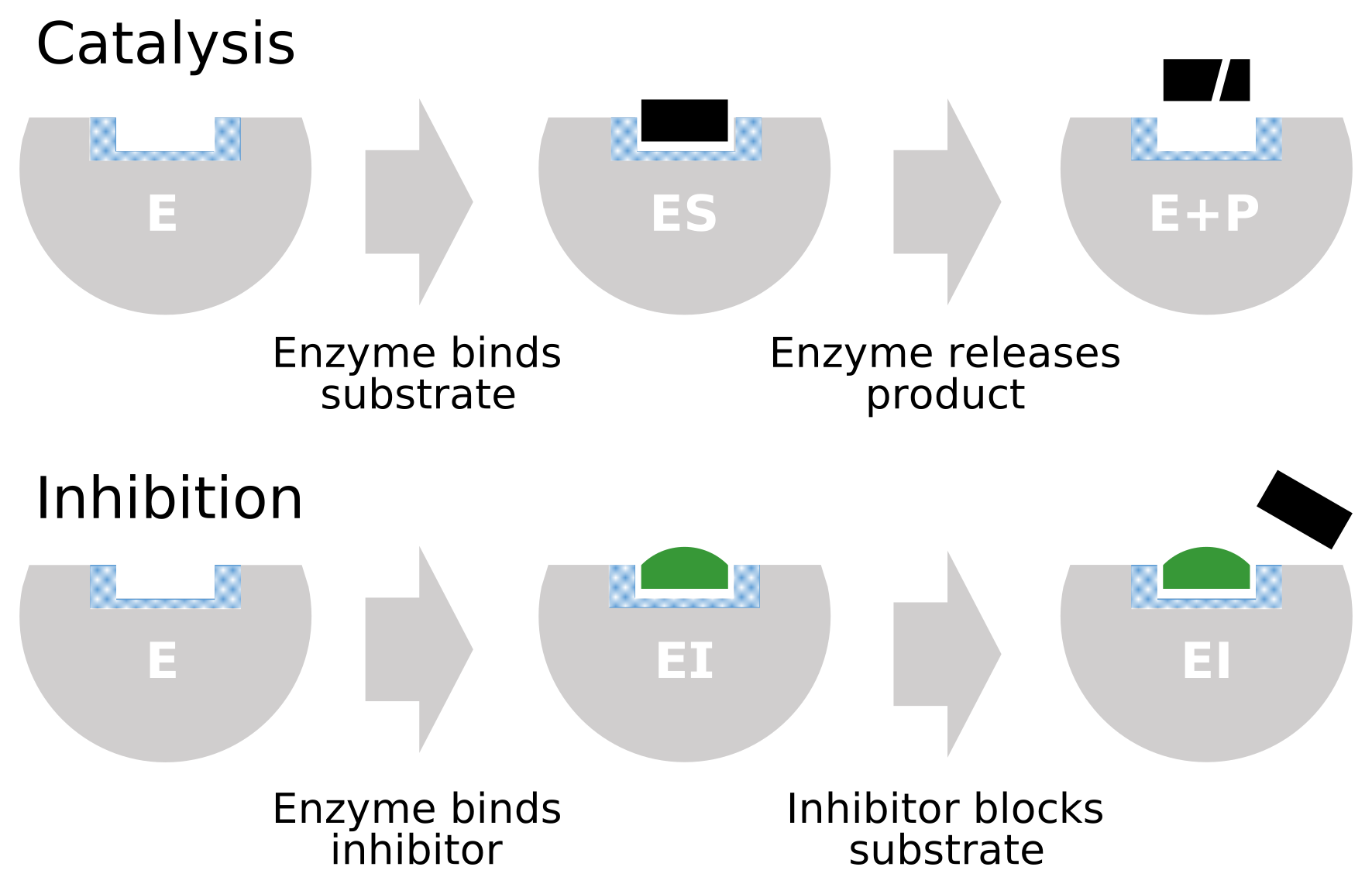
Feedback inhibition operates via allosteric regulation. In a typical metabolic pathway, a series of enzymes catalyze sequential reactions, converting a starting substrate into a final product. The final product molecule, upon reaching a sufficient concentration, acts as an allosteric inhibitor. It binds to a regulatory site on an enzyme (often the first committed enzyme) that is distinct from the active site where the substrate binds. This binding induces a conformational change in the enzyme, altering the shape of the active site and reducing its affinity for the substrate, thereby slowing down or halting the entire pathway. This mechanism is distinct from competitive inhibition, where the inhibitor directly competes with the active site. The allosteric nature of feedback inhibition allows the cell to fine-tune pathway activity without completely shutting it down, ensuring a steady supply of the product when needed.
📊 Key Facts & Numbers
Estimates suggest that metabolic pathways regulated by feedback inhibition can achieve up to a 10-fold reduction in enzyme activity when end-product concentrations rise significantly. For example, in the synthesis of isoleucine from threonine, the enzyme threonine deaminase is inhibited by isoleucine, reducing flux through the pathway by as much as 90% under high isoleucine conditions. The typical concentration of an allosteric inhibitor required to achieve 50% inhibition (the Kᵢ value) can be in the micromolar range, indicating high sensitivity. This regulatory precision prevents wasteful synthesis; for instance, the biosynthesis of ATP is tightly controlled, with ATP itself inhibiting key enzymes in glycolysis and the citric acid cycle, ensuring energy production matches demand. The sheer number of enzymes involved in cellular metabolism, estimated to be in the thousands, implies that feedback inhibition is a pervasive regulatory strategy across virtually all known metabolic networks.
👥 Key People & Organizations
Key figures in understanding feedback inhibition include Arthur Pardee, whose 1956 work on pyrimidine synthesis was foundational. Jacques Monod and François Jacob independently explored related regulatory mechanisms in bacteria, particularly the concept of operons at the Pasteur Institute in Paris, for which they shared the Nobel Prize in Physiology or Medicine in 1965. Daniel Koshland further contributed to understanding enzyme kinetics and allosteric regulation, developing models that explained how inhibitors bind to regulatory sites. Major research institutions like the Harvard University Department of Molecular and Cellular Biology and the Stanford University School of Medicine have consistently been at the forefront of investigating these regulatory pathways. Pharmaceutical companies like Pfizer and Merck also study feedback inhibition extensively, as it's a target for drug development.
🌍 Cultural Impact & Influence
Feedback inhibition has profoundly influenced our understanding of cellular control and has become a cornerstone of biochemistry and molecular biology curricula worldwide. It's a prime example of biological elegance, demonstrating how complex systems can self-regulate efficiently. The principle of feedback inhibition has inspired engineers and computer scientists, influencing the design of control systems and artificial intelligence algorithms that mimic biological feedback loops. The concept is frequently cited in textbooks and educational materials as a clear illustration of how living organisms maintain homeostasis. Furthermore, the study of feedback inhibition has directly led to the development of numerous pharmaceutical drugs that target specific metabolic pathways, often by mimicking or blocking these natural regulatory mechanisms, impacting fields from oncology to infectious diseases.
⚡ Current State & Latest Developments
Current research continues to explore the nuances of feedback inhibition in increasingly complex biological systems, such as multicellular organisms and microbial communities. Advances in CRISPR-Cas9 gene editing and synthetic biology are enabling researchers to precisely manipulate these feedback loops in engineered organisms for applications in biotechnology and medicine. For instance, scientists are designing synthetic metabolic pathways with enhanced feedback inhibition to improve the production of biofuels and pharmaceuticals. Studies are also investigating how disruptions in feedback inhibition contribute to diseases like cancer, where uncontrolled cell growth can result from dysregulated metabolic pathways. The development of sophisticated computational models, often utilizing Python and specialized bioinformatics tools, allows for the simulation and prediction of feedback inhibition dynamics in real-time cellular environments.
🤔 Controversies & Debates
One ongoing debate centers on the precise balance between the efficiency of feedback inhibition and the need for rapid response to changing environmental conditions. Critics sometimes argue that feedback inhibition, while conserving resources, might be too slow to respond to sudden, drastic environmental shifts, leading to transient imbalances. Another area of contention involves the complexity of regulatory networks; in reality, many pathways are not linear but highly branched and interconnected, with multiple feedback loops and feedforward controls interacting. The extent to which a single end-product inhibitor dictates the overall flux versus its interplay with other regulatory molecules is a subject of active research. Furthermore, the role of feedback inhibition in evolutionary adaptation, and whether it can be a constraint on evolving new metabolic capabilities, remains a topic of discussion among evolutionary biologists.
🔮 Future Outlook & Predictions
The future of feedback inhibition research is deeply intertwined with advances in synthetic biology and systems biology. Scientists aim to engineer novel feedback control systems into microorganisms for precise production of valuable compounds, potentially revolutionizing industries like biotechnology and agriculture. Understanding how feedback inhibition is altered in diseases like cancer is leading to new therapeutic strategies, such as designing drugs that specifically target feedback mechanisms in cancer cells to starve them of essential metabolites. Researchers are also exploring the potential for feedback inhibition in nanotechnology and biomimetic materials, creating self-healing or self-regulating artificial systems. The increasing ability to model and simulate complex biological networks will undoubtedly reveal even more sophisticated roles for feedback inhibition in cellular life.
💡 Practical Applications
Feedback inhibition has direct applications in the pharmaceutical industry, where many drugs are designed to mimic or block these natural regulatory processes. For example, drugs targeting statin synthesis inhibit HMG-CoA reductase, an enzyme in the cholesterol biosynthesis pathway, thereby lowering cholesterol levels. In industrial biotechnology, feedback inhibition is engineered into microbial strains to optimize the production of chemicals, biofuels, and therapeutic proteins. By modifying feedback mechanisms, companies like Ginkgo Bioworks aim to create more efficient cell factories. Furthermore, understanding feed
Key Facts
- Category
- science
- Type
- topic